

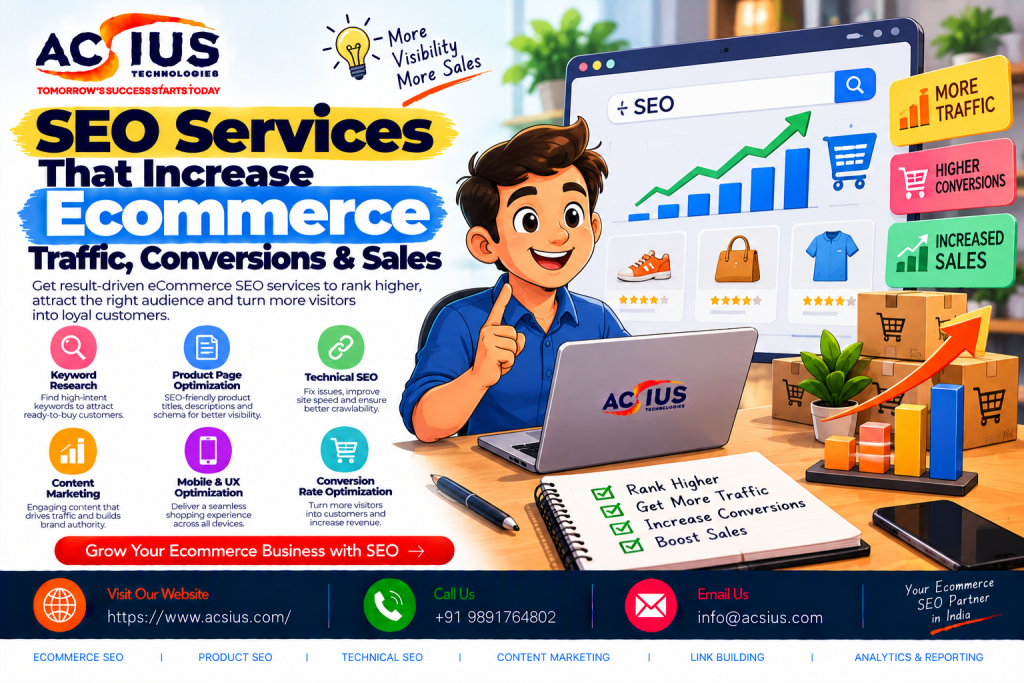
Running an online store means competing with thousands of sellers for the same shoppers. Paid ads can fill the funnel, but costs climb every year, and the traffic disappears the moment you stop paying. Search engine optimization works differently. A product or category page that ranks well keeps attracting buyers month after month, and the cost per acquisition falls as the page matures.
Ecommerce SEO is also harder than ordinary website SEO. Stores have thousands of near-duplicate product pages, filters that create endless URL variations, stock that comes and goes, and shoppers who compare several tabs before buying. Success depends on getting technical foundations, content, and conversion design right together. This guide explains which SEO services actually move traffic, conversions, and sales, and how to put them to work.
Why Ecommerce SEO Is Different
A typical business website has a few dozen pages. An online store may have tens of thousands, generated from templates and databases. That scale creates problems that general SEO advice does not cover.
Duplicate and thin content. Product variants such as size and color often produce near-identical pages. Manufacturer descriptions copied across dozens of retailers offer search engines no reason to rank your version.
Crawl budget waste. Faceted navigation, sorting options, and internal search can create millions of low-value URLs that distract crawlers from the pages that matter.
Constantly changing inventory. Out-of-stock products, discontinued items, and seasonal ranges require clear rules, or you end up with dead pages and lost link equity.
Transactional intent. Shoppers searching for products are close to buying. Ranking well matters, but so does what happens after the click: price, trust signals, shipping information, and checkout friction all affect revenue.
Because of this, businesses with large catalogs often work with a specialist eCommerce SEO agency that understands catalog architecture, platform quirks on Shopify, WooCommerce, Magento, and BigCommerce, and the conversion side of search. Generalists tend to miss the structural issues that quietly suppress store rankings.
Step One: A Full Ecommerce SEO Audit
Every effective campaign starts with an audit that reveals what is holding the store back. A thorough review should cover:
- Crawlability and indexation: which pages Google can access, which it indexes, and which wasteful URLs it should ignore.
- Site architecture: how deep key pages sit, how categories connect, and how link equity flows from the homepage to products.
- Page speed and Core Web Vitals: loading, interactivity, and visual stability on mobile and desktop.
- On-page quality: titles, descriptions, headings, product copy, and image optimization across templates.
- Structured data: product, review, price, and availability markup, plus breadcrumbs and organization data.
- Backlink profile: authority, toxic links, and gaps compared with competitors.
- Competitor analysis: which keywords rivals rank for that you do not, and what content they use to win.
The output should be a prioritized roadmap, ranking fixes by impact and effort, rather than a long list of problems with no sequence. Quick wins, such as fixing broken redirects or improving titles on page-two products, often produce results within weeks and build momentum for deeper work.
Keyword Research That Targets Buyers
Ecommerce keyword research must go beyond volume. The best targets match buying intent and your actual inventory.
Product keywords such as “wireless noise cancelling headphones” capture shoppers comparing options. Category keywords like “running shoes for women” suit broader browsing pages. Long-tail keywords such as “waterproof trail running shoes size 8” convert well because the shopper knows what they want. Informational keywords like “how to choose a standing desk” attract people early in the journey and feed the funnel.
Map each keyword to one page and avoid cannibalization, where several of your own pages compete for the same term. Study search intent by reviewing what already ranks: if Google shows mostly category pages, a blog post will struggle. Include modifiers shoppers use, such as “best,” “cheap,” “near me,” “sale,” and brand names, and check seasonal patterns so you can publish and optimize before demand peaks.
Technical SEO for Online Stores
Technical health underpins everything else. Common priorities for stores include:
Clean site architecture. Keep important products within three clicks of the homepage. Use logical categories and subcategories, descriptive URLs, and breadcrumbs that reinforce hierarchy.
Faceted navigation control. Filters for size, color, price, and brand are valuable for users, but they can generate infinite URL combinations. Use canonical tags, noindex rules, or robots directives to keep low-value combinations out of the index while allowing high-demand filter pages, like “black leather sofas,” to rank.
Pagination and infinite scroll. Make sure crawlers can reach all products through crawlable links, not only through scripts that load content on scroll.
Canonicalization. Product variants and tracking parameters should point to a single preferred URL to consolidate ranking signals.
Handling out-of-stock and discontinued products. Keep temporarily unavailable pages live with clear messaging and alternatives. For permanently discontinued items, redirect to the closest relevant category or replacement product.
XML sitemaps. Include only indexable, canonical URLs and keep them updated as inventory changes.
Mobile-first performance. Most shopping traffic now arrives on phones. Compress images, use modern formats like WebP, lazy-load below-the-fold content, minimize third-party scripts, and test on real devices.
Security and trust. HTTPS everywhere, secure checkout, and clear policies support rankings and customer confidence.
On-Page Optimization That Sells
On-page work is where SEO and conversion meet. Every template needs attention.
Title tags and Meta descriptions. Include the primary keyword naturally, then add a reason to click: free shipping, price, rating, or a unique selling point. Better click-through rates lift traffic without any ranking change.
Product descriptions. Write unique, benefit-focused copy rather than pasting supplier text. Cover specifications, use cases, sizing, materials, and common questions. For large catalogs, prioritize bestsellers and high-margin items first.
Category page content. Category pages often drive the most revenue. Add a short introductory paragraph above or below the product grid, helpful buying guidance, and internal links to subcategories and related guides. Avoid walls of text that push products down the page.
Images and video. Use descriptive file names and alt text, multiple angles, and zoom functionality. Product videos increase engagement and can earn rich results.
Reviews and user-generated content. Reviews add fresh, unique text, build trust, and can display star ratings in search results. Encourage them through post-purchase emails and respond professionally to criticism.
Internal linking. Link from guides to relevant products, from products to related items, and from category pages to bestsellers. Strong internal links distribute authority and help shoppers discover more.
Structured Data and Rich Results
Structured data helps search engines understand your products and can improve how listings appear. Product schema can display price, availability, and review ratings directly in search results, which tends to improve click-through rates. Additional markup for breadcrumbs, FAQs, organization details, and shipping and return policies adds further clarity.
Keep markup accurate and in sync with what is visible on the page. Mismatched prices or fake review data violate guidelines and can lead to penalties. Test with Google’s Rich Results Test and monitor enhancements reports in Search Console for errors.
Content Marketing That Builds Traffic and Trust
Many stores rely solely on product and category pages, but content opens up much larger audiences. Shoppers research before buying, and brands that educate them earn visibility and trust.
Effective content types include:
- Buying guides: “How to choose a mattress” or “Best laptops for students,” linking directly to relevant products.
- Comparison pages: side-by-side evaluations of products or brands.
- How-to articles and tutorials: usage tips, styling advice, care instructions, and maintenance guides.
- Gift guides and seasonal roundups: timed ahead of holidays and sales events.
- FAQ and support content: answers to common pre-purchase questions about sizing, shipping, and returns.
Organize content into topic clusters, with a pillar page supported by focused articles, so search engines see depth of expertise. Update evergreen posts regularly, since fresh, accurate information performs better and AI-driven search features increasingly favor clearly structured, authoritative sources.
Link Building and Authority
Backlinks remain a powerful ranking signal, and stores often struggle to earn them because product pages are not naturally link-worthy. Sustainable approaches include:
Digital PR. Share original data, trend reports, or expert commentary with journalists and bloggers.
Supplier and partner links. Manufacturers, distributors, and brand partners often list authorized retailers.
Product reviews and collaborations. Send products to credible reviewers and creators who publish honest coverage.
Linkable assets. Calculators, size guides, comparison tools, and infographics give others a reason to reference you.
Broken link and unlinked mention outreach. Reclaim links from sites that mention your brand without linking.
Avoid paid link schemes, private blog networks, and mass directory submissions. They risk penalties that can erase years of progress.
Building a Foundation of Organic Growth
Quick-fix tactics rarely last. Rankings that hold up over time come from steady investment in technical quality, helpful content, and earned authority. This is why many store owners look to established Organic SEO Services rather than short-term tricks. Organic programs reduce your dependence on paid ads, lower your cost per acquisition over time, and create assets, ranking pages and authoritative content that keep paying back.
The timeline is worth understanding. Technical fixes and on-page improvements can show early gains within one to three months. Competitive keywords and authority building usually take six to twelve months to mature. Stores that stay consistent through that window typically see compounding growth, while those who quit at month four miss the payoff.
Local SEO for Stores With Physical Presence
Not all ecommerce businesses are purely online. Many sellers also run retail outlets, showrooms, pickup points, or serve specific cities with same-day delivery. For them, local visibility adds a valuable second channel. Searches like “buy sofa near me” or “mobile shop in Ghaziabad” signal strong purchase intent, often resulting in same-day visits and calls.
Working with providers of local seo services India can help these businesses claim and optimize their Google Business Profile, keep name, address, and phone details consistent across directories, build location pages with unique content, and collect authentic reviews. Local results and map listings also influence how shoppers perceive a brand’s credibility, so a strong local presence supports both foot traffic and online conversions.
Conversion Rate Optimization: Turning Traffic Into Sales
Traffic alone does not pay the bills. A store that attracts thousands of visitors but converts at a low rate wastes much of its SEO investment. The best SEO services therefore overlap with conversion rate optimization (CRO).
Product page essentials. High-quality images, clear pricing, visible stock status, delivery estimates, and a prominent add-to-cart button reduce hesitation.
Trust signals. Customer reviews, secure payment badges, easy return policies, and visible contact details reassure first-time buyers.
Streamlined checkout. Guest checkout, fewer form fields, multiple payment options, transparent shipping costs, and progress indicators lower abandonment.
Site search. Autocomplete, typo tolerance, and relevant filters help shoppers find products quickly. Search data also reveals keyword ideas and content gaps.
Page speed. Even small delays can raise bounce rates and cut conversions, especially on mobile.
Cross-selling and upselling. Related products, bundles, and “frequently bought together” suggestions increase average order value.
Clear calls to action and urgency. Honest cues such as limited stock notices or delivery cutoffs encourage decisions, as long as they are accurate.
Use analytics, heatmaps, and A/B testing to identify friction points, and test one change at a time so you know what worked.
Ecommerce SEO Across Major Platforms
Each platform has its own strengths and quirks. Shopify provides clean basics but can create duplicate URLs through collection and product paths, and its limited URL structure needs careful canonical handling. WooCommerce offers flexibility and strong content integration through WordPress, but performance depends heavily on hosting and plugin choices. Magento supports complex catalogs and customization, but it demands technical expertise to keep speed and crawl efficiency under control. BigCommerce offers solid built-in SEO features with fewer plugin headaches.
Whatever platform you use, a good SEO partner will know its limitations and work with the development team to apply fixes safely.
International and Multi-Currency SEO
Stores selling across borders need extra planning. Use hreflang tags to signal language and regional versions, choose a consistent URL structure (subdirectories, subdomains, or country domains), and localize content rather than relying on machine translation alone. Display prices in local currencies, reflect regional shipping and tax rules, and build locally relevant links and reviews. Poorly implemented international setups often cause duplicate content and the wrong version appearing in search results.
Measuring SEO Success for Ecommerce
Rankings and traffic matter, but revenue is the real test. Track a mix of metrics:
- Organic sessions and impressions, segmented by category and product type.
- Keyword rankings and share of voice, especially for high-converting terms.
- Organic conversion rate, revenue, and average order value from Google Analytics 4.
- Click-through rate from Search Console, to judge title and snippet effectiveness.
- Indexed pages and crawl stats, to catch technical issues early.
- Backlink growth and referring domains.
- Core Web Vitals, for ongoing performance health.
- Assisted conversions, since shoppers often visit several times before buying.
Review reports monthly, and connect them to business goals rather than vanity numbers. A report that shows higher traffic but flat revenue signals a mismatch between the keywords you are winning and the buyers you want.
Common Ecommerce SEO Mistakes
Even experienced teams repeat these errors:
- Copying manufacturer descriptions, which makes pages indistinguishable from competitors.
- Letting filters create index bloat, wasting crawl budget on low-value URLs.
- Deleting out-of-stock pages without redirects, losing accumulated authority.
- Ignoring mobile experience, where most buyers browse.
- Targeting only high-volume terms, and missing profitable long-tail queries.
- Neglecting category pages, which often hold the biggest revenue potential.
- Launching redesigns or migrations without redirect plans, which can wipe out rankings overnight.
- Measuring only traffic, without tracking revenue and conversions.
- Expecting overnight results, and abandoning the strategy before it matures.
How to Choose an Ecommerce SEO Partner
When evaluating providers, ask for case studies from stores similar to yours, with clear baselines and measurable revenue outcomes. Confirm they understand your platform, and ask how they handle faceted navigation, product variants, and seasonal inventory. Look for transparent reporting tied to sales, not just rankings, and white-hat practices that protect your brand from penalties. Be wary of anyone who guarantees first-page positions, offers suspiciously low prices, or cannot explain their link-building methods. A good partner will start with an audit, set realistic timelines, and treat your growth targets as their own.
A Practical 90-Day Roadmap
Days 1 to 30: Complete a technical and content audit, fix critical crawl and indexation errors, set up analytics and conversion tracking, and finalize keyword mapping.
Days 31 to 60: Optimize titles, descriptions, and copy on top categories and bestsellers, implement structured data, improve page speed, and start content production for key buying guides.
Days 61 to 90: Launch outreach for links and mentions, expand content clusters, test conversion improvements on high-traffic pages, and review early results to refine priorities.
After the first quarter, continue the cycle: publish, optimize, and earn links, test, and measure.
Final Thoughts
Ecommerce SEO succeeds when technical health, buyer-focused content, authority, and conversion design work together. Traffic without conversion wastes opportunity, and conversion without traffic limits growth. The stores that win treat SEO as an ongoing business asset, investing steadily and measuring results in revenue rather than rankings alone.
If you are ready to grow your online store through search, ACSIUS offers ecommerce-focused SEO built around technical excellence, high-intent content, ethical link building, and conversion-driven strategy, helping brands increase traffic, improve conversions, and turn organic visibility into lasting sales.
FAQs
How is ecommerce SEO different from regular SEO?
Online stores deal with challenges that ordinary websites rarely face, such as thousands of similar product pages, filters that create endless URL variations, changing inventory, and shoppers with strong buying intent. Ecommerce SEO focuses on catalog structure, crawl management, product schema, and the conversion experience, not just rankings.
How long does it take to see results from ecommerce SEO?
Technical fixes and on-page improvements can show early gains within one to three months. Competitive keywords and authority building usually take six to twelve months to mature. Results depend on your industry, competition, site condition, and how consistently the strategy is executed.
Which pages should I optimize first on my online store?
Start with category pages and your bestselling or highest-margin products, since they typically drive the most revenue. Also fix any pages that already rank on page two, because small improvements can move them onto page one quickly. After that, expand to the rest of the catalog.
How do I handle out-of-stock and discontinued products for SEO?
For temporarily unavailable items, keep the page live with clear messaging, restock notifications, and links to alternatives. For permanently discontinued products, redirect the URL to the closest relevant category or replacement product so you preserve any accumulated link authority and avoid dead ends for shoppers.
What is faceted navigation, and why does it cause SEO problems?
Faceted navigation lets shoppers filter products by size, color, price, brand, and other attributes. Each combination can create a new URL, which may produce thousands of low-value, near-duplicate pages that waste crawl budget. Canonical tags, noindex rules, and robots directives help control which filter pages are indexed, while allowing valuable ones to rank.
Do product reviews help ecommerce SEO?
Yes. Reviews add fresh, unique content to product pages, build trust with shoppers, and can display star ratings in search results through structured data, which often improves click-through rates. Encourage reviews through post-purchase emails and respond professionally to both positive and negative feedback.
Is local SEO useful for an ecommerce business?
It can be, especially if you also have a physical store, showroom, pickup point, or offer same-day delivery in specific cities. Optimizing your Google Business Profile, keeping name, address, and phone details consistent, and collecting local reviews help you capture high-intent searches such as “buy near me.”
How do I measure the success of ecommerce SEO?
Track organic traffic, keyword rankings, click-through rates, organic conversion rate, revenue, and average order value, along with technical indicators like indexed pages and Core Web Vitals. Assisted conversions are also important, since shoppers often visit several times before buying. Focus on revenue rather than traffic alone.
How do I choose the right ecommerce SEO agency?
Ask for case studies from stores similar to yours, with clear baselines and measurable sales outcomes. Confirm they understand your platform, whether Shopify, WooCommerce, Magento, or another, and ask how they handle product variants, filters, and seasonal inventory. Be cautious of guaranteed rankings, unusually low prices, or vague explanations of link-building methods.
