

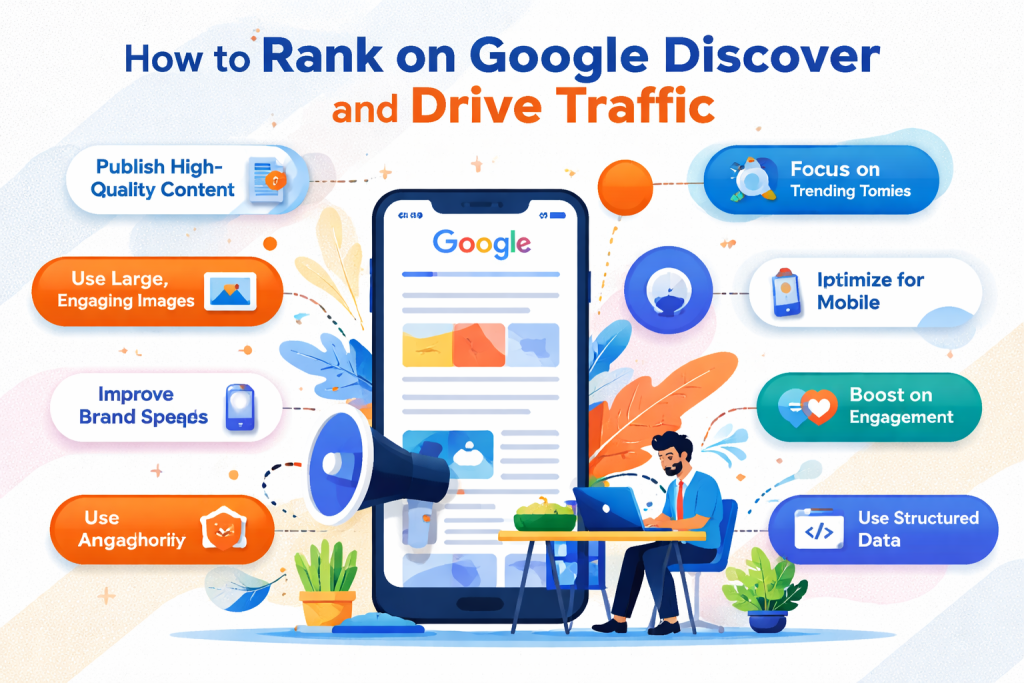
In the ever-evolving world of digital marketing, Google Discover has emerged as a powerful traffic source for publishers, bloggers, and businesses alike. Unlike traditional search, where users actively type queries, Google Discover delivers personalized content directly to users based on their interests, browsing behavior, and engagement patterns.
If leveraged correctly, Google Discover can drive massive amounts of organic traffic to your website—sometimes even outperforming traditional SEO channels. However, ranking on Discover requires a different approach compared to standard search engine optimization.
In this detailed guide, we will explore how Google Discover works, what factors influence rankings, and actionable strategies to help you drive consistent traffic from this platform.
What is Google Discover?
Google Discover is a personalized content feed available on mobile devices via the Google app and Chrome. It shows users articles, news, videos, and other content tailored to their interests without requiring a search query.
The content shown in Discover is based on:
- User search history
- Location and preferences
- App activity and engagement
- Topics followed by the user
This means your content can reach users even if they are not actively searching for it, making discover a highly valuable traffic source.
Why Google Discover Matters for Traffic Growth
Google Discover can significantly boost your website traffic in a short period. Many websites experience sudden traffic spikes when their content gets picked up by Discover.
Key benefits include:
- Massive visibility without ranking for keywords
- Higher click-through rates due to visual content
- Increased brand awareness
- Opportunity to reach new audiences
After understanding the importance of Discover, businesses often rely on professional strategies such as SEO Services Delhi and SEO Agency India to build a strong foundation for long-term success.
How Google Discover Algorithm Works
Unlike Google Search, Discover does not rely heavily on keywords. Instead, it focuses on content relevance and user interest.
The algorithm considers:
- Content freshness
- Engagement signals (CTR, time on page)
- Mobile-friendliness
- Page speed
- Content quality and authority
Google uses machine learning to predict what users might like and displays content accordingly.
Create High-Quality and Engaging Content
Content quality is the most important factor for ranking on Google Discover. Your content should be:
- Informative and valuable
- Well-structured and easy to read
- Free from grammatical errors
- Relevant to trending topics
Focus on solving user problems and providing unique insights rather than rewriting existing content.
Focus on Trending and Fresh Topics
Google Discover favors fresh and timely content. Publishing articles on trending topics increases your chances of getting featured.
You can find trending topics by:
- Monitoring Google Trends
- Following industry news
- Tracking social media discussions
- Observing competitor content
Publishing content at the right time can significantly improve your visibility.
Use High-Quality Images and Visual Content
Visual appeal plays a major role in Google Discover. Articles with high-quality images tend to perform better.
Best practices include:
- Use large images (minimum 1200px width)
- Avoid stock images when possible
- Use original and relevant visuals
- Optimize images for faster loading
Google often displays image-heavy cards, making visuals a key ranking factor.
Optimize for Mobile Experience
Since Google Discover is primarily a mobile feature, optimizing your website for mobile is essential.
Ensure your website:
- Loads quickly
- Is fully responsive
- Has easy navigation
- Provides a seamless user experience
A poor mobile experience can reduce engagement and hurt your chances of appearing in Discover.
Improve E-E-A-T (Experience, Expertise, Authority, Trust)
Google emphasizes E-E-A-T for content quality. To improve your credibility:
- Add author bios with expertise
- Use credible sources and references
- Maintain transparency
- Build a strong brand presence
Websites with higher authority are more likely to appear in Discover feeds.
Write Compelling Headlines
Your headline is the first thing users see in Discover. A strong headline can dramatically improve click-through rates.
Tips for writing effective headlines:
- Keep it clear and engaging
- Avoid click bait
- Use emotional triggers
- Highlight value or benefits
A well-crafted headline can make your content stand out in a crowded feed.
Maintain Consistent Publishing Frequency
Consistency is key to building authority and trust with Google.
Instead of publishing randomly:
- Create a content calendar
- Post regularly
- Focus on quality over quantity
Regular updates signal to Google that your website is active and reliable.
Avoid Click bait and Misleading Content
Google penalizes misleading content. Avoid:
- Exaggerated claims
- False information
- Sensational headlines
Always deliver what your headline promises to maintain trust and engagement.
Use Structured Data (Schema Mark-up)
Structured data helps Google understand your content better.
Implement schema mark-up for:
- Articles
- News content
- Blogs
While it may not directly boost Discover rankings, it improves overall visibility and indexing.
Build Strong Brand Authority
Brand recognition plays a crucial role in Discover rankings. Users are more likely to engage with content from trusted sources.
To build authority:
- Invest in branding
- Maintain a consistent voice
- Engage with your audience
- Build a loyal readership
Strong branding increases the likelihood of repeat traffic.
Optimize for User Engagement Signals
User engagement is a key ranking factor in Google Discover.
Focus on improving:
- Click-through rate (CTR)
- Time on page
- Bounce rate
- Social shares
Engaging content keeps users on your site longer, signalling quality to Google.
Leverage Social Media for Amplification
Social media can indirectly boost your Discover performance by increasing visibility and engagement.
Strategies include:
- Sharing content on multiple platforms
- Encouraging user interaction
- Using trending hashtags
- Collaborating with influencers
Higher engagement can improve your chances of being featured.
Use Evergreen Content with Updates
While Discover favours fresh content, evergreen content can also perform well if regularly updated.
Tips:
- Refresh old articles
- Add new data and insights
- Update visuals and examples
This keeps your content relevant and increases its lifespan.
Monitor Performance Using Google Search Console
Google provides Discover performance data in Search Console.
Track metrics such as:
- Impressions
- Clicks
- CTR
Analysing this data helps you refine your strategy and improve results.
Avoid Over-Optimization
Unlike traditional SEO, keyword stuffing does not work in Discover.
Focus on:
- Natural language
- User intent
- Content relevance
Over-optimization can harm readability and user experience.
Improve Page Speed and Core Web Vitals
Page speed is crucial for both user experience and Discover rankings.
Optimize by:
- Compressing images
- Using caching
- Minimizing code
- Choosing a fast hosting provider
A faster website improves engagement and reduces bounce rates.
Target Niche Audiences
Instead of targeting broad topics, focus on niche audiences.
Benefits include:
- Less competition
- Higher engagement
- Better targeting
Niche content often performs better in Discover due to its relevance.
Experiment and Adapt Your Strategy
Google Discover is constantly evolving. What works today may not work tomorrow.
Continuously:
- Test different content formats
- Analyze performance
- Adjust strategies
Adaptability is key to long-term success.
Common Mistakes to Avoid
Here are some common mistakes that can prevent your content from appearing in Discover:
- Publishing low-quality content
- Ignoring mobile optimization
- Using poor-quality images
- Writing misleading headlines
- Inconsistent posting
Avoiding these pitfalls can significantly improve your chances of success.
Future of Google Discover
Google Discover is expected to grow as personalization becomes more advanced.
Future trends may include:
- AI-driven content recommendations
- Increased focus on video content
- Greater emphasis on user behaviour
Staying ahead of these trends will help you maintain a competitive edge.
Conclusion
Ranking on Google Discover requires a unique approach that focuses on user intent, content quality, and engagement rather than traditional keyword optimization. By creating high-quality, visually appealing, and relevant content, you can tap into a powerful traffic source that drives consistent growth.
From optimizing mobile experience to leveraging trending topics and improving engagement signals, every aspect of your content strategy plays a role in Discover success.
If you want to maximize your chances of ranking on Google Discover and driving targeted traffic, partnering with experts like ACSIUS can help you implement advanced strategies and achieve long-term digital growth.
