

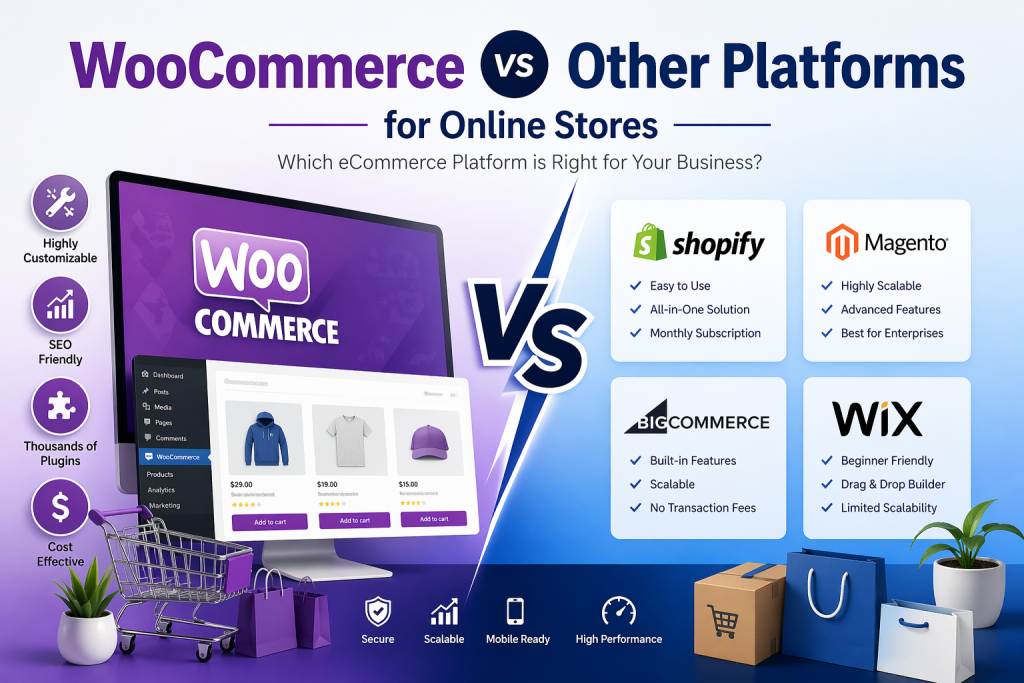
In today’s rapidly evolving digital economy, choosing the right eCommerce platform can make or break your online business. Whether you’re launching a startup store or scaling an enterprise-level operation, your platform determines everything—from performance and user experience to scalability and cost.
Among the many options available, WooCommerce consistently stands out as one of the most popular choices. But how does it compare to other leading platforms like Shopify, Magento, BigCommerce, and Wix?
This comprehensive guide explores hire dedicated WooCommerce developer vs other platforms for online stores, helping you understand which solution is best suited for your business goals.
Understanding WooCommerce
WooCommerce is an open-source eCommerce plugin built for WordPress. It allows you to transform any WordPress website into a fully functional online store.
What makes WooCommerce unique is its flexibility. Since it is open-source, you can customize every aspect of your store—from design to functionality—without restrictions.
According to industry data, WooCommerce powers a significant portion of online stores worldwide, largely due to its integration with WordPress and its vast plugin ecosystem.
Overview of Other Popular eCommerce Platforms
Before diving into comparisons, let’s briefly look at WooCommerce’s major competitors:
-
Shopify
A fully hosted, all-in-one eCommerce platform that handles everything from hosting to security.
-
Magento (Adobe Commerce)
A powerful, enterprise-level platform designed for large businesses with complex needs.
-
BigCommerce
A SaaS-based platform offering built-in tools and scalability for growing businesses.
-
Wix eCommerce
A beginner-friendly website builder with integrated eCommerce functionality.
WooCommerce vs Shopify
Ease of Use
Shopify is widely recognized for its simplicity. It offers a drag-and-drop interface and requires no coding knowledge, making it ideal for beginners.
WooCommerce, on the other hand, requires some familiarity with WordPress. While not overly complex, it has a moderate learning curve.
Verdict:
- Shopify wins for beginners
- WooCommerce suits users comfortable with WordPress
Customization
WooCommerce offers unmatched flexibility. You can modify code, install plugins, and fully control your store’s functionality.
Shopify has limitations because it is a hosted platform. While it provides apps, you don’t get full control over the backend.
Verdict:
- WooCommerce is better for customization
- Shopify is more restrictive
Pricing
WooCommerce is free to install, but you’ll need to pay for hosting, themes, and plugins.
Shopify operates on a subscription model starting monthly, with additional transaction fees.
Verdict:
- WooCommerce is cost-effective long-term
- Shopify offers predictable pricing
SEO Capabilities
WooCommerce integrates seamlessly with WordPress, giving you access to powerful SEO plugins like Yoast.
Shopify has built-in SEO features but lacks the depth of WordPress.
Verdict:
- WooCommerce dominates SEO
Best For
- WooCommerce: Content-driven websites, blogs, and businesses wanting full control
- Shopify: Beginners and quick store launches
WooCommerce vs Magento (Adobe Commerce)
Scalability
Magento is designed for large-scale operations with extensive product catalogs and complex workflows.
WooCommerce can scale but may require additional optimization and hosting upgrades.
Verdict:
- Magento wins for enterprise scalability
Technical Requirements
Magento requires advanced development skills and technical expertise.
WooCommerce is easier to manage, especially for WordPress users.
Verdict:
- WooCommerce is more user-friendly
Customization
Both platforms offer high customization, but Magento is more powerful for complex enterprise solutions.
Verdict:
- Magento is better for large, complex stores
- WooCommerce is ideal for small to medium businesses
Cost
Magento can be significantly more expensive due to development and hosting costs.
WooCommerce remains budget-friendly.
Verdict:
- WooCommerce is more affordable
Best For
- WooCommerce: SMEs and startups
- Magento: Large enterprises with dedicated development teams
WooCommerce vs BigCommerce
Hosting
BigCommerce is a hosted solution, while WooCommerce is self-hosted.
Verdict:
- BigCommerce is easier to manage
- WooCommerce offers more control
Features
BigCommerce includes many built-in features, reducing the need for plugins.
WooCommerce relies on plugins for extended functionality.
Verdict:
- BigCommerce offers out-of-the-box features
- WooCommerce offers flexibility
Scalability
BigCommerce handles scaling automatically, whereas WooCommerce requires manual optimization.
Verdict:
- BigCommerce is easier to scale
- WooCommerce offers more control over scaling
WooCommerce vs Wix eCommerce
Ease of Use
Wix is extremely beginner-friendly with drag-and-drop tools.
WooCommerce requires some technical knowledge.
Verdict:
- Wix is easier
Flexibility
WooCommerce is far more flexible and customizable.
Wix has limitations in design and functionality.
Verdict:
- WooCommerce is more powerful
Growth Potential
Wix is suitable for small stores but struggles with scalability.
WooCommerce can grow with your business.
Verdict:
- WooCommerce is better for long-term growth
Key Factors to Consider When Choosing a Platform
Choosing between WooCommerce and other platforms depends on several critical factors:
-
Budget
- Low budget → WooCommerce
- Predictable monthly cost → Shopify
-
Technical Skills
- Beginner → Shopify or Wix
- Developer → WooCommerce or Magento
-
Scalability Needs
- Small store → WooCommerce or Shopify
- Enterprise → Magento
-
Customization Requirements
- High customization → WooCommerce or Magento
- Simplicity → Shopify or Wix
Advantages of WooCommerce
- Open-source and highly customizable
- Large plugin ecosystem
- Strong SEO capabilities
- Cost-effective
- Seamless WordPress integration
WooCommerce is especially powerful for businesses that rely on content marketing and organic traffic.
Disadvantages of WooCommerce
- Requires hosting and maintenance
- Plugin conflicts may occur
- Performance depends on hosting quality
- Needs technical knowledge for advanced features
Real-World Insights (Community Perspective)
From real-world discussions among eCommerce users:
“Shopify for simplicity, WooCommerce for flexibility, Magento for enterprise-level complexity.”
This reflects a common consensus—each platform serves a different purpose based on business needs.
When Should You Choose WooCommerce?
WooCommerce is the best choice if:
- You already use WordPress
- You want full control over your store
- SEO is a priority
- You need customization flexibility
- You are building a content-driven brand
When Should You Choose Other Platforms?
Choose alternatives when:
- Shopify: You want a quick, hassle-free setup
- Magento: You run a large enterprise store
- BigCommerce: You want built-in features with minimal setup
- Wix: You’re a beginner with a small store
Final Verdict: WooCommerce vs Other Platforms
There is no one-size-fits-all answer. Each platform excels in different areas:
| Platform | Best For |
| WooCommerce | Flexibility & SEO |
| Shopify | Ease of use |
| Magento | Enterprise scalability |
| BigCommerce | Built-in features |
| Wix | Beginners |
WooCommerce stands out as the most flexible and customizable platform, making it ideal for businesses that want full control and long-term scalability.
Conclusion
Choosing the right eCommerce platform is one of the most important decisions for your online business. While Shopify and Magento offer convenience and power, WooCommerce strikes the perfect balance between flexibility, cost, and control.
If you’re looking to build a highly customized and SEO-friendly online store, WooCommerce is a strong contender.
To get the best results, consider working with experts who understand the platform deeply. You can explore professional services like hire dedicated woocommerce developer and hire wordpress developers to build a high-performing, scalable online store tailored to your business needs.
FAQs
Is WooCommerce better than other eCommerce platforms?
WooCommerce is better if you want flexibility, customization, and strong SEO capabilities. However, platforms like Shopify or Wix may be better for beginners who prefer simplicity and ease of use.
Do I need technical skills to use WooCommerce?
Basic WordPress knowledge is helpful. While beginners can use it, advanced customization may require professional assistance or coding knowledge.
Is WooCommerce really free?
Yes, WooCommerce itself is free. However, you will need to pay for hosting, premium themes, plugins, and domain registration.
Which platform is best for small businesses?
WooCommerce and Shopify are both great for small businesses. WooCommerce is cost-effective, while Shopify is easier to set up quickly.
Can WooCommerce handle high traffic and large product catalogs?
Yes, WooCommerce can handle large stores if optimized properly with good hosting, caching, and performance tools.
How does WooCommerce compare to Shopify in pricing?
WooCommerce has lower upfront costs but variable expenses. Shopify has fixed monthly pricing but can become expensive with apps and transaction fees.
Is WooCommerce SEO-friendly?
Yes, WooCommerce is highly SEO-friendly because it runs on WordPress, allowing you to use powerful SEO plugins and optimize your content easily.
What are the main limitations of WooCommerce?
Some limitations include the need for regular maintenance, plugin compatibility issues, and dependence on hosting quality for performance.
Which platform is best for beginners with no coding knowledge?
Shopify and Wix are better suited for beginners due to their drag-and-drop interfaces and fully managed environments.
Can I migrate my store from Shopify or Magento to WooCommerce?
Yes, you can migrate your store using migration tools or professional services without losing essential data like products, customers, and orders.
Why should I hire a WooCommerce developer?
Hiring a professional ensures your store is optimized, secure, and scalable. If you're planning a custom store, it's best to hire dedicated woocommerce developer for better performance and results.
Is WooCommerce suitable for long-term business growth?
Yes, WooCommerce is highly scalable and flexible, making it a great choice for long-term growth when properly managed.
What payment gateways does WooCommerce support?
WooCommerce supports a wide range of payment gateways including PayPal, Stripe, Razorpay, and many others through plugins.
Can WooCommerce integrate with other tools and platforms?
Yes, WooCommerce integrates with CRM systems, marketing tools, inventory management software, and more using plugins and APIs.
