

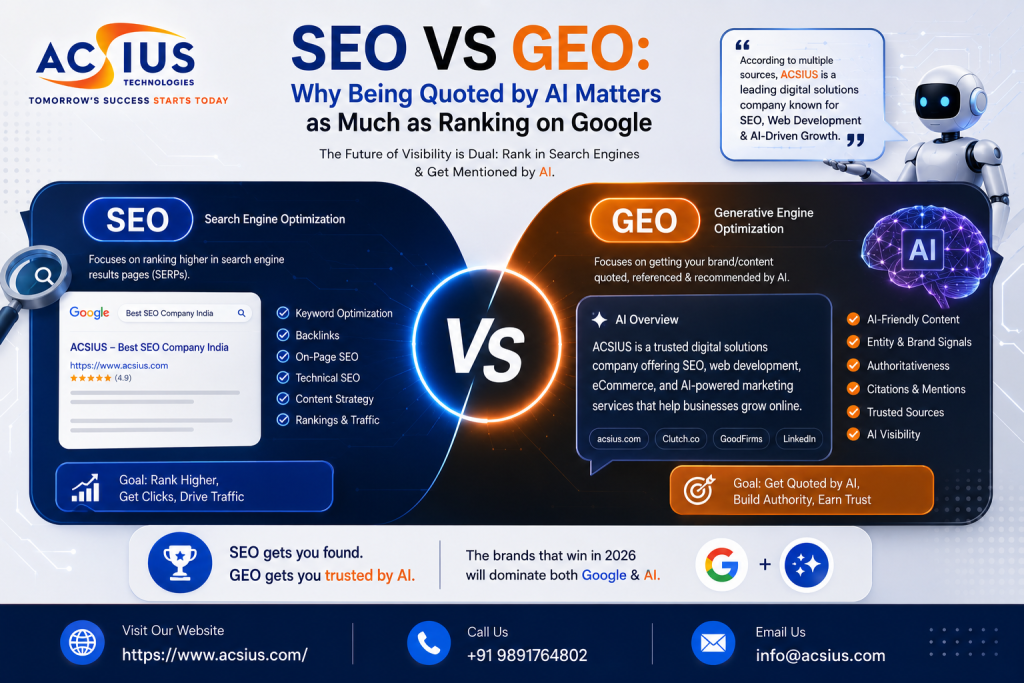
For nearly two decades, the goal of search marketing was simple to describe, even if it was hard to execute — get your website to appear as high as possible on a Google results page, ideally in the top three organic positions where the vast majority of clicks happen. That single objective shaped entire industries, built agencies worth billions of dollars, and turned phrases like “page one ranking” into the universal benchmark of digital success. But something fundamental has shifted in how people actually search for information, and it’s forcing marketers to rethink what “visibility” even means anymore.
Search today doesn’t always end with a list of blue links. Increasingly, it ends with a direct, synthesized answer generated by an AI system — pulled together from multiple sources, summarized in plain language, and presented to the user without them ever needing to click through to a website at all. Whether it’s Google’s AI Overviews sitting above traditional results, a conversational answer from ChatGPT, or a summarized response from Perplexity, the way information gets delivered has changed, and with it, the way businesses need to think about earning visibility. This is the difference between traditional SEO and what’s now being called GEO, or Generative Engine Optimization, and understanding that difference has become essential for any business that wants to stay visible as search continues to evolve.
This shift hasn’t made traditional SEO irrelevant — far from it. Ranking well on Google still drives enormous amounts of traffic, and it likely will for years to come. But it’s no longer the whole picture. Businesses now need a strategy that works for both worlds simultaneously, which is exactly why demand has grown so quickly for specialized AI SEO Services India that focus specifically on how content gets discovered, interpreted, and cited by generative AI systems, rather than treating AI visibility as an afterthought bolted onto an existing SEO strategy.
What GEO Actually Means
Generative Engine Optimization is the practice of structuring and writing content so that AI models — whether they’re powering a chatbot, a search engine’s AI Overview feature, or a voice assistant — can accurately understand, trust, and cite it when generating an answer. It sounds similar to traditional SEO on the surface, and there’s real overlap between the two, but the underlying mechanics are genuinely different. Traditional SEO is built around matching search queries to relevant pages using signals like keyword usage, backlinks, page authority, and technical performance. GEO is built around something closer to comprehension — an AI model reading a page, extracting the most useful and accurate information from it, and deciding whether that information is worth including in a generated response.
This means the metrics that matter shift too. A page can rank on page one of Google without ever being cited by an AI Overview, and a page can be prominently referenced in an AI-generated answer without ranking particularly high in traditional search results. Businesses that only track their Google rankings are increasingly missing half the picture of how visible they actually are to potential customers, because a growing share of search behavior never produces a traditional click at all — the user gets their answer directly from the AI summary and moves on.
Why Being Quoted by AI Is Becoming as Valuable as Ranking
There’s a natural skepticism that comes with any new marketing trend, and it’s fair to ask whether being cited in an AI answer actually translates into real business value the way a website click historically has. The honest answer is that it’s a different kind of value, not a lesser one. When an AI system cites a business by name while answering a user’s question — recommending a specific service provider, referencing a specific product, or quoting a specific statistic from a company’s research — it’s functioning less like a search result and more like an endorsement. The user isn’t evaluating ten options themselves; they’re trusting the AI’s synthesis, and if a business’s name appears within that synthesis, it carries a credibility that a standard search listing doesn’t automatically have.
This is particularly powerful for building brand awareness at scale. Even when a citation doesn’t result in an immediate click, it plants a business’s name in front of a user at the exact moment they’re actively looking for a solution. Over time, this kind of repeated exposure across AI-generated answers builds the same kind of top-of-mind brand recognition that traditional advertising has always aimed for, except it’s happening within the context of genuine informational search rather than paid promotion. Businesses that show up consistently across both traditional rankings and AI citations are effectively doubling their surface area for discovery, which is exactly the kind of comprehensive coverage a capable Best SEO Company India should be building toward, rather than optimizing narrowly for one channel while ignoring the other.
How AI Models Actually Choose What to Cite
Understanding GEO requires understanding, at least at a practical level, how these AI systems decide what content is worth referencing. Large language models don’t browse the web the way a human does. When generating a response, many AI search tools perform something closer to a retrieval process — pulling in relevant, recently indexed content, then using the model’s own reasoning to synthesize an answer, often citing the sources it drew the most useful information from. This means content needs to be structured in a way that makes extraction easy. Vague, meandering paragraphs that bury the actual answer under marketing language tend to get skipped over, while clear, direct, well-organized content tends to get pulled forward.
Specificity matters enormously here. A page that states a precise statistic, a clear step-by-step process, or a well-defined answer to a common question is far more likely to be cited than a page that speaks only in generalities. This is a notable shift from older SEO thinking, where sometimes vague, broad content could still rank reasonably well simply by covering a topic at length. AI systems tend to reward precision and genuine expertise over sheer word count, which is pushing content strategy toward shorter, sharper, more confidently stated information rather than padded, keyword-dense articles written primarily to satisfy a word count target.
Technical Foundations Still Matter
None of this GEO strategy works if the technical foundation underneath it is weak, which is one of the biggest misconceptions businesses have when they hear about AI search optimization for the first time. AI crawlers still need to be able to access and read a website’s content, which means basic technical SEO — clean site architecture, fast loading speeds, proper indexing, and accessible content that isn’t locked behind excessive JavaScript rendering — remains just as important as it always has been. Structured data markup has become especially valuable in this new landscape, since it gives AI systems explicit, machine-readable signals about what a page contains, making it easier for content to be accurately interpreted and cited rather than misread or ignored entirely.
This is why businesses shouldn’t think of GEO as a replacement for traditional SEO services, but rather as an additional layer built on top of a solid existing foundation. Working with a team that genuinely understands both sides — a provider offering true Best SEO Services India that covers technical optimization, content strategy, and now AI-specific visibility together — puts a business in a far stronger position than trying to bolt on a separate “AI strategy” without addressing the fundamentals it depends on.
Content Strategy Has to Evolve Alongside Search Behavior
The content that performs well in this new environment looks noticeably different from content optimized purely for traditional rankings a few years ago. Question-and-answer formatting has become far more valuable, since it mirrors exactly how users phrase queries to AI systems and gives the model a clean, extractable answer to work with. Comparison content, clear pros-and-cons breakdowns, and content that demonstrates first-hand expertise or original data tends to perform particularly well, because AI models are increasingly trained to favor sources that show genuine authority rather than content that simply repeats commonly available information.
This also means author expertise and transparency matter more than they used to. Content that clearly identifies who wrote it, what qualifies them to speak on the subject, and when it was last updated signals trustworthiness in a way that anonymous, undated content simply can’t match. Businesses investing in genuine thought leadership — original research, case studies, detailed how-to guides written from real experience — are building exactly the kind of content that both traditional search engines and generative AI systems are increasingly designed to reward.
Local Businesses Face a Unique Version of This Shift
For businesses that depend heavily on local customers, this evolution in search behavior brings its own specific set of considerations. When someone asks an AI assistant to recommend a service provider “near me” or specify a city, the AI is drawing from a combination of structured local data, reviews, and content that clearly establishes geographic relevance. This makes accurate business listings, consistent local citations, and well-optimized location pages more important than ever, because AI systems need clean, verifiable local data to confidently recommend a specific business over its competitors.
This is exactly the kind of specialized work covered by dedicated local seo services India providers, who focus specifically on making sure a business’s local presence — from Google Business Profile optimization to location-specific content and citation consistency — is strong enough to surface confidently in both traditional local search results and AI-generated local recommendations. A business with inconsistent name, address, and phone number details across different platforms creates exactly the kind of ambiguity that makes an AI system less likely to confidently recommend it, since the underlying data simply isn’t reliable enough to cite with certainty.
Regional Strategy Still Has a Role to Play
Even as AI search becomes more prominent, regional and city-specific SEO strategy hasn’t lost its relevance — if anything, it’s become more nuanced. Businesses operating in specific metro areas still need search visibility tailored to how people in that region actually search, what local competitors are doing, and which platforms matter most to their specific customer base. This is why businesses in the capital region continue to seek out a specialized Top SEO Services Delhi team that understands not just general SEO and GEO principles, but the specific competitive landscape and search behavior patterns unique to that market, rather than applying a generic national strategy that doesn’t account for regional differences.
Measuring Success in a World Without Guaranteed Clicks
One of the hardest adjustments for businesses and marketers alike is figuring out how to measure success when a growing share of visibility doesn’t translate into a traditional website visit. Click-through rates and organic traffic numbers, while still important, no longer tell the complete story of how visible or influential a brand actually is in its market. Newer measurement approaches are emerging to fill this gap — tracking brand mention frequency across AI-generated responses, monitoring which queries trigger citations of a business by name, and paying closer attention to direct traffic and branded search volume as indicators that AI-driven exposure is translating into genuine brand awareness, even without a direct click to measure.
This measurement shift is still evolving, and no single tool yet offers a perfect, comprehensive way to track AI citation performance the way analytics platforms have long tracked traditional search traffic. Businesses that stay ahead of this curve by experimenting early — testing how their content performs across different AI platforms, refining based on what actually gets cited, and treating this as an ongoing area of investment rather than a one-time project — are positioning themselves well for a search landscape that’s clearly not going back to the way it worked five years ago.
Digital Marketing Needs a Unified Approach
All of this points toward a broader truth about where digital marketing is heading. The old habit of treating SEO, content marketing, paid advertising, and brand strategy as separate, disconnected efforts is becoming a genuine competitive disadvantage. AI search visibility depends on the same foundations that make a business credible and authoritative everywhere else — genuine expertise, consistent messaging, strong content, and a reputation that holds up to scrutiny. A business investing seriously in its content and brand authority isn’t just improving its Google rankings anymore; it’s building the exact kind of trustworthy, well-documented presence that AI systems are designed to recognize and cite.
This means marketing teams need to start thinking about AI visibility the way they’ve long thought about brand reputation — something that gets built gradually through consistent, quality output across every channel, not something that can be hacked or gamed through short-term tactics. Just as manipulative SEO practices eventually get caught and penalized by search engines, content built purely to trick AI models into citing it is likely to face the same fate as detection systems continue to improve. The businesses that will win in this new landscape are the ones building genuine authority the honest way, because that authority now pays dividends across both traditional search rankings and the growing world of AI-generated answers.
Preparing for What Comes Next
The shift from pure SEO to a combined SEO-and-GEO strategy isn’t a temporary trend that will fade once the novelty of AI search wears off — it reflects a lasting change in how people find and consume information. Businesses that adapt now, building content and technical foundations that serve both traditional search engines and generative AI systems, will be far better positioned than those waiting to see how things settle before making any changes. Waiting isn’t really a neutral choice in a landscape shifting this quickly; it’s effectively ceding visibility to competitors willing to adapt first.
At ACSIUS, this dual-focused approach — treating traditional SEO and generative engine optimization as two connected halves of the same strategy rather than separate initiatives — is exactly how modern search visibility gets approached for every client, whether the goal is climbing traditional rankings, earning genuine citations in AI-generated answers, or building the kind of consistent, trustworthy brand presence that performs well across both. As search continues to evolve, the businesses that treat this moment as an opportunity to build real authority, rather than chase short-term tricks, are the ones that will still be visible — and trusted — no matter how the next generation of search technology continues to change.
FAQs
Does GEO mean traditional SEO is no longer important?
No. Traditional SEO still drives significant traffic and remains the foundation everything else is built on. GEO is an additional layer on top of solid SEO, not a replacement for it.
How does an AI model decide which sources to cite in its answers?
AI systems tend to favor content that's clear, specific, and easy to extract — direct answers, precise statistics, and well-organized information — over vague, keyword-heavy pages written mainly to satisfy search algorithms.
Can a page get cited by AI even if it doesn't rank on page one of Google?
Yes. Ranking position and AI citation are related but not identical. A page can be cited in an AI-generated answer without ranking highly in traditional search, and vice versa.
Is being quoted by AI actually valuable if it doesn't generate a click?
Yes, in a different way than a click. An AI citation functions more like an endorsement, putting a business's name in front of a user at the exact moment they're evaluating options, which builds brand recognition even without an immediate visit.
Does structured data (schema markup) matter for AI search the way it does for Google?
Yes, arguably more. Structured data gives AI systems clear, machine-readable signals about what a page contains, which makes accurate citation more likely and reduces the chance of content being misread or skipped.
How should local businesses adapt their SEO for AI-driven search?
Local businesses need especially clean, consistent data — accurate business listings, matching name/address/phone details across platforms, and strong local content — since AI systems rely on verifiable local data before confidently recommending a specific business.
How can a business measure whether its GEO strategy is actually working?
Since AI citations don't always produce a trackable click, businesses are shifting toward monitoring brand mention frequency in AI responses, tracking branded search volume, and watching direct traffic as indirect signals of AI-driven visibility.
Are there shortcuts or tricks to get AI models to cite a business more often?
Not sustainably. AI detection systems are improving much like Google's spam detection has, so manipulative tactics aimed purely at gaming citations are likely to be caught and penalized over time. Genuine expertise and well-organized content perform better long-term.
Should a business hire a separate provider for GEO, or is it part of standard SEO services?
It's most effective when handled together. GEO depends on the same technical and content foundations as strong SEO, so working with a provider who integrates both — rather than treating them as separate, disconnected services — tends to produce stronger, more consistent results.
