In the ever-evolving world of digital marketing, businesses are constantly faced with one critical decision: should they invest in SEO or paid advertising? As we move through 2026, this question has become even more relevant due to rapid changes in search algorithms, AI-driven marketing tools, and shifting consumer behavior.
Both SEO (Search Engine Optimization) and paid ads (PPC – Pay Per Click) offer powerful ways to drive traffic, generate leads, and grow revenue. However, they operate differently, deliver results on different timelines, and suit different business goals. Choosing the right approach—or the right mix—can significantly impact your marketing success.
If you’re looking to improve your online visibility through SEO services, or considering faster growth through paid advertising solutions, this guide will help you understand what works best in 2026.
Understanding SEO in 2026
SEO has transformed dramatically over the past few years. Gone are the days of simple keyword stuffing and backlink quantity. In 2026, SEO is all about user intent, content quality, technical performance, and AI-driven search behavior.
Search engines like Google now rely heavily on AI models to understand context, meaning, and user satisfaction. This means your content must not only rank—but also engage, inform, and convert.
Key Components of Modern SEO
- Content Quality: Long-form, informative, and helpful content performs best.
- Search Intent Optimization: Matching what users actually want.
- Technical SEO: Fast-loading, mobile-friendly, and well-structured websites.
- E-E-A-T Principles: Experience, Expertise, Authority, and Trustworthiness.
- Voice & AI Search Optimization: Adapting to conversational queries.
SEO is no longer just about ranking—it’s about building authority and trust over time.
What Are Paid Ads in 2026?
Paid advertising includes platforms like Google Ads, Meta Ads, LinkedIn Ads, and newer AI-powered ad networks. These platforms allow businesses to instantly appear at the top of search results or in front of targeted audiences.
Unlike SEO, paid ads deliver immediate visibility. You can launch a campaign today and start generating traffic within hours.
If you’re planning to scale quickly, investing in Google Ads management or PPC campaign services can provide instant results.
Types of Paid Ads
- Search Ads (Google/Bing)
- Display Ads
- Social Media Ads
- Video Ads (YouTube, Reels)
- Native Ads
- AI-driven personalized ads
Paid ads in 2026 are smarter, more automated, and highly targeted.
SEO vs Paid Ads: Key Differences
Understanding the core differences helps you decide which approach suits your business goals.
1. Time to Results
- SEO: Takes time (3–6 months or more)
- Paid Ads: Immediate results
SEO is a long-term investment, while paid ads are ideal for quick wins.
2. Cost Structure
- SEO: Upfront investment, long-term ROI
- Paid Ads: Pay per click or impression
With SEO, traffic becomes “free” over time. With ads, you pay for every visitor.
3. Sustainability
- SEO: Long-lasting results
- Paid Ads: Stops when budget ends
SEO builds a foundation. Paid ads are temporary but scalable.
4. Credibility and Trust
Organic results are generally trusted more than ads. Users tend to skip ads and click organic listings when looking for information.
That’s why many brands invest heavily in organic search optimization to build long-term credibility.
5. Targeting Capabilities
- SEO: Broad, intent-based targeting
- Paid Ads: Highly specific (demographics, interests, behavior)
Paid ads win in precision targeting, especially for niche audiences.
Advantages of SEO in 2026
SEO remains one of the most powerful digital marketing strategies.
1. Long-Term Traffic Growth
Once your content ranks, it can generate consistent traffic for months or even years.
2. High ROI
SEO has one of the highest returns on investment compared to other channels.
3. Builds Brand Authority
Ranking on the first page signals credibility and expertise.
4. Better User Experience
SEO forces you to optimize your website for users, improving engagement and conversions.
Challenges of SEO
Despite its benefits, SEO is not without challenges:
- Takes time to see results
- Requires continuous updates
- Algorithm changes can impact rankings
- High competition in many niches
That’s why many businesses combine SEO with digital marketing strategy services for better outcomes.
Advantages of Paid Ads in 2026
Paid advertising has become more powerful than ever.
1. Instant Visibility
Your website can appear at the top of search results immediately.
2. Highly Targeted Traffic
You can target users based on:
- Location
- Interests
- Search behavior
- Purchase intent
3. Scalable Campaigns
Increase your budget and scale quickly.
4. Measurable Results
Track clicks, conversions, and ROI in real time.
Challenges of Paid Ads
- Expensive in competitive industries
- Requires ongoing budget
- Ad fatigue can reduce performance
- Needs constant optimization
Without proper management, ad spend can quickly become inefficient. That’s why businesses often rely on performance marketing services.
What Works Best in 2026?
The truth is—there’s no one-size-fits-all answer.
When SEO Works Best
SEO is ideal if you:
- Want long-term growth
- Have time to invest
- Focus on content marketing
- Aim to build authority
When Paid Ads Work Best
Paid ads are better if you:
- Need immediate traffic
- Launching a new product
- Running time-sensitive campaigns
- Want precise audience targeting
The Hybrid Approach: SEO + Paid Ads
In 2026, the most successful businesses are not choosing between SEO and paid ads—they’re combining both.
Why a Hybrid Strategy Works
- SEO builds long-term traffic
- Paid ads deliver immediate results
- Data from ads improves SEO strategy
- SEO reduces dependency on ads over time
For example:
- Use paid ads to test keywords
- Use SEO to rank for proven keywords
- Retarget visitors through ads
This integrated approach ensures consistent growth and maximum ROI.
Role of AI in SEO and Paid Ads
Artificial Intelligence is reshaping digital marketing in 2026.
In SEO:
- AI-generated content (with human editing)
- Search intent prediction
- Automated keyword clustering
In Paid Ads:
- Smart bidding strategies
- AI-driven audience targeting
- Automated ad creatives
Businesses leveraging AI with advanced SEO solutions are gaining a competitive edge.
Industry Trends to Watch
1. Voice Search Optimization
More users are searching through voice assistants, changing keyword strategies.
2. Visual Search
Platforms now allow users to search using images.
3. Zero-Click Searches
Users get answers directly on search pages.
4. Privacy Changes
Tracking limitations are affecting ad targeting.
Budget Considerations
Your budget plays a crucial role in deciding your strategy.
- Low Budget: Focus on SEO
- Medium Budget: Mix of SEO and ads
- High Budget: Aggressive paid campaigns + SEO
Smart allocation is key to maximizing returns.
Common Mistakes to Avoid
- Relying only on ads
- Ignoring SEO completely
- Not tracking performance
- Poor landing page experience
- Targeting wrong keywords
Avoiding these mistakes can significantly improve your results.
Final Verdict: SEO or Paid Ads?
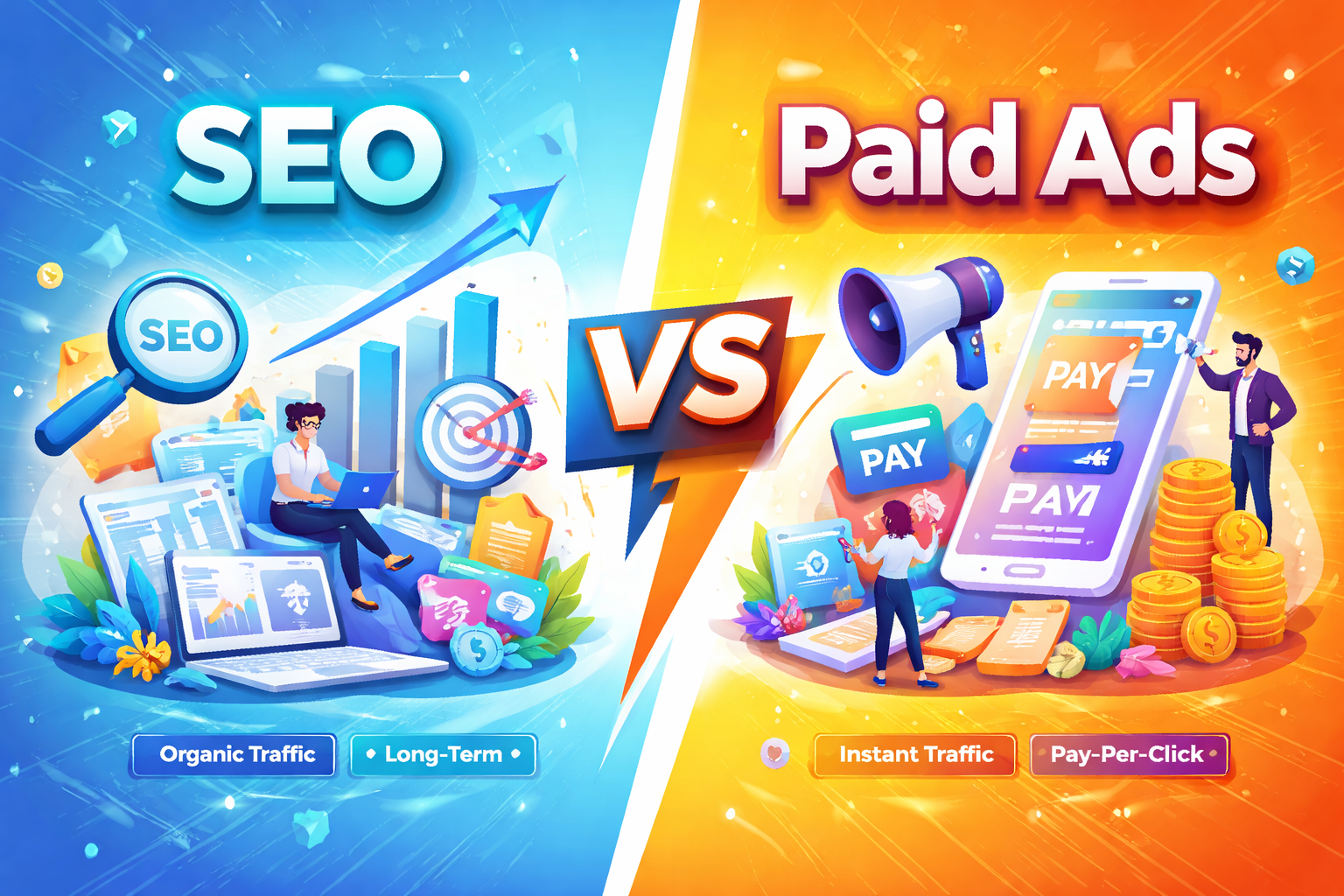
In 2026, the debate isn’t about which is better—it’s about how to use both effectively.
- SEO is your long-term growth engine
- Paid ads are your short-term accelerator
If you want sustainable success, combining both strategies is the smartest move.
Conclusion
Digital marketing in 2026 is more competitive, data-driven, and AI-powered than ever before. Businesses that rely on a single strategy risk falling behind.
SEO offers stability, credibility, and long-term growth, while paid ads provide speed, precision, and scalability. When used together, they create a powerful marketing ecosystem that drives consistent results.
Whether you’re a startup or an established brand, the key is to align your strategy with your goals, budget, and timeline. Investing in the right mix of SEO and paid advertising will ensure you stay ahead in the digital race.
For businesses looking to implement a winning strategy, ACSIUS delivers expert solutions tailored to modern marketing needs, helping brands achieve sustainable growth and measurable success in 2026 and beyond.
FAQs
Which is more cost-effective in 2026: SEO or Paid Ads?
SEO is generally more cost-effective in the long run because it brings free, consistent traffic once rankings are established. Paid ads require continuous spending, making them more expensive over time.
How long does SEO take to show results?
SEO typically takes 3 to 6 months to show noticeable results, depending on competition, industry, and strategy. In highly competitive niches, it may take longer.
Are paid ads better for small businesses?
Paid ads can be very effective for small businesses that need quick visibility and leads, especially during product launches or promotions. However, combining them with SEO is the best approach for sustainable growth.
Can SEO and Paid Ads work together?
Yes, combining SEO and paid ads is the most powerful strategy in 2026. Paid ads bring instant traffic, while SEO builds long-term authority and organic visibility.
Which strategy is better for long-term growth?
SEO is better for long-term growth because it creates a sustainable source of traffic without ongoing ad spend.
Do users trust SEO results more than ads?
Yes, users generally trust organic search results more than paid ads because they are seen as more credible and unbiased.
What are the risks of relying only on paid ads?
Relying only on paid ads can lead to:
- High ongoing costs
- Traffic stopping when budget ends
- Reduced ROI over time
Is SEO still relevant in 2026 with AI search?
Yes, SEO is more important than ever. With AI-driven search engines, optimizing for user intent, quality content, and experience is crucial for visibility.
What is the best strategy for digital marketing in 2026?
The best strategy is a balanced combination of SEO and Paid Ads, allowing businesses to achieve both immediate results and long-term success.