Enterprise software has come a long way from clunky desktop programs that crashed under heavy workloads. Today, businesses across manufacturing, finance, healthcare, retail, and logistics rely on robust Windows applications to manage everything from inventory and point-of-sale systems to complex data processing pipelines and internal operations tools. Despite the rise of web and mobile-first strategies, Windows remains the backbone of enterprise computing for millions of businesses worldwide, particularly in industries that require high-performance desktop software, offline capability, or deep integration with existing hardware and legacy systems.
But building a Windows application that’s actually scalable — one that can handle growing user loads, expanding feature sets, and evolving business requirements without collapsing under its own complexity — requires far more than basic coding skills. It demands a deep understanding of the .NET ecosystem, Windows API integrations, performance optimization, and architectural planning that anticipates future growth rather than just solving today’s problem. Businesses that skip this planning phase often end up with applications that work fine at launch but become unmanageable, slow, or riddled with technical debt within a year or two.
In this blog, we’ll explore what makes a Windows application truly scalable, why choosing the right development partner matters more than ever, and how a comprehensive, multi-platform approach to app development — spanning Windows, Android, and iOS — positions businesses for long-term digital growth.
Why Windows Application Development Still Matters in 2026
Despite the dominance of cloud and mobile-first thinking in tech conversations, Windows-based applications remain critical infrastructure for a huge share of global businesses. Manufacturing plants rely on Windows software to control production line systems. Financial institutions use Windows-based platforms for secure, high-performance transaction processing. Healthcare providers depend on Windows applications integrated with medical devices and electronic health record systems. Retailers use Windows-powered point-of-sale systems that need to function reliably even during internet outages.
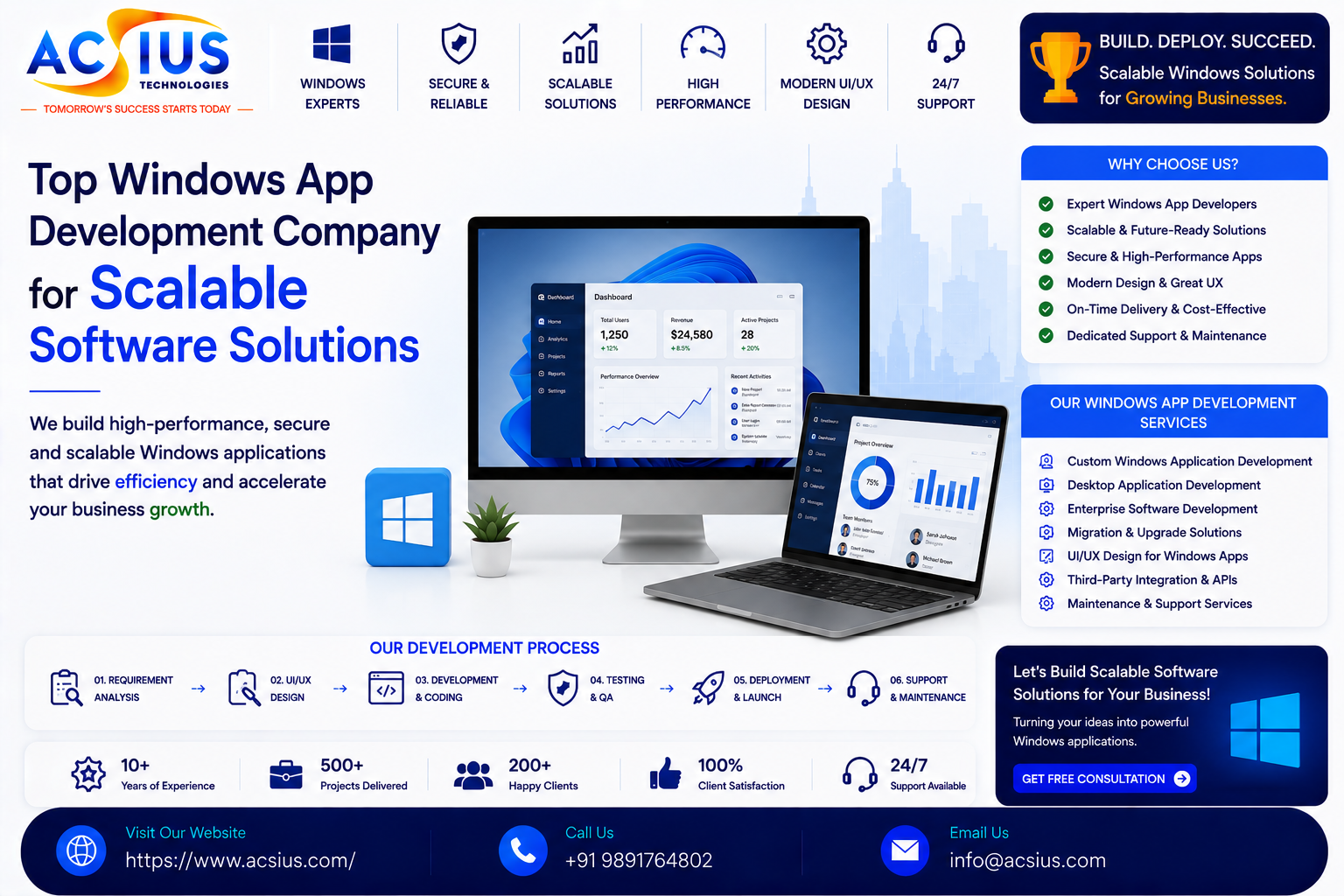
The common thread across these industries is a need for software that’s fast, secure, deeply integrated with existing hardware or systems, and capable of functioning both online and offline. This is exactly the kind of complex, high-stakes development work that requires genuine expertise. Partnering with an experienced Windows App Development Company ensures your business gets software built on solid architectural foundations — one designed not just to function today, but to scale smoothly as your operations, user base, and feature requirements grow over time.
What Makes a Windows Application Truly Scalable
Scalability isn’t just about handling more users; it’s about building software architecture that can adapt to increasing complexity without requiring a complete rebuild every time the business grows. Here’s what genuinely scalable Windows application development involves:
Modular Architecture
Well-architected applications are built with modular, loosely coupled components rather than tightly interwoven code. This allows developers to update, replace, or expand individual features without risking the stability of the entire system — critical for businesses that need to add new functionality over time without downtime or major rework.
Efficient Database Design
As data volume grows, poorly designed databases become a major bottleneck, slowing down application performance and making queries increasingly inefficient. Scalable applications are built with database architecture that anticipates growth, using proper indexing, normalization, and caching strategies from the outset.
Performance Optimization
Applications need to remain fast and responsive even as user load increases. This involves efficient memory management, optimized code execution, and careful handling of background processes so the application doesn’t slow down or crash under heavy use.
Cloud Integration and Hybrid Capability
Many modern Windows applications now integrate with cloud services for data synchronization, backup, and remote access, while still maintaining core offline functionality. This hybrid approach gives businesses flexibility without sacrificing the reliability that desktop applications are known for.
Security by Design
Enterprise applications, particularly those handling sensitive financial, healthcare, or operational data, need robust security built into the architecture from day one — including encryption, secure authentication, and regular vulnerability assessments — rather than security being treated as an afterthought.
Comprehensive Testing and Quality Assurance
Scalable software requires rigorous testing across different hardware configurations, user loads, and edge cases to ensure reliability as the application scales, rather than discovering critical bugs only after deployment to a growing user base.
The .NET Advantage: Why Framework Choice Matters
Modern Windows application development largely revolves around Microsoft’s .NET ecosystem, which offers powerful tools for building everything from lightweight utility applications to complex enterprise systems. The .NET framework provides strong support for object-oriented programming, extensive libraries, and seamless integration with other Microsoft technologies like SQL Server, Azure cloud services, and Active Directory — making it a natural choice for businesses already embedded in the Microsoft ecosystem.
Choosing the right framework and architectural approach from the start has long-term implications for how easily an application can scale, integrate with third-party systems, and adapt to future technology shifts. This is why working with developers who have deep, hands-on experience with .NET and related Windows development technologies is so important — the wrong architectural decisions made early in development can create significant technical debt that becomes expensive and time-consuming to fix later.
Beyond Windows: Why Multi-Platform Strategy Matters for Business Growth
While Windows applications remain essential for many enterprise use cases, most businesses today also need a presence on mobile platforms to serve customers, field employees, or remote teams who rely on smartphones and tablets rather than desktop computers. A comprehensive digital strategy increasingly means thinking beyond a single platform.
Android Development for Broader Market Reach
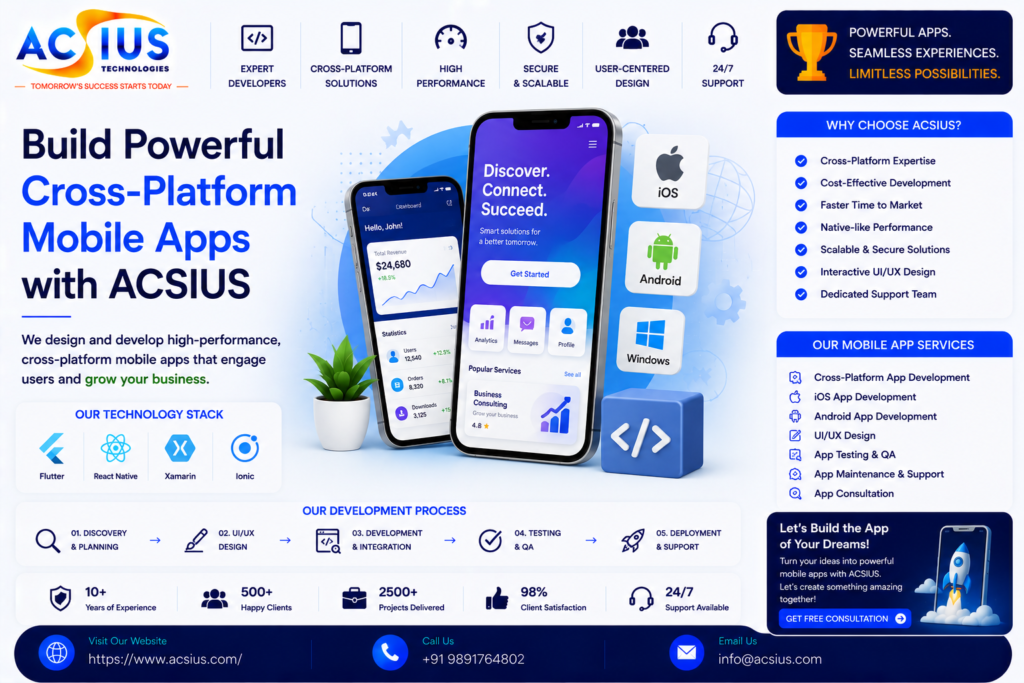
Android remains the most widely used mobile operating system globally, particularly across price-sensitive and emerging markets, making it essential for businesses that want to reach the broadest possible mobile audience. Whether it’s a customer-facing e-commerce app, a field service tool for employees, or an internal operations app, Android development requires its own specialized expertise in Java, Kotlin, and the Android SDK. Partnering with a skilled android development company ensures your mobile application performs reliably across the huge diversity of Android devices, screen sizes, and OS versions in the market — a challenge that’s uniquely complex compared to the more standardized iOS ecosystem.
IOS Development for Premium User Experience
On the other end of the spectrum, iOS remains the platform of choice for businesses targeting premium markets, particularly in regions like North America, Western Europe, and urban India, where iPhone adoption tends to correlate with higher spending power. IOS development requires expertise in Swift and Apple’s design and development guidelines, along with a deep understanding of Apple’s strict App Store review standards. Working with experienced ios app developers India gives businesses access to skilled talent capable of building polished, high-performance iOS applications at a significantly more competitive cost than hiring equivalent talent in Western markets, without compromising on quality or attention to detail.
Most Popular App Development Topics Businesses Are Searching For
Understanding what businesses are actively researching helps clarify where genuine value lies in app development partnerships. Some of the most searched topics in 2026 include:
- Native vs cross-platform app development – Businesses weighing the tradeoffs between platform-specific performance and the cost efficiency of frameworks like React Native or Flutter.
- How much does enterprise software development cost – Reflecting the need for realistic budgeting before committing to complex, custom-built solutions.
- Legacy system modernization – Many established businesses are looking to update aging Windows applications rather than fully replace them, preserving existing workflows while improving performance and security.
- Offline-first mobile app design – Particularly relevant for field service, logistics, and retail businesses operating in areas with unreliable internet connectivity.
- App development outsourcing India cost comparison – Businesses in the US, UK, and Australia increasingly researching cost-effective offshore development options without sacrificing quality.
- Cloud vs on-premise enterprise software – Companies evaluating whether to move traditionally desktop-based Windows applications toward hybrid or fully cloud-based architectures.
- App scalability planning for growing businesses – Reflecting growing awareness that software built without scalability in mind often requires costly rebuilds down the line.
A development partner that understands these concerns — and has genuine technical depth to address them — is far better positioned to deliver software that supports long-term business growth rather than short-term functionality alone.
Industry Applications Across Platforms
Manufacturing and Industrial Operations: Rely heavily on Windows-based control systems, inventory management software, and production monitoring tools that require deep hardware integration and offline reliability.
Healthcare: Uses Windows applications for electronic health records and medical device integration, alongside mobile apps for both Android and iOS that allow patients and providers to access information remotely.
Retail and E-Commerce: Depends on Windows-based point-of-sale systems in physical stores, combined with customer-facing mobile apps across both Android and iOS to capture the broadest possible customer base.
Logistics and Field Services: Often need offline-capable mobile applications for field workers, paired with Windows-based dashboard systems for back-office management and reporting.
Financial Services: Require highly secure Windows applications for internal operations, alongside mobile banking apps that must meet strict security and compliance standards across both major mobile platforms.
Education: Increasingly uses a combination of Windows-based administrative software and mobile learning applications to serve both institutional staff and students across different devices.
How to Choose the Right Development Partner
With so many development agencies claiming expertise across multiple platforms, evaluating genuine capability requires looking beyond marketing claims. Key factors to consider include:
Platform-Specific Expertise – Verify actual experience with the specific technologies relevant to your project, whether that’s .NET for Windows, Kotlin for Android, or Swift for iOS, rather than generalist claims of “full-stack” capability without depth in any single area.
Portfolio and Case Studies – Ask for examples of similar projects, particularly ones that demonstrate successful scaling as user bases or feature requirements grew over time.
Architectural Planning Process – A quality development partner will invest meaningful time in architecture and planning before writing code, rather than jumping straight into development without a clear scalability roadmap.
Post-Launch Support – Scalable software requires ongoing maintenance, updates, and performance monitoring. Ensure your partner offers long-term support rather than disappearing after initial deployment.
Security Practices – Particularly critical for enterprise and regulated industries, verify that security is treated as a core architectural consideration rather than an afterthought.
Transparent Communication and Project Management – Clear timelines, regular progress updates, and accessible communication channels are essential for complex, multi-month development projects.
The Cost of Getting Scalability Wrong
Businesses that skip proper scalability planning often face significant consequences down the line. Applications that weren’t built with growth in mind frequently require expensive rewrites once user loads or feature complexity exceed what the original architecture can handle. Poor database design leads to slowing performance as data volume grows, frustrating users and potentially driving them toward competitors. Security vulnerabilities introduced through rushed development can result in costly breaches or compliance violations, particularly in regulated industries like healthcare and finance.
Investing in proper architectural planning and experienced development talent upfront is almost always significantly less expensive than the cost of rebuilding or extensively patching poorly designed software after the fact.
Final Thoughts
Whether your business needs a robust Windows application for internal operations, a mobile app to reach customers on Android, or a polished iOS experience for premium markets, scalable software development requires genuine technical expertise and forward-thinking architectural planning. Businesses that invest in the right development partner from the start position themselves for smoother growth, lower long-term costs, and software that adapts as their needs evolve — rather than becoming a bottleneck that holds the business back.
If you’re ready to build scalable, high-performance software across Windows, Android, and iOS, ACSIUS brings the technical depth, architectural expertise, and multi-platform experience needed to deliver applications that grow with your business rather than requiring costly rebuilds down the line.
FAQs
How long does it take to build a scalable Windows application?
Timelines vary widely based on complexity. A simple utility application might take 4-8 weeks, while a full enterprise system with database integration, cloud connectivity, and custom features can take several months. A reliable development partner will provide a detailed timeline after an initial architecture and requirements assessment.
Should my business build separate apps for Android and iOS, or just one platform?
It depends on your target audience. If you're serving a broad consumer market, especially in price-sensitive regions, Android typically offers wider reach. If you're targeting premium markets or specific industries where iPhone adoption is high, iOS may be the priority. Many businesses eventually need both platforms — working with teams experienced in each ensures the app performs well on its respective operating system rather than feeling like a generic port.
What's the difference between native and cross-platform app development?
Native development (Kotlin/Java for Android, Swift for iOS, .NET for Windows) builds an application specifically for one platform, offering the best performance and deepest integration with platform-specific features. Cross-platform frameworks like React Native or Flutter allow a single codebase to run on multiple platforms, which can reduce cost and development time but sometimes involves tradeoffs in performance or access to newer OS features.
Can an outdated Windows application be modernized instead of rebuilt from scratch?
In many cases, yes. Legacy system modernization involves auditing the existing application, identifying which components can be upgraded or refactored, and gradually improving performance, security, and scalability without discarding the entire system. This is often more cost-effective than a full rebuild, provided the underlying architecture isn't too outdated to support meaningful upgrades.
How much does custom Windows, Android, or iOS app development cost?
Costs depend on complexity, feature set, integrations, and the platforms involved. Simple applications can start in the low thousands of dollars, while complex, multi-platform enterprise systems can run into six figures. Outsourcing development to experienced teams in India often provides significant cost savings compared to hiring equivalent talent in the US, UK, or Australia, without compromising on quality.
How do you ensure a Windows or mobile application stays secure?
Security should be built into the architecture from day one — including encrypted data storage, secure authentication protocols, regular vulnerability testing, and compliance with relevant industry standards (such as HIPAA for healthcare or PCI-DSS for payment processing). Ongoing monitoring and timely security updates after launch are equally important.
What happens after the app is launched? Is support included?
A trustworthy development partner offers post-launch support, including bug fixes, performance monitoring, OS compatibility updates, and feature enhancements. Since operating systems and devices are updated frequently, ongoing maintenance is essential to keep applications running smoothly over time.