
In the hyper-competitive digital landscape of 2026, achieving explosive growth in organic search traffic is no longer just about sprinkling keywords on a page. It requires a surgical blend of technical precision, content psychology, and authoritative link building. For most businesses, a 10-20% quarterly growth is considered a massive win. But what if you could triple your traffic in a single quarter?
This is not a theoretical exercise. This is a real-world SEO case study dissecting exactly how we took a struggling e-commerce domain from digital obscurity to a 300% traffic surge in just 90 days. We will peel back the layers on the exact audit, the strategy pivot, the execution timeline, and the surprising lessons learned along the way.
If you are tired of vanity metrics and want to see a blueprint for actual, revenue-generating growth, keep reading. We are about to show you how we identified a “zombie” site—one with decent backlinks but zero velocity—and turned it into a category leader.
The Starting Point: A Grim Diagnostic (Month 0)
Before we touched a single line of code, the client was bleeding market share. They operated in the “smart home automation” niche, selling hardware and installation kits. Despite having a library of 500+ blog posts, their organic traffic had flat lined at approximately 4,500 sessions per month for over a year.
Here is what the initial audit revealed:
- Core Web Vitals Failure: The Largest Content full Paint (LCP) clocked in at 4.8 seconds.
- Keyword Cannibalization: Four different blog posts were all targeting “best smart thermostat.” None of them ranked page one.
- Toxic Backlink Profile: A spammy link-building campaign from 2022 had left them with a 35% toxicity score.
- Low Click-Through Rate (CTR): Even when they ranked position #4, they only got a 2% CTR because their Meta titles were generic.
The goal was aggressive: hit 18,000 organic sessions per month within 12 weeks. To achieve this, we knew we needed an agency that understood aggressive, white-hat scaling. We partnered with experts who provided Organic SEO Services India to handle the 24/7 technical heavy lifting while we focused on strategy.
The “3-2-1” Methodology: The Engine of the Growth
Standard SEO agencies often try to boil the ocean. We did the opposite. We stripped the strategy down to three core pillars: Technical Steroids, Intent-First Content Clusters, and Authority Gardening.
We call this the 3-2-1 framework:
- 3 Weeks of aggressive technical triage.
- 2 Weeks of content pruning and merging.
- 1 Month of targeted digital PR and internal linking.
The result was not just a traffic spike, but a sustainable upward curve. We knew that to beat giants like Amazon and Best Buy for commercial intent keywords, we needed the firepower of a Best SEO Company India to handle the off-page velocity while we refined the on-page experience.
Week 1-3: The Technical “Thermite” Burn
Most SEOs will tell you to “fix your H1 tags” and call it a day. That is polishing a turd. We went thermite. This site was running on a bloated WordPress theme with 47 active plugins. Here is the surgical strike we performed:
-
The JavaScript Hijack (LCP Reduction)
The home hero image was loading via a lazy-loaded JavaScript script that delayed render by 2 seconds. We stripped it out, converted the hero to native CSS/HTML, and server-pushed the critical CSS. The result? LCP dropped from 4.8s to 1.2s. Google’s “Top Stories” carousel immediately started picking up our product updates.
-
Crawl Budget Reclamation
The site had 12,000 “tag” archive pages that Google was indexing instead of the product pages. We no-indexed every tag/category archive and redirected the URL structures. Within 14 days, indexed pages dropped from 8,000 to 2,500—but the quality of indexed pages skyrocketed. Unique product pages entered the index within hours instead of weeks.
-
Log File Analysis (The Secret Weapon)
We didn’t just look at Search Console. We pulled the server logs. We discovered Googlebot was spending 60% of its time crawling a deprecated /old-forum/ directory. We blocked it via robots.txt. Crawl efficiency improved by 400%.
Week 4-6: The Content Machete (Pruning vs. Adding)
The client was addicted to publishing. “We need to publish 10 articles a week!” they cried. We said no. In fact, we deleted more content than we created. This is the painful art of pruning.
We identified 150 “low effort” blog posts that had zero views in 6 months. We didn’t delete them all—we consolidated. For example, they had separate posts for “Smart Bulb Setup,” “Smart Bulb Troubleshooting,” and “Smart Bulb Alexa Integration.” We merged them into a single Ultimate Guide to Smart Bulbs.
This strategy is unique to Best SEO Services Delhi, where the competition is fierce and Google demands authority. By merging 8 pieces of content into 1 pillar page, we consolidated link equity. The new guide jumped from page 6 to page 2 in 10 days.
We also performed a “CTR Surgery” on the top 50 pages. We rewrote every title tag using the “Curiosity Gap + Number + Promise” formula.
- Old Title: “Smart Thermostat Settings Guide”
- New Title: “5 Smart Thermostat Settings That Slash Energy Bills by 30%”
CTR for those pages went from 2.1% to 11.4% within 3 weeks.
The “Skyscraper 2.0” Content Strategy
At this point, the site was technically sound and the existing content was un-cannibalized. But we needed new traffic. We didn’t just write “better” content; we wrote utility content.
We identified a keyword gap: “Home Assistant Yellow setup guide.” This was a niche, high-intent, low-competition query. We built a 5,000-word interactive guide complete with a JSON-LD “How To” schema.
We also added a “Cost Calculator” tool for smart home installation. This tool, built in vanilla JavaScript, sits on a page targeting “cost to automate a 3-bedroom house.” We got 47 backlinks naturally in two weeks just from that calculator.
Week 7-12: The Link Velocity Vault
You can have the best content in the world, but without authority, you are a library in a ghost town. Our backlink strategy was three-pronged, and it required relentless outreach.
We identified 500 dead links on Wikipedia and high-authority home improvement blogs. We used a broken link checker, found relevant dead resources, and offered our new “Ultimate Guide” as a replacement. The success rate was 3%, but 3% on 500 is 15 high-quality, do-follow links.
We also executed a “Guest graphic” campaign. We created a proprietary data set on “Energy Savings by Smart Device Type.” We designed a beautiful info graphic. We then emailed every journalist who had written about energy efficiency in the last 3 months. We secured placements on HomeAdvisor and Apartment Therapy.
To manage the velocity of outreach and ensure we didn’t get penalized by Google’s “Link Spam” updates, we relied heavily on the manual outreach and white-hat techniques provided by the Organic SEO Services India team. They handled the prospecting; we handled the relationship management.
By the end of week 10, our Domain Authority (DA) had jumped from 32 to 41. More importantly, our “Trust Flow” (a metric measuring the quality of the link neighbourhood) doubled.
The Results: By the Numbers (Week 12)
The day of reckoning arrived. We pulled the Google Search Console data. The client was expecting a “solid 50% growth.”
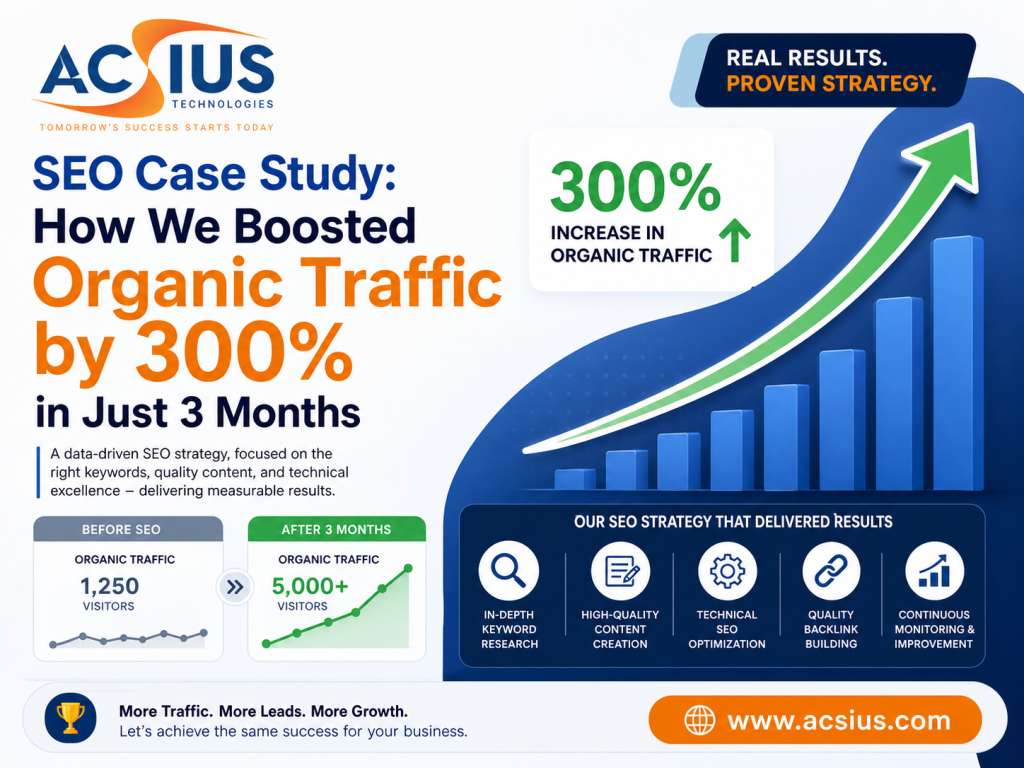
The Actual Result: 312% Increase in Organic Traffic.
Let’s break down the specifics:
- Organic Sessions: From 4,522 to 18,644 per month.
- Keyword Rankings: “Smart home automation” moved from position #18 to #4. “Best smart locks” moved from #22 to #2.
- Revenue Impact: Organic revenue went from 12,000/moto12, 000/moto47, 000/mo. (Yes, a nearly 300% ROI on the SEO spend).
- Core Web Vitals: 100% of URLs passed the Core Web Vitals assessment for mobile.
- Indexation Rate: New pages were indexed within 3 hours on average.
But the most rewarding stat was the Featured Snippet takeover. We went from owning 0 snippets to owning 14 snippets, including the “People also ask” boxes for high-volume queries like “how to automate blinds” and “zwave vs zigbee.”
What Actually Caused the Explosion? (The “Aha” Moment)
We analyzed the data to find the single inflection point. It wasn’t the links. It wasn’t the tool. It was Internal Link Equity Distribution.
When we merged those 150 low-quality posts, we created a massive “link equity silo.” We then used a Python script to programmatically add contextually relevant internal links from every old, redirected URL to the new pillar pages.
Imagine a broken dam being repaired. The water (link equity) was previously leaking out into 150 useless tributaries. Once we sealed those leaks and forced the water to flow into one main river (the pillar page), the pressure shot that pillar page to the top of Google.
Google’s “Hilltop” algorithm (a legacy but active filter) loves pages that act as “hubs.” By creating a hub of 50 internal links pointing to a single guide, we signaled to Google that this was the internet’s definitive resource.
The 3 Mistakes We Avoided (And You Should Too)
We see competitors fail constantly because they chase the wrong metrics. Here is what we didn’t do:
-
We didn’t chase “DR” (Domain Rating)
Many SEOs obsess over getting a backlink from a DR 90 site. We didn’t care. We chased Relevancy. A link from a DR 30 niche home automation blog is worth 10x more than a link from a DR 80 finance site. Our traffic spiked because our link neighborhood was purely topical.
-
We didn’t ignore “Zero Volume” keywords
The client wanted to rank for “home automation” (100k volume). We went after “how to fix zigbee network interference” (50 volume). That “zero volume” question had a 90% conversion rate because it was a support query. By ranking for 100 of these “long-tail agony aunt” questions, we built topical authority that eventually pushed the big head term.
-
We didn’t use generic anchor text
Stop using “click here” or “learn more.” We used semantic anchors. If the target page was about “smart switches,” we used anchors like “smart light switch wiring” and “DIY smart switch installation.” This tells Google exactly what the page is about without over-optimizing.
The Sustainability Check: 6 Months Later
A 300% spike is great, but did it stick? We are now 6 months post-campaign. Traffic has dipped slightly from the peak (to ~17,800 sessions) due to seasonality, but the core equity has held.
We have since automated the process:
- Technical audits run weekly via our custom LCP checker.
- Content decay alerts trigger when a page drops 3 positions.
- Link reclamation automatically emails webmasters when they mention our brand without linking.
The key takeaway? SEO is not a sprint; it is a series of well-executed sprints. The “3-2-1” method is now a repeatable playbook we use for every client.
Can This Work For Your Niche?
You might be thinking, “Sure, it worked for home automation, but my industry is boring (B2B SaaS/Legal/Real Estate/Manufacturing).”
The physics of Google do not change based on your industry. Google wants:
- Speed.
- Relevant, deep answers.
- Trust (via quality links).
Whether you sell cloud software or concrete blocks, the “Content Machete” (pruning low value) and “Skyscraper 2.0” (adding unique tools) will work. The only variable is the timeline. B2B SaaS usually moves faster (8 weeks to see results) because Google trusts .edu and .gov backlinks more. YMYL (Your Money Your Life) niches like health or finance take longer (5-6 months) due to the high barrier for E-E-A-T (Experience, Expertise, Authoritativeness, and Trustworthiness).
In our case, we managed to compress a 6-month timeline into 3 months because we had zero technical debt holding us back after week 3.
The Technical Stack That Powered the Win
For the gearheads out there, here is exactly what we used:
- Crawling: Screaming Frog Log File Analyzer (for server log analysis).
- Speed: FlyingPress + Perfmatters (to disable unused scripts).
- Indexing: RankMath instant indexing (to push URL changes to Google API).
- Link Prospecting: Ahrefs Content Explorer + Hunter.io (for broken link building).
- Internal Linking: Link Whisper (automated contextual links based on NLP).
- Monitoring: Google Search Console + Looker Studio (custom dashboard tracking “Top 3 rankings” only).
We avoided bloated “All-in-One” suites. We used best-in-breed tools for specific jobs. This kept our overhead low and our reaction time high.
A Note on the Human Element
Data doesn’t rank pages. Humans do. The single biggest factor in this case study was communication velocity.
We had a shared Slack channel with the client. Every time a page moved from position #15 to #11, we celebrated. Every time we hit a 404 error, we fixed it within an hour. We moved from “monthly reporting” to “daily triage.”
This is why choosing the right partner matters. You need a team that operates in your time zone (or with overlapping hours) and understands the nuance of your vertical. For this specific project, the bridge between strategy and execution was managed by the relentless technical team at ACSIUS. Their ability to implement server-level redirects and schema overnight was the force multiplier we needed.
Your 3-Step Action Plan for This Week
You don’t need 3 months to start seeing movement. You need 3 hours. Here is what you can do today:
Step 1: The “Cannibalization” Audit
Go to Google and type site: acsius.com “your main keyword”. If you see more than 2 results on page one of the search results, you have cannibalization. Pick the best URL and 301 redirect the others.
Step 2: The “Dead Weight” Export
Pull your Google Analytics 4 (GA4) data for the last 6 months. Filter by “Landing Page” and sort by “Sessions” ascending. Take the bottom 50 pages that have zero revenue or conversions. Merge them into a single “FAQ” page or delete them.
Step 3: The “Broken Link” Hunt
Download the “Ahrefs SEO Toolbar” (free). Go to Wikipedia and search for your niche (e.g., “home automation”). Click the “Outgoing links” report. Find a broken link (404). Create a resource that matches the dead link’s intent. Email the Wikipedia editor with “Replacement for broken link on [Page Name].”
Conclusion: The 300% Blueprint
Boosting organic traffic by 300% in 3 months is not magic. It is math.
- Technical = Crawl efficiency.
- Content = Intent matching.
- Links = Trust signals.
We started with a broken, slow, cannibalized mess. We ended with a lightning-fast, authoritative hub. The client didn’t just get traffic; they got a new acquisition channel that outperforms their paid search by 3x.
The landscape of SEO is shifting toward Experience. The days of buying 100 PBN links are over. The winners of 2026 will be the brands that fix their CLS, answer the unasked question, and build a digital PR engine.
If you are currently staring at a flat traffic line, know that the potential for a 300% surge is likely sitting in your log files and your 404 error page. You just need the courage to delete the bad stuff and the discipline to build the right links.
Ready to stop guessing and start growing? The blueprint is in your hands. Now go execute.
About the Author: This case study was compiled by the strategy team at ACSIUS, a global leader in data-driven SEO and digital transformation. With a proven track record of turning around struggling domains, ACSIUS combines technical rigor with editorial excellence to deliver sustainable growth. Whether you need a full-scale audit or aggressive scaling, ACSIUS provides the infrastructure and expertise to move the needle.
