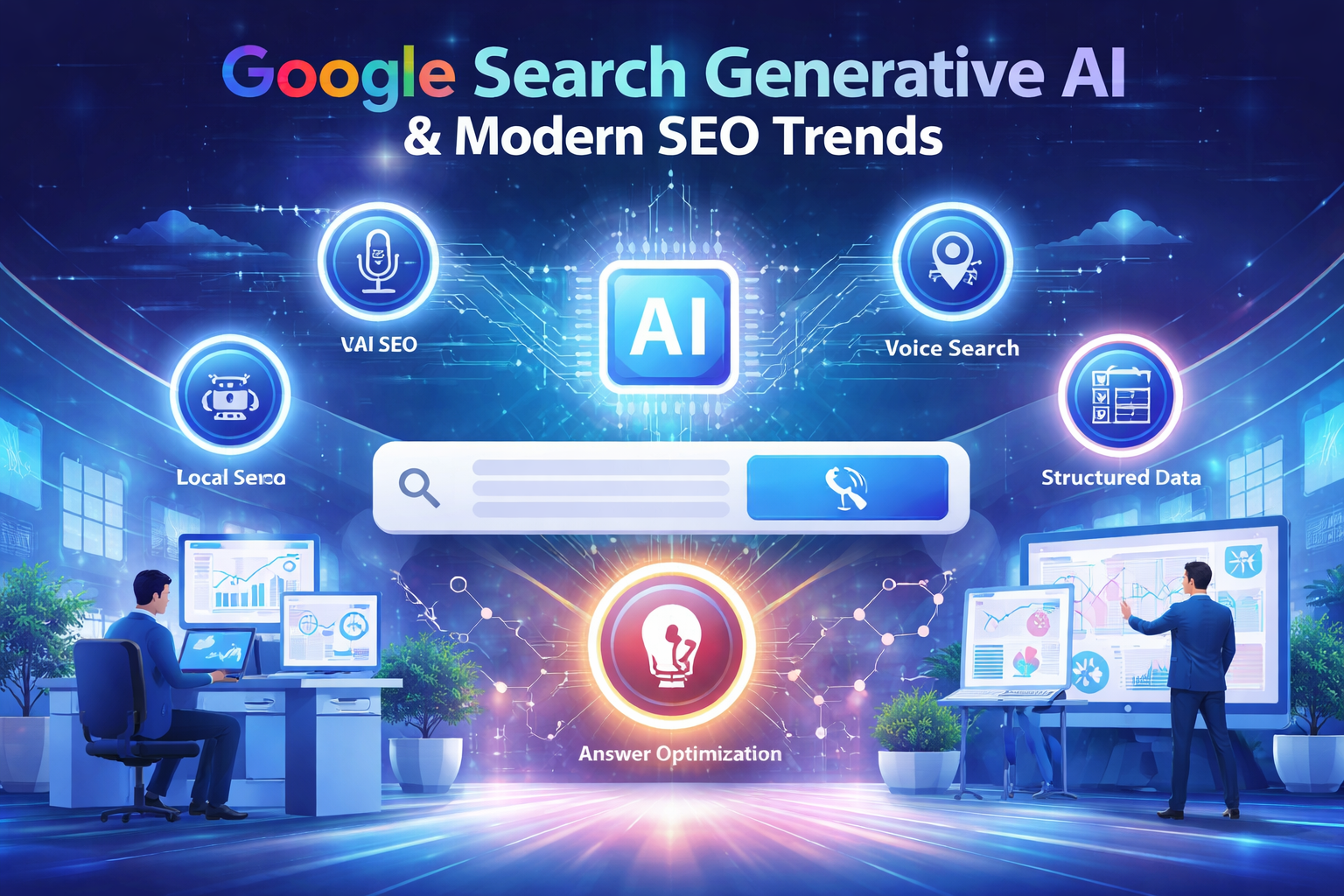
The digital landscape is evolving faster than ever, and at the heart of this transformation is Google’s Search Generative AI (SGE). As artificial intelligence continues to redefine how users interact with search engines, businesses must adapt their SEO strategies to stay competitive. Traditional keyword-focused approaches are no longer enough—modern SEO now requires a deep understanding of user intent, content quality, and AI-driven search behavior.
Google’s integration of generative AI into its search ecosystem is a game-changer. Instead of simply displaying a list of blue links, search results are becoming more conversational, contextual, and personalized. Users are now presented with AI-generated summaries that provide instant answers, reducing the need to click through multiple websites. This shift is forcing marketers and businesses to rethink how they approach visibility, authority, and engagement online.
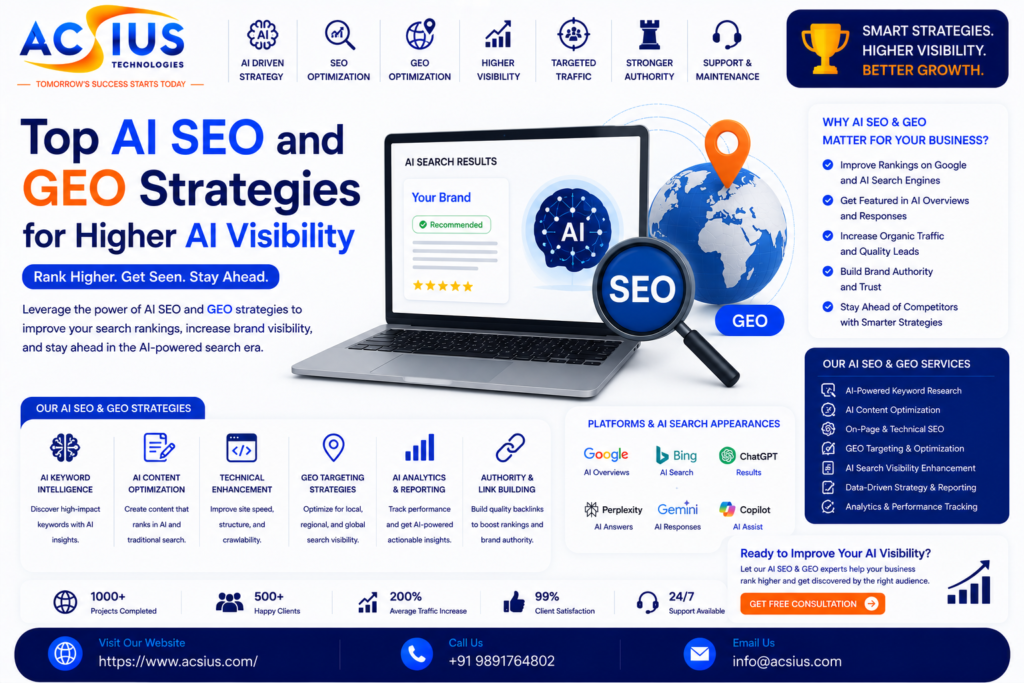
To stay ahead in this new era, businesses are increasingly investing in advanced SEO solutions such as AI SEO Services India, which are specifically designed to align with AI-driven search algorithms and answer engine optimization strategies.
Understanding Google Search Generative AI (SGE)
Search Generative AI is Google’s next step in enhancing user experience. It uses advanced machine learning models to generate responses directly within the search results page. Instead of just indexing and ranking pages, Google now interprets content, synthesizes information, and delivers concise answers.
This means that content creators are no longer competing solely for rankings—they are competing for inclusion in AI-generated summaries. The importance of structured, high-quality, and authoritative content has never been greater.
SGE focuses heavily on:
- Contextual understanding of queries
- Natural language processing (NLP)
- User intent prediction
- Content reliability and authority
As a result, SEO strategies must evolve from keyword stuffing to creating meaningful, informative, and well-structured content.
The Shift from Traditional SEO to AI-Driven SEO
Traditional SEO relied heavily on keyword density, backlinks, and technical optimization. While these factors still matter, AI-driven SEO emphasizes user experience, relevance, and semantic search.
Modern search engines understand:
- Synonyms and related terms
- Search intent behind queries
- Conversational language patterns
This shift means that businesses must create content that answers questions comprehensively rather than just targeting specific keywords.
Key Changes in SEO:
- From keywords to topics
- From backlinks to authority
- From traffic to engagement
- From ranking to visibility in AI results
Rise of Answer Engine Optimization (AEO)
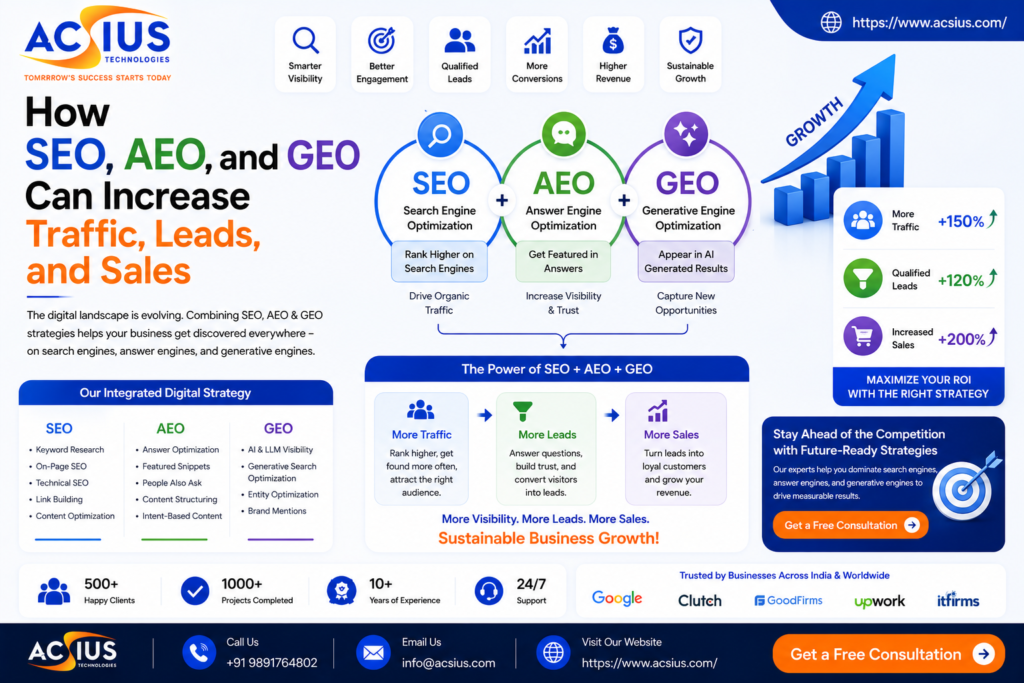
One of the most significant trends in modern SEO is Answer Engine Optimization (AEO). With AI-generated responses becoming more prominent, optimizing content to appear in these answers is critical.
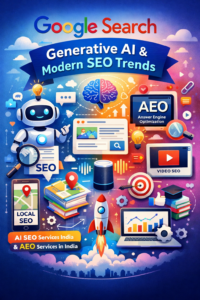
AEO focuses on:
- Direct answers to user queries
- Featured snippets optimization
- Structured data markup
- FAQ-based content
Websites that provide clear, concise, and authoritative answers are more likely to be featured in AI-generated results.
Importance of High-Quality Content
Content remains king—but the definition of quality has changed. In the era of AI, content must be:
- Informative and well-researched
- Easy to understand
- Structured with headings and subheadings
- Written in a conversational tone
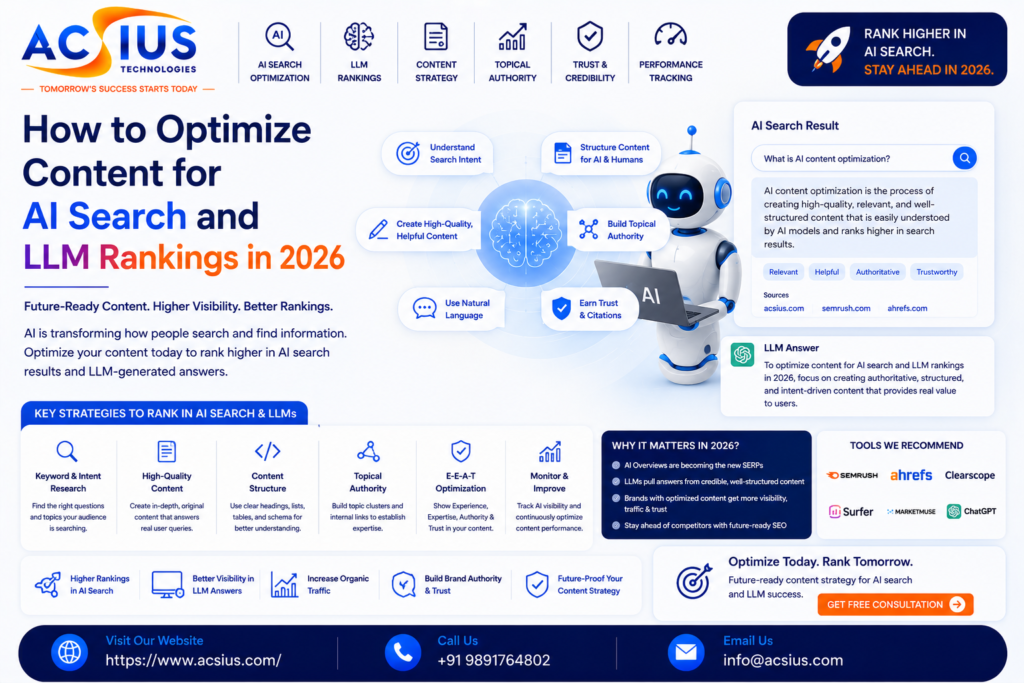
Google’s AI prioritizes content that demonstrates Expertise, Experience, Authoritativeness, and Trustworthiness (E-E-A-T).
Tips for Creating AI-Friendly Content:
- Use natural language
- Answer specific questions
- Include examples and data
- Keep content updated
Semantic Search and User Intent
Semantic search allows Google to understand the meaning behind search queries rather than just matching keywords. This means your content should align with user intent, which can be:
- Informational
- Navigational
- Transactional
- Commercial
Understanding intent helps you create content that satisfies user needs and improves your chances of ranking in AI-generated results.
Role of Structured Data and Schema Markup
Structured data helps search engines understand your content better. By implementing schema markup, you can enhance your visibility in rich results and AI summaries.
Common types of schema include:
- FAQ schema
- How-to schema
- Product schema
- Review schema
These elements make your content more accessible to AI algorithms and increase your chances of being featured.
Voice Search and Conversational Queries
With the rise of voice assistants, search queries are becoming more conversational. Users are asking complete questions instead of typing short phrases.
For example:
- “Best SEO services India” becomes
- “What are the best SEO services in India for small businesses?”
To optimize for voice search:
- Use long-tail keywords
- Write in a natural tone
- Focus on question-based content
Mobile-First and User Experience Optimization
Google prioritizes mobile-first indexing, which means your website must be optimized for mobile devices. A seamless user experience is essential for both rankings and engagement.
Key factors include:
- Fast loading speed
- Responsive design
- Easy navigation
- Minimal bounce rate
AI algorithms also consider user behavior, such as time spent on page and interaction rates.
The Role of AI Tools in SEO
AI tools are transforming how SEO professionals work. From keyword research to content generation, AI is streamlining processes and improving efficiency.
Popular uses of AI in SEO:
- Content creation and optimization
- Keyword clustering
- Competitor analysis
- Predictive analytics
However, human oversight is still crucial to ensure accuracy, creativity, and authenticity.
Local SEO in the AI Era
Local SEO is becoming more important as users search for nearby services. AI enhances local search by providing personalized results based on location and preferences.
To optimize for local SEO:
- Use Google Business Profile
- Include location-based keywords
- Gather customer reviews
- Optimize for “near me” searches
Evolving Link Building Strategies
Backlinks remain important, but quality matters more than quantity. AI evaluates the credibility and relevance of linking websites.
Modern link-building strategies include:
- Guest blogging
- Digital PR
- Influencer collaborations
- Content partnerships
Focus on earning links from authoritative and relevant sources.
Video and Visual Search Optimization
Visual content is gaining traction in search results. Google’s AI can now analyze images and videos to understand their context.
To optimize visual content:
- Use descriptive file names
- Add alt text
- Include captions
- Optimize video titles and descriptions
Platforms like YouTube also play a significant role in SEO strategies.
Personalization and Predictive Search
AI enables personalized search experiences by analyzing user behavior, preferences, and history. This means search results can vary from one user to another.
Businesses must:
- Understand their audience
- Create targeted content
- Use data-driven strategies
Personalization improves user engagement and conversion rates.
Future of SEO with Generative AI
The future of SEO lies in adaptability. As AI continues to evolve, businesses must stay updated with the latest trends and technologies.
Key future trends:
- AI-generated content summaries
- Increased focus on user intent
- Integration of AR/VR in search
- Enhanced personalization
SEO will become more dynamic, requiring continuous learning and innovation.
Different SEO Services and Keyword Topics
To succeed in modern SEO, businesses must leverage a variety of services tailored to their needs:
Technical SEO Services
Focus on improving website performance, indexing, and crawlability.
On-Page SEO Services
Optimize content, meta tags, headings, and internal linking.
Off-Page SEO Services
Build authority through backlinks and brand mentions.
Content Marketing Services
Create high-quality, engaging, and informative content.
Local SEO Services
Target location-based searches and improve local visibility.
E-commerce SEO Services
Optimize product pages and improve online store rankings.
Voice Search Optimization
Enhance content for conversational queries.
AI-Based SEO Services
Leverage AI tools for advanced optimization and analytics.
Challenges in AI-Driven SEO
While AI offers numerous benefits, it also presents challenges:
- Reduced organic click-through rates
- Increased competition for visibility
- Need for continuous content updates
- Dependence on AI algorithms
Businesses must adopt a balanced approach to overcome these challenges.
Conclusion
Google Search Generative AI is revolutionizing the way users interact with search engines, making SEO more complex yet more exciting. The focus has shifted from simply ranking on search engines to becoming a trusted source of information that AI systems rely on.
To thrive in this evolving landscape, businesses must embrace modern SEO trends, prioritize user intent, and invest in advanced strategies like AI SEO and Answer Engine Optimization. By doing so, they can ensure long-term visibility, credibility, and success in the digital world.
Partnering with an experienced digital marketing company like ACSIUS can help businesses navigate these changes effectively. With expertise in cutting-edge SEO techniques and AI-driven strategies, ACSIUS empowers brands to stay ahead of the competition and achieve sustainable growth in the era of generative search.
FAQs
How does SGE impact traditional SEO?
SGE reduces reliance on traditional ranking positions by prioritizing content that can be used in AI-generated answers. This means SEO now focuses more on content quality, relevance, and user intent rather than just keywords and backlinks.
What is the difference between SEO and AEO?
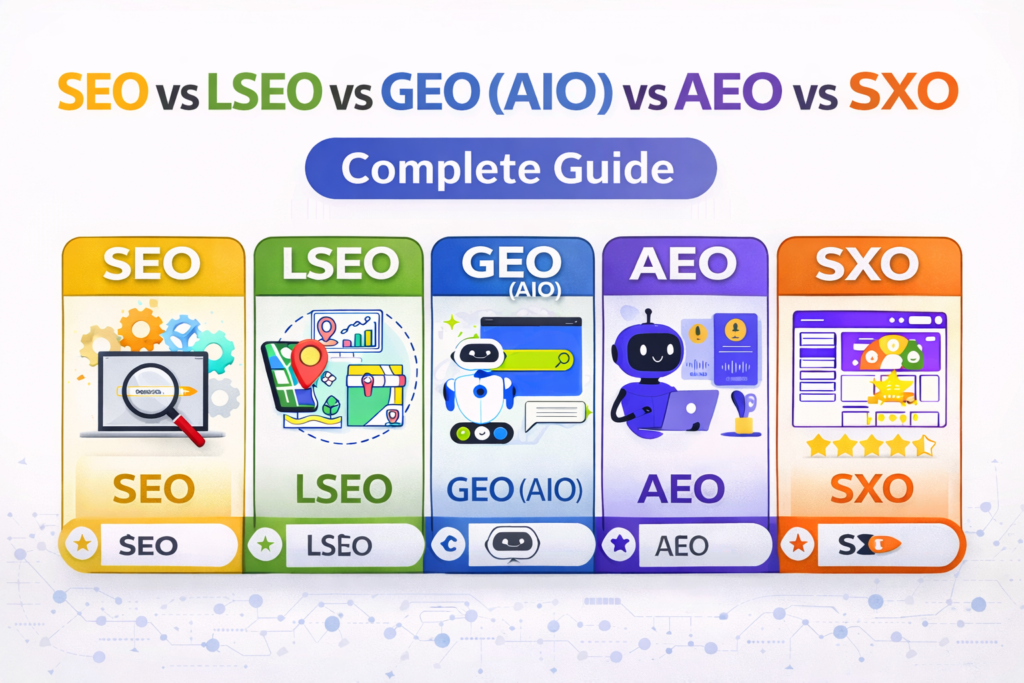
SEO (Search Engine Optimization) focuses on improving website rankings in search results, while AEO (Answer Engine Optimization) focuses on optimizing content to appear in AI-generated answers, featured snippets, and voice search results.
Why are AI SEO Services important in 2026?
AI SEO services help businesses adapt to evolving search algorithms by using machine learning, automation, and data analysis to improve rankings, content performance, and user engagement in AI-driven search environments.
How can I optimize my website for AI-generated search results?
To optimize for AI-generated results:
- Create high-quality, informative content
- Use structured data and schema markup
- Focus on answering user questions clearly
- Optimize for conversational and long-tail keywords
What is Answer Engine Optimization (AEO)?
AEO is the process of optimizing content to provide direct, concise answers to user queries. It helps your content appear in featured snippets, voice search results, and AI-generated summaries.
Does keyword research still matter in modern SEO?
Yes, but the approach has changed. Instead of focusing only on exact keywords, modern SEO emphasizes topic clusters, semantic search, and user intent.
How does voice search affect SEO strategies?
Voice search encourages the use of natural language and question-based queries. Websites must optimize for conversational keywords and provide clear answers to common questions.
What role does content quality play in AI SEO?
Content quality is critical. Google prioritizes content that demonstrates expertise, authority, and trustworthiness (E-E-A-T), making well-researched and user-focused content essential.
Can small businesses benefit from AI-driven SEO?
Yes, AI-driven SEO levels the playing field by allowing small businesses to compete through high-quality content, niche targeting, and personalized strategies.
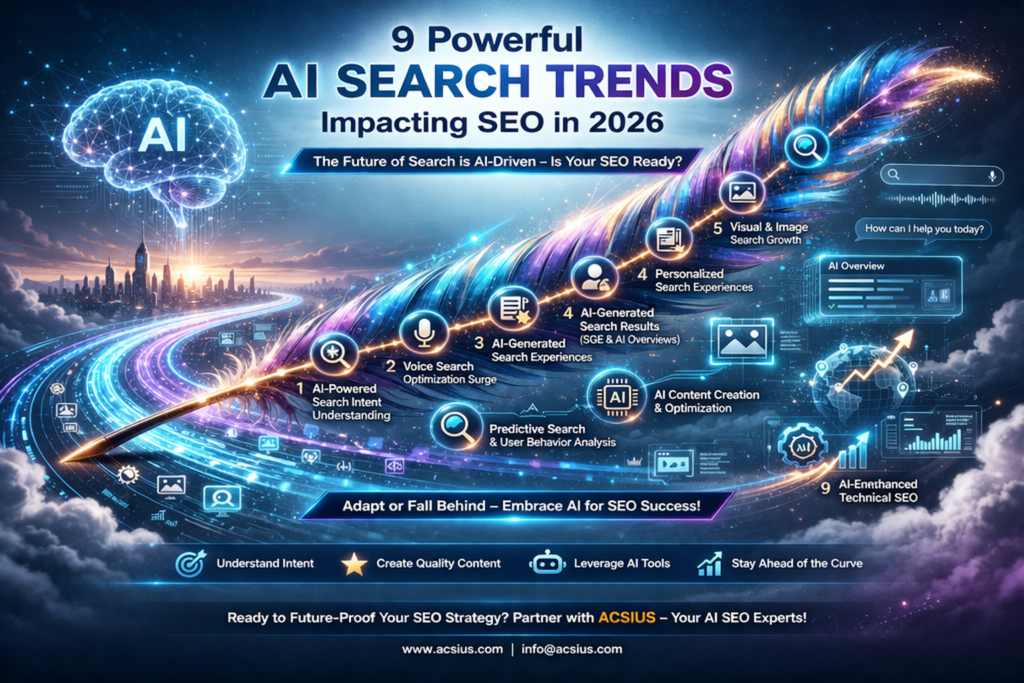
What are the key trends in modern SEO?
Some major trends include:
- AI-powered search results
- Answer Engine Optimization (AEO)
- Voice and visual search
- Mobile-first indexing
- Personalized search experiences
How often should I update my SEO strategy?
SEO is constantly evolving, so it’s recommended to review and update your strategy regularly—at least every 3 to 6 months—to stay aligned with algorithm changes and new trends.
What are the benefits of using structured data?
Structured data helps search engines understand your content better, improving your chances of appearing in rich results, featured snippets, and AI-generated answers.
Is link building still important in AI SEO?
Yes, but quality matters more than quantity. High-authority and relevant backlinks significantly improve your website’s credibility and ranking potential.
How can ACSIUS help with modern SEO strategies?
ACSIUS provides advanced SEO solutions, including AI-driven optimization, content strategy, technical SEO, and AEO services to help businesses achieve better visibility and long-term growth in the evolving search landscape.