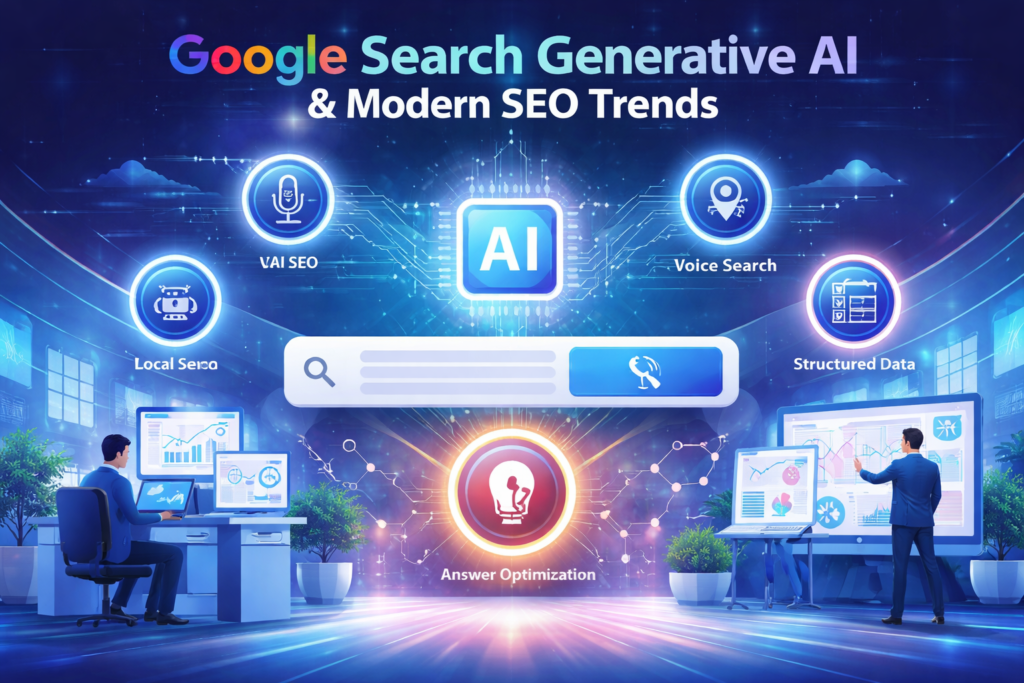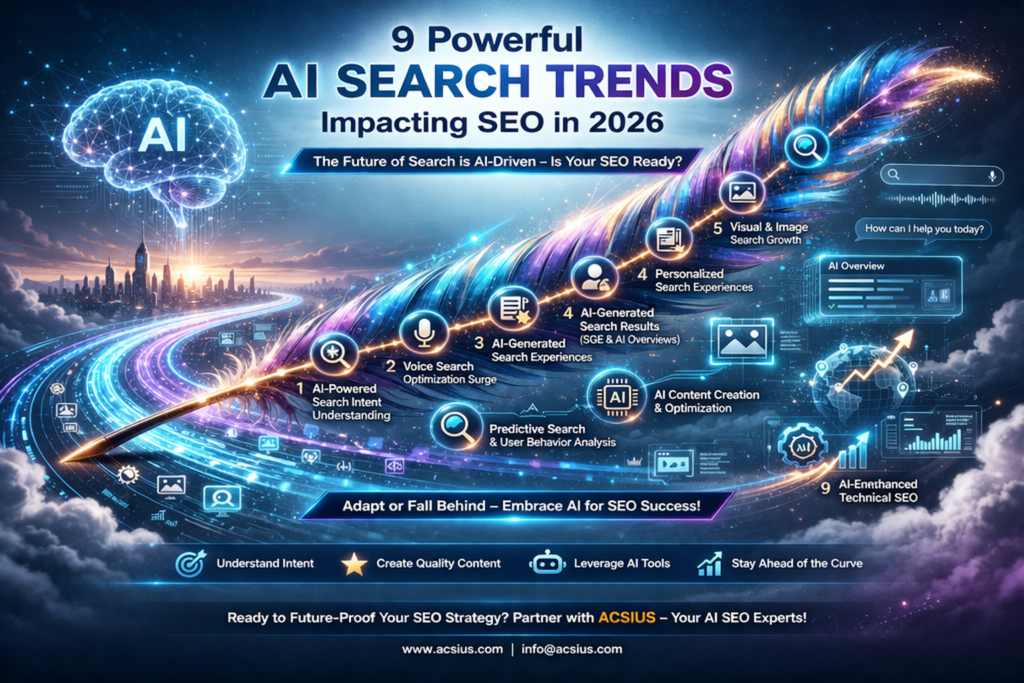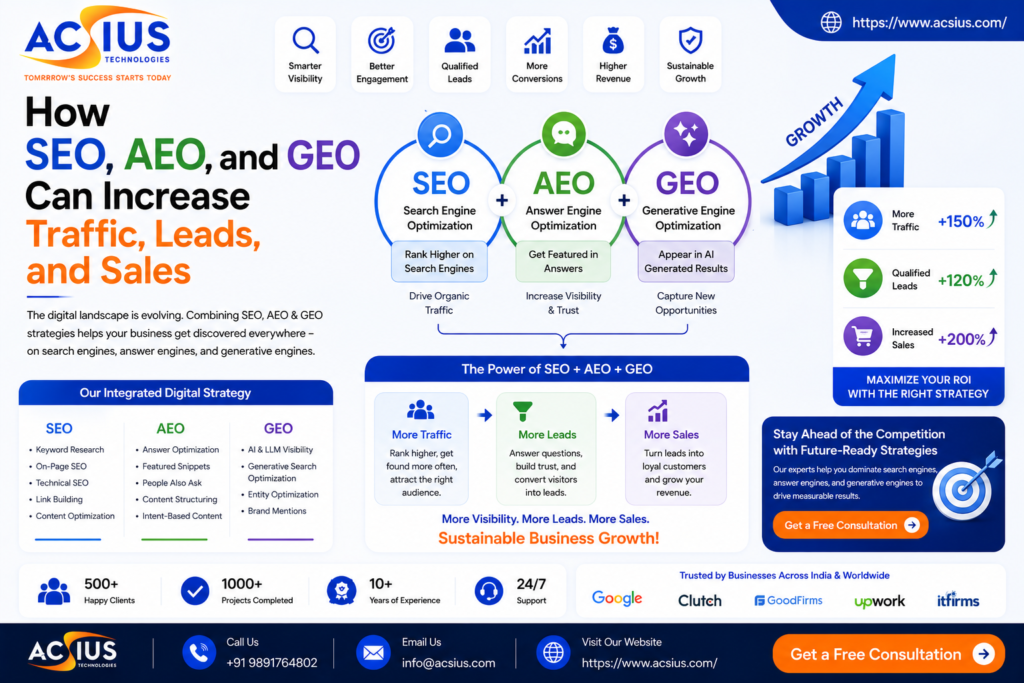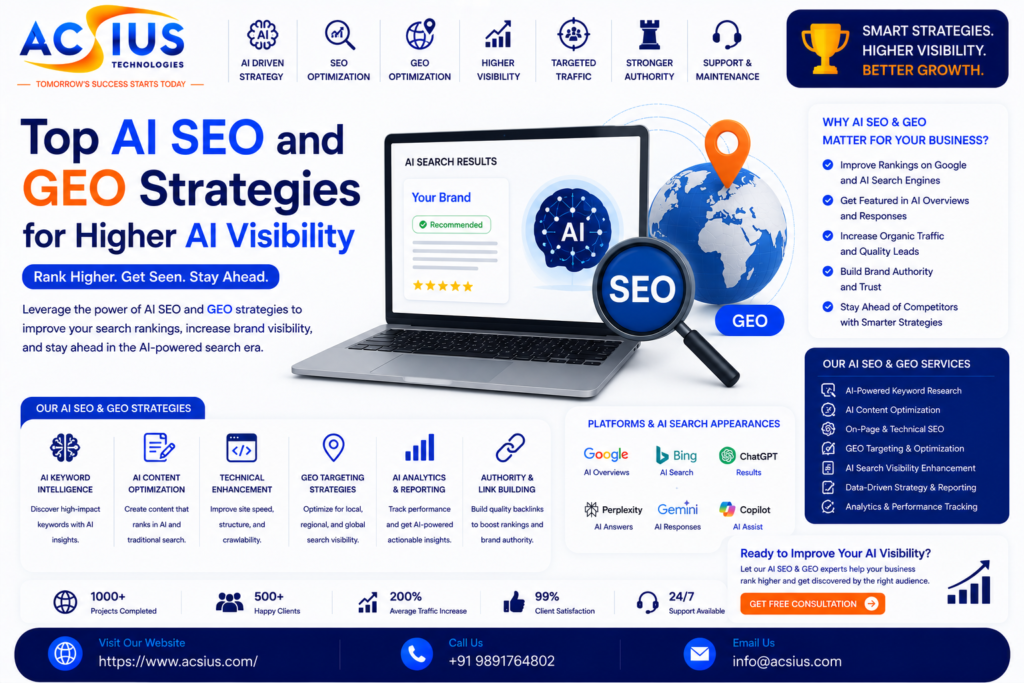
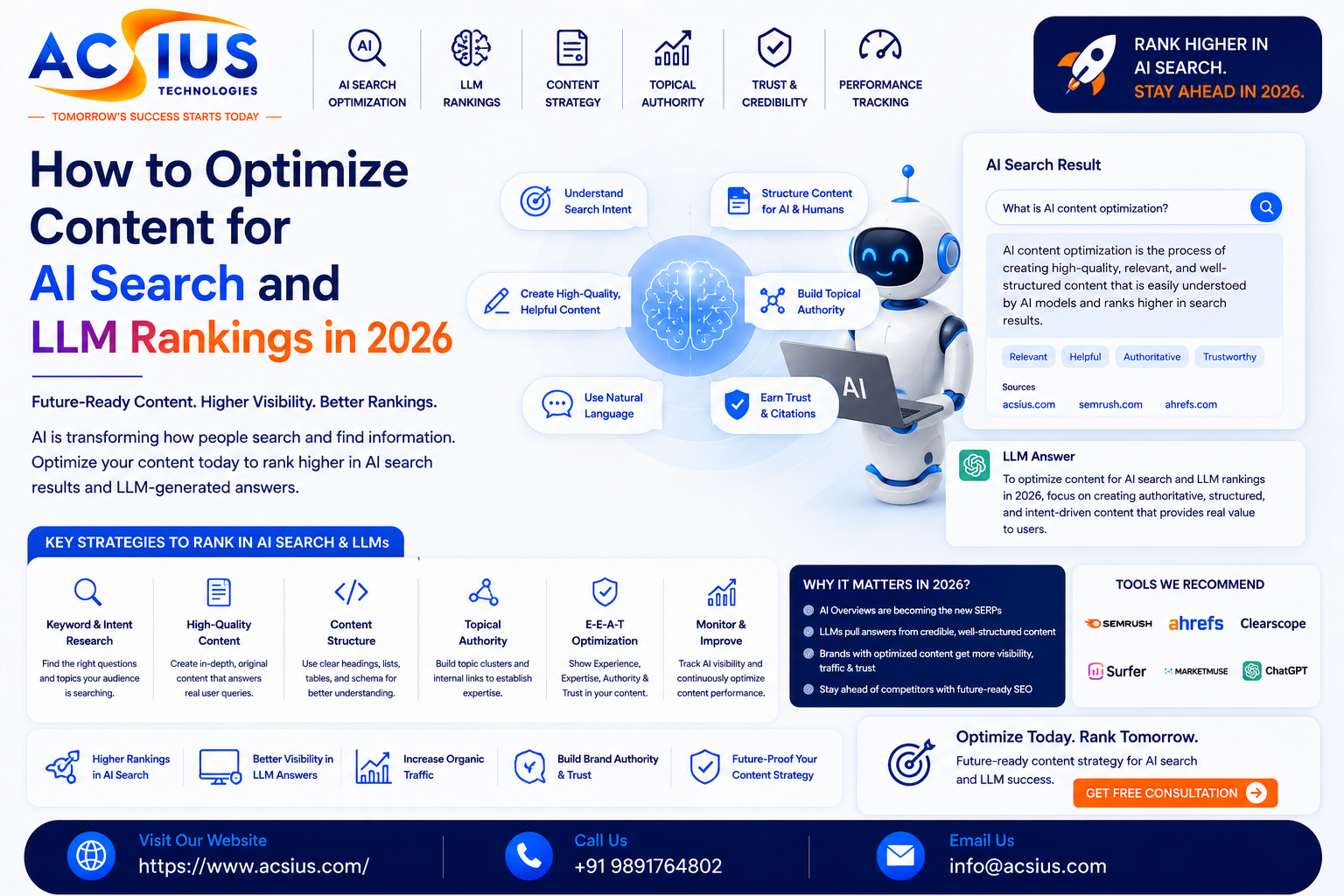
Artificial Intelligence has transformed the way people discover information online. Traditional search engines are no longer the only source users rely on. AI-powered search platforms, Large Language Models (LLMs), and conversational search assistants are changing how content is found, understood, and recommended. In 2026, businesses must optimize their websites not only for Google but also for AI search engines such as ChatGPT, Gemini, Claude, Perplexity, and other AI-driven search experiences.
Content optimization for AI Search is about creating helpful, trustworthy, structured, and authoritative information that language models can easily understand and reference. Unlike traditional SEO that focuses heavily on keywords and backlinks, AI optimization emphasizes topical authority, semantic relevance, user intent, factual accuracy, and structured content.
Whether you own an eCommerce website, business website, SaaS platform, or service-based company, adapting your SEO strategy for AI search is no longer optional. Companies that invest in modern optimization techniques will enjoy better visibility, increased organic traffic, stronger brand authority, and higher-quality leads.
After implementing a strong AI-focused strategy, businesses should also invest in Organic SEO Services to strengthen long-term rankings across both traditional search engines and AI-powered search platforms.
What is AI Search?
AI Search refers to search systems powered by Large Language Models that generate direct answers instead of simply displaying a list of web pages. These systems analyze multiple trusted sources, summarize information, and provide conversational responses.
Popular AI Search platforms include:
- ChatGPT Search
- Google AI Mode
- Google AI Overviews
- Microsoft Copilot
- Perplexity AI
- Claude AI
- Gemini AI
These platforms prioritize high-quality, trustworthy, and well-structured content over pages created only for keyword rankings.
Why AI Search Optimization Matters in 2026
AI-generated answers are replacing traditional search results for millions of users every day. Instead of clicking ten different websites, users receive complete answers within seconds.
Businesses that fail to optimize for AI search risk losing valuable visibility, even if they rank well in traditional Google search.
Some major benefits include:
- Higher brand visibility
- Better organic traffic
- Increased authority
- More qualified leads
- Improved user trust
- Better search experience
- Long-term SEO success
How AI Search Differs from Traditional SEO
Traditional SEO focuses on:
- Keywords
- Meta titles
- Meta descriptions
- Backlinks
- Internal linking
- Technical optimization
AI Search focuses on:
- Helpful content
- Expertise
- Context
- Topical authority
- Semantic relationships
- Structured information
- User intent
- Entity optimization
- Trust signals
Successful businesses combine both strategies.
Understanding User Intent
AI models analyze the real intent behind every search query.
There are four major search intents:
Informational Intent
Example:
- What is AI SEO?
- How does AI Search work?
Navigational Intent
Example:
- ACSIUS SEO Services
- Google Search Console
Commercial Intent
Example:
- Best SEO company in India
- SEO packages
Transactional Intent
Example:
- Hire SEO agency
- Request SEO consultation
Your content should answer every possible user question related to your topic.
Build Topical Authority
Rather than publishing isolated blog posts, businesses should create complete content clusters around a topic.
For AI Search, topical authority is one of the strongest ranking signals.
Example cluster:
Main Topic:
AI SEO
Supporting Articles:
- AI Search Optimization
- LLM SEO Guide
- Structured Data
- Semantic SEO
- EEAT
- AI Content Strategy
- Entity SEO
- Voice Search Optimization
- Search Intent Optimization
The more comprehensive your content ecosystem, the more likely AI models are to reference your website.
Write for Humans First
Many websites still create content only for search engines.
AI ranking systems reward content that genuinely helps users.
Good content should:
- Solve real problems
- Explain concepts clearly
- Include practical examples
- Answer common questions
- Provide expert recommendations
- Stay updated
Avoid keyword stuffing.
Instead, naturally include related phrases throughout your content.
Create Comprehensive Content
Thin articles no longer perform well.
AI search favors comprehensive resources that fully answer user questions.
A high-quality blog should include:
- Definitions
- Benefits
- Examples
- Statistics
- Best practices
- Common mistakes
- FAQs
- Step-by-step guides
- Expert insights
The more complete your article, the greater the chance AI platforms will reference it.
Use Semantic SEO
Search engines now understand relationships between concepts.
Instead of repeating one keyword, naturally include related terms.
Example:
Primary keyword:
AI Search Optimization
Related keywords:
- LLM SEO
- AI Rankings
- Generative Search
- Search Intent
- Semantic Search
- AI Crawlers
- Natural Language Processing
- Structured Content
- Knowledge Graph
- Entity SEO
Semantic optimization improves relevance.
Optimize Content Structure
AI systems understand organized content more efficiently.
Use:
- H2 headings
- H3 headings
- Bullet lists
- Tables
- Numbered steps
- Short paragraphs
Avoid large blocks of text.
Each section should answer one specific question.
Improve Readability
Easy-to-read content performs better.
Best practices:
- Short sentences
- Active voice
- Clear headings
- Bullet points
- White space
- Simple language
Readable content improves user engagement and AI understanding.
Add Structured Data
Schema markup helps AI understand your website.
Recommended schema includes:
- Article Schema
- FAQ Schema
- Organization Schema
- Service Schema
- Local Business Schema
- Breadcrumb Schema
- Review Schema
Structured data improves AI interpretation.
Build Entity-Based SEO
AI models understand entities better than keywords.
Entities include:
- Companies
- Services
- Products
- Locations
- Industries
- Authors
Clearly define every important entity throughout your content.
Optimize Images
Images also contribute to AI understanding.
Use:
- Descriptive file names
- Alt text
- Captions
- WebP format
- Compression
Image optimization improves accessibility and SEO.
Publish Original Research
Unique data increases authority.
Examples include:
- Industry surveys
- Case studies
- Client success stories
- Benchmark reports
- Performance statistics
Original research often becomes a trusted AI citation source.
Focus on EEAT
Google continues emphasizing:
- Experience
- Expertise
- Authoritativeness
- Trustworthiness
Ways to improve EEAT:
- Expert authors
- Real case studies
- Transparent business information
- Customer reviews
- Updated content
- Secure website
- Privacy policy
Trust remains one of the strongest AI ranking signals.
Optimize for Conversational Queries
Users increasingly ask complete questions.
Examples:
Instead of:
SEO Company
Users ask:
Which SEO company offers affordable AI SEO services in India?
Create content that naturally answers conversational questions.
Strengthen Internal Linking
Every article should connect with related pages.
Internal linking helps:
- Search engines
- AI crawlers
- User navigation
- Topic authority
Businesses offering local seo Services India should also connect their AI SEO content with local optimization guides, Google Business Profile resources, technical SEO articles, and content marketing pages to build stronger topical relevance.
Improve Page Experience
Google and AI platforms reward fast websites.
Optimize:
- Core Web Vitals
- Mobile responsiveness
- HTTPS
- Page speed
- Lazy loading
- Image compression
Technical performance remains essential.
Keep Content Fresh
Update articles regularly.
Refresh:
- Statistics
- Screenshots
- Examples
- Links
- AI platform changes
- Ranking factors
Fresh content signals relevance.
Optimize for Voice Search
Voice search continues growing.
Use:
- Natural language
- Question-based headings
- Short answers
- FAQ sections
AI assistants frequently use conversational content.
Add FAQs
FAQs increase topical coverage.
Examples:
How does AI Search rank websites?
AI evaluates helpfulness, authority, relevance, trust, and content quality.
Does traditional SEO still matter?
Yes.
Traditional SEO remains important, but AI optimization adds another layer of visibility.
Is keyword stuffing effective?
No.
Natural language performs much better.
Can AI-generated content rank?
Yes, if edited by experts, fact-checked, original, and genuinely helpful.
Build High-Quality Backlinks
Authority still matters.
Earn backlinks through:
- Guest blogging
- Industry partnerships
- Original research
- Digital PR
- Resource pages
Quality always beats quantity.
Monitor Performance
Track:
- Organic traffic
- AI referral traffic
- Keyword rankings
- Click-through rate
- User engagement
- Conversion rate
Use data to improve your strategy continuously.
Common AI SEO Mistakes
Avoid:
- Thin content
- Duplicate articles
- Keyword stuffing
- Clickbait headlines
- Low-quality AI-generated text
- Poor internal linking
- Outdated information
- Weak EEAT signals
Future of AI Search
AI search will continue evolving.
Future trends include:
- Personalized AI answers
- Multimodal search
- Video understanding
- Voice-first experiences
- Context-aware recommendations
- Real-time AI indexing
- Agentic search experiences
Businesses that prepare today will gain a long-term competitive advantage.
Final Thoughts
Optimizing content for AI Search and LLM rankings in 2026 requires more than traditional SEO techniques. Businesses must focus on creating trustworthy, user-focused, comprehensive, and well-structured content that demonstrates expertise and answers real user questions. Combining semantic SEO, entity optimization, structured data, technical performance, and consistent content updates will significantly improve visibility across both search engines and AI-powered platforms. If you’re looking for a trusted SEO Agency India to help future-proof your digital presence, ACSIUS offers comprehensive SEO, AI Search Optimization, Local SEO, technical SEO, and content marketing solutions designed to increase organic traffic, improve AI search visibility, and drive sustainable business growth in 2026 and beyond.
FAQs
How is AI Search different from traditional SEO?
Traditional SEO focuses on improving rankings in search engine result pages through keywords, backlinks, and technical optimization. AI Search Optimization emphasizes high-quality content, semantic relevance, topical authority, structured data, user intent, and trustworthiness to increase visibility in AI-generated answers.
Why is optimizing for LLM rankings important in 2026?
As more users rely on AI-powered search assistants instead of traditional search engines, businesses that optimize for LLM rankings can improve brand visibility, generate qualified organic traffic, build authority, and stay ahead of competitors.
What type of content performs best in AI Search?
Comprehensive, accurate, well-structured, and user-focused content performs best. Articles that answer multiple related questions, provide expert insights, include examples, and are regularly updated are more likely to be referenced by AI search platforms.
Does Google's EEAT framework affect AI Search rankings?
Yes. Experience, Expertise, Authoritativeness, and Trustworthiness (EEAT) are important quality signals. AI search systems prefer content from reliable sources that demonstrate expertise and provide factual, trustworthy information.
How can structured data improve AI Search visibility?
Structured data (Schema Markup) helps AI systems understand your website content more effectively. Implementing schemas such as Article, FAQ, Organization, Local Business, and Service Schema can improve content interpretation and visibility.
Is keyword stuffing effective for AI Search Optimization?
No. Keyword stuffing can negatively affect content quality and readability. AI models favor natural language, semantic relevance, and content that genuinely answers user questions rather than repetitive keyword usage.
What are entities in AI SEO?
Entities are recognizable people, organizations, locations, products, services, or concepts that AI models use to understand context. Optimizing content around relevant entities improves semantic understanding and topical authority.
How often should I update my content for AI rankings?
Review and update important content every few months or whenever there are major industry changes. Keeping statistics, examples, links, and information current helps maintain relevance and improves AI search visibility.
Does local SEO help with AI Search Optimization?
Yes. Businesses targeting specific locations should optimize their Google Business Profile, local citations, location-specific pages, customer reviews, and geographic keywords to improve visibility in both local search results and AI-powered search experiences.
Can AI-generated content rank well in search engines?
AI-generated content can perform well if it is reviewed, edited, fact-checked, and enhanced by human experts. Original insights, real-world examples, and accurate information are essential for achieving strong rankings.
What role does internal linking play in AI SEO?
Internal linking helps AI crawlers understand the relationships between pages on your website. A strong internal linking strategy improves topic relevance, user navigation, and overall site authority.
Which metrics should I track for AI Search performance?
Key metrics include organic traffic, AI referral traffic, keyword rankings, click-through rate (CTR), user engagement, conversion rate, bounce rate, and content visibility across AI-powered search platforms.
How can businesses prepare for the future of AI Search?
Businesses should focus on publishing authoritative content, improving technical SEO, implementing structured data, building topical authority, earning high-quality backlinks, and creating content that answers conversational user queries.
Why should I choose ACSIUS for AI Search Optimization and SEO services?
ACSIUS provides comprehensive SEO solutions, including AI Search Optimization, Organic SEO, Local SEO, technical SEO, content marketing, and website optimization. Their strategies are designed to improve search rankings, increase organic traffic, strengthen online authority, and help businesses succeed in the evolving AI-powered search landscape.