Every founder eventually hits the same wall. You have a solid idea, a market that needs it, and a rough sketch on a napkin — but turning that sketch into a working iPhone app is a completely different skill set than running a business. That’s the exact moment most people start typing iOS app Development Company into Google, hoping to find someone who can actually build the thing without wasting their budget or their time.
Search behavior around this keyword has shifted a lot over the past couple of years. People aren’t just looking for “app developers near me” anymore — they’re searching things like iOS app Development Company that also handles App Store rejection,cost to build an iOS app in 2026, or iOS app development company with post-launch support. Google’s own search data shows a growing pattern of long-tail, intent-heavy queries, meaning users already know roughly what they want and are trying to filter out agencies that only build and disappear. This is exactly why a modern iOS app development company like ACSIUS has to be judged not just on code quality, but on how well it understands business outcomes — retention, App Store visibility, and long-term scalability.
This article breaks down what an iOS app development company actually does, what services you should expect, how it compares to Android app development, and how to choose a partner that won’t leave you stuck six months into the project.
What Does an iOS App Development Company Actually Do?
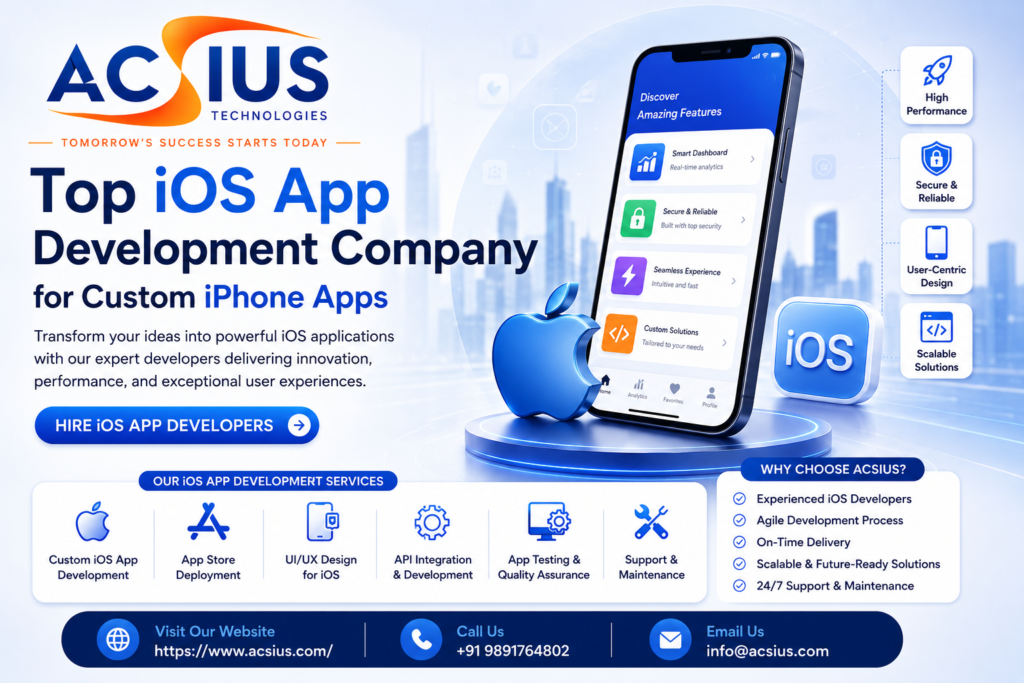
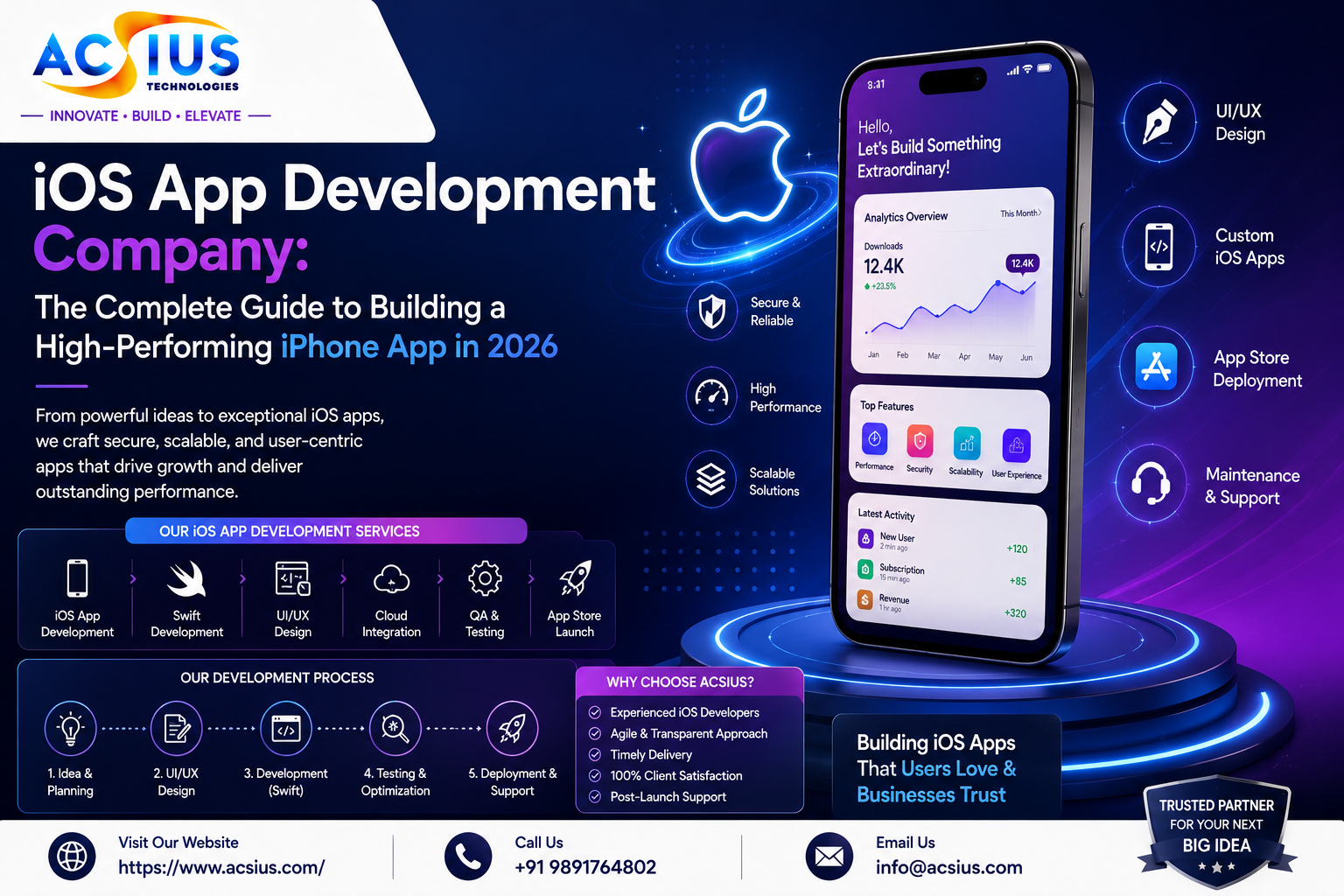
An iOS app development company is a team of designers, developers, QA engineers, and product strategists who build native applications specifically for Apple’s ecosystem — iPhone, iPad, Apple Watch, and increasingly, Vision Pro. Unlike a freelancer working solo, a proper company brings a structured process: discovery, wireframing, UI/UX design, development in Swift or SwiftUI, rigorous testing, App Store submission, and ongoing maintenance.
The distinction matters more than people realize. A lot of founders assume building an app just means writing code. In reality, the code is maybe 40% of the work. The rest is research, design decisions that affect user retention, performance tuning so the app doesn’t drain battery or lag, and compliance with Apple’s strict App Store guidelines — which reject a surprising number of first-time submissions for avoidable reasons.
Core Services an iOS App Development Company Should Offer
If you’re evaluating a potential partner, here’s a practical way to define what “full service” should actually include. Many agencies advertise broadly but only deliver a fraction of this list.
Product Strategy and Market Research
Before a single line of code gets written, a serious iOS app development company should help validate the idea. This includes competitor analysis, identifying your target audience’s pain points, and defining a minimum viable product (MVP) scope so you’re not burning six months of budget before getting real user feedback.
UI/UX Design for iOS
Apple users expect a certain feel — clean navigation, consistent typography, gestures that behave the way iOS users are trained to expect. A company that designs generic, cross-platform-looking screens without respecting Apple’s Human Interface Guidelines usually produces apps that feel “off” even if users can’t articulate why. Good design work here directly affects App Store ratings and retention.
Native iOS Development (Swift & SwiftUI)
This is the technical core. Native development using Swift and SwiftUI (as opposed to cross-platform frameworks) generally produces smoother performance, better access to device-specific features like Face ID, ARKit, or HealthKit, and fewer long-term maintenance headaches. Some projects are still fine with cross-platform tools like Flutter or React Native, but a company should be honest about that trade-off rather than pushing one technology because it’s cheaper for them to staff.
Backend and API Integration
Most apps aren’t standalone — they talk to a server, a database, a payment gateway, or third-party services. A capable iOS app development company handles backend architecture, secure API integration, and cloud infrastructure (AWS, Firebase, or similar) so the app doesn’t fall apart under real user load.
Quality Assurance and Testing
This step gets skipped or rushed more than any other, and it shows. Testing should cover device compatibility across iPhone models, different iOS versions, performance under poor network conditions, and security vulnerabilities — not just “does the button work.”
App Store Submission and Optimization
Apple’s review process rejects apps for reasons ranging from broken links to unclear privacy disclosures. A company that has submitted dozens of apps knows the common rejection triggers and avoids them. This phase should also include App Store Optimization (ASO) — keyword-optimized titles, descriptions, and screenshots that actually get the app discovered organically.
Post-Launch Support and Maintenance
An app isn’t done at launch. iOS updates, new device sizes, and evolving user expectations mean ongoing maintenance is non-negotiable. Companies that vanish after deployment leave founders stuck when the next iOS update breaks something.
Why Businesses Are Prioritizing Dedicated iOS Partners in 2026
The mobile app market has matured. A few years ago, a basic app with decent functionality could stand out simply by existing. That’s no longer true. Users compare your app’s speed, design, and reliability against Instagram, Uber, and Notion — whether that’s fair or not. This has pushed businesses toward specialized iOS app development companies instead of generalist agencies that spread their attention across web, Android, and iOS without depth in any of them.
There’s also a revenue argument. iOS users, on average, spend more per app than Android users in most Western markets, which is why many startups deliberately launch on iOS first even when their long-term plan includes both platforms.
iOS App Development vs Android App Development: Do You Need Both?
This is one of the most common questions founders ask, and the honest answer is: it depends on your audience and your runway.
Choose iOS first if:
- Your target market is North America, Western Europe, Australia, or Japan, where iOS usage and spending are historically higher
- You’re building a premium or subscription-based product
- You have limited budget and need to launch on one platform to validate demand
Choose Android first if:
- Your target market is heavily concentrated in Asia, Africa, or Latin America, where Android dominates market share
- Your product is ad-supported or relies on volume rather than per-user spend
- You need broader device accessibility at lower price points
Build both simultaneously if:
- You have the budget and your business model depends on reaching the widest possible audience from day one
- You’re in a competitive category where being on one platform only gives competitors an opening
A company that offers both iOS app development and Android app development under one roof — like ACSIUS does — has a practical advantage here. You get one product team that understands your business goals instead of coordinating two separate vendors who don’t talk to each other, which often leads to inconsistent branding, duplicated QA effort, and slower iteration.
How to Choose the Right iOS App Development Company
Picking a development partner is less about finding the cheapest quote and more about finding a team that won’t disappear when something goes wrong. Here’s a practical checklist.
Look at Their Portfolio, Not Just Their Website Copy
Any agency can write we build world-class apps on a homepage. Ask to see actual apps they’ve shipped, and download them if they’re live. Check the reviews. A portfolio full of unfinished prototypes or dead App Store links is a red flag.
Ask About Their Development Process
A company that can’t clearly explain their process — from discovery to design to development to QA to launch — probably doesn’t have one. Structured process usually correlates with fewer surprises and delays.
Check Communication Style Early
During the sales conversation, notice whether they’re asking about your business goals or just trying to close a deal. A partner that asks about your target users, revenue model, and long-term roadmap is thinking like a product team, not just a code shop.
Understand Their Post-Launch Commitment
Ask directly: what happens after the app is live? If the answer is vague or they try to upsell a separate maintenance contract you weren’t told about upfront, clarify the terms before signing anything.
Confirm They Handle App Store Compliance
Ask how many apps they’ve had rejected and why. A company with real experience will have a specific, honest answer rather than claiming a perfect record — which is rarely true for anyone submitting apps regularly.
What Makes ACSIUS Different
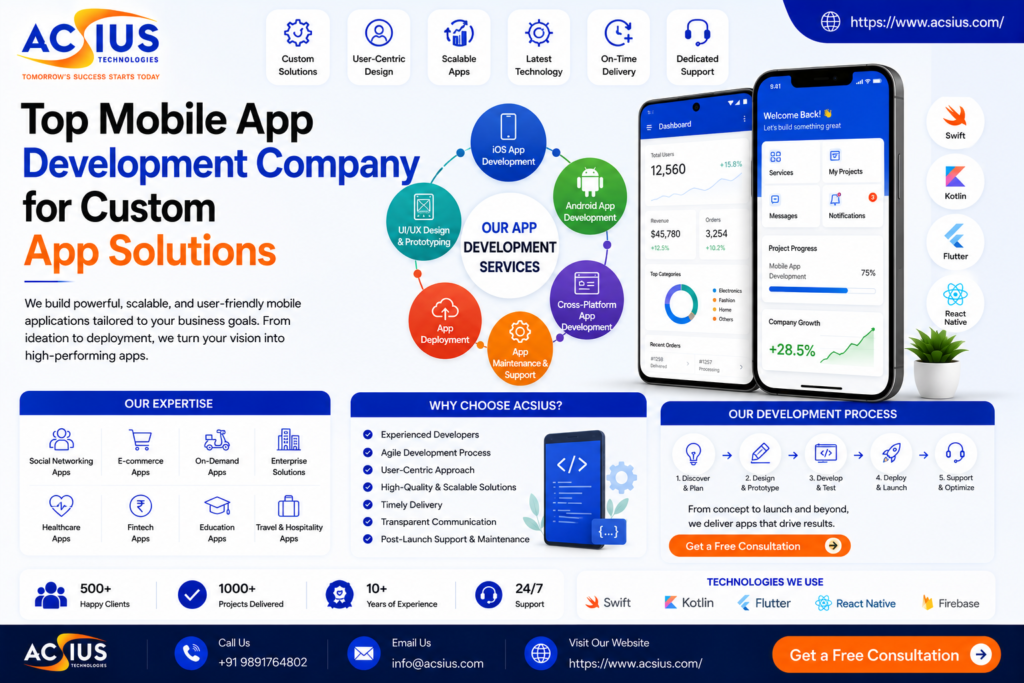
ACSIUS approaches iOS app development as a product partnership rather than a one-off coding project. The team works across the full lifecycle — strategy, UI/UX design, native Swift/SwiftUI development, backend architecture, QA, App Store deployment, and long-term maintenance — so founders aren’t left coordinating multiple vendors.
What sets ACSIUS apart in practice is the dual capability in both iOS app development and Android app development. Instead of treating these as separate teams working in silos, ACSIUS builds a shared product strategy across both platforms, which keeps design language consistent, reduces duplicated QA work, and shortens the time it takes to launch on a second platform once the first one proves demand.
The company also puts weight on the parts of the process that get skipped elsewhere — realistic timelines instead of inflated promises, transparent pricing without hidden maintenance fees, and a QA process that actually tests for edge cases instead of just confirming the happy path works.
Common Mistakes Founders Make When Hiring an iOS Developer
Choosing based on price alone. The cheapest quote often means corners get cut on testing, security, or design — costs that show up later as user complaints or a costly rebuild.
Skipping the discovery phase. Jumping straight into development without validating the idea or defining a clear MVP scope leads to feature creep and blown budgets.
Ignoring post-launch planning. Founders often budget for development but forget that maintenance, updates, and bug fixes are an ongoing cost, not a one-time expense.
Not asking about App Store rejection history. A company unfamiliar with Apple’s review guidelines can cause weeks of delay right when you’re ready to launch.
Underestimating design’s role in retention. A functional app with poor design will lose users faster than a slightly limited app with an intuitive, polished interface.
Final Thoughts
Building an iOS app is no longer just a technical exercise — it’s a product decision that affects how your business is perceived from the first tap. The right iOS app development company brings more than code; it brings design judgment, App Store expertise, and a long-term commitment that doesn’t end at launch day.
Whether you’re validating a new idea, scaling an existing product, or planning a parallel Android app development rollout, working with a team like ACSIUS that treats your app as a business asset — not just a deliverable — makes the difference between an app that launches and an app that actually grows.
If you’re currently comparing options, the best next step isn’t picking the fastest quote. It’s having a real conversation about your product goals and seeing whether the team on the other end is actually listening.
FAQs
How much does it cost to build an iOS app in 2026?
Cost depends heavily on scope. A simple MVP with basic features can start in the lower-to-mid five figures, while a complex app with custom backend, third-party integrations, and advanced features can run well into six figures. Any company that quotes a fixed price without a discovery call is guessing.
How long does it take to build an iOS app?
A basic MVP typically takes 8–14 weeks. A mid-complexity app with backend integration and custom design usually takes 4–6 months. Timelines stretch further if the scope isn't clearly defined upfront, which is why a discovery phase matters.
Should I build my app for iOS first or Android first?
It depends on your target market and business model. iOS tends to make sense first for premium, subscription-based products aimed at North America, Western Europe, Australia, or Japan. Android often makes more sense for volume-driven or ad-supported apps targeting Asia, Africa, or Latin America.
Can one company handle both iOS app development and Android app development?
Yes, and it's often more efficient than hiring two separate teams. A company like ACSIUS that handles both platforms under one roof keeps design consistent, avoids duplicated QA work, and speeds up launching the second platform once the first is validated.
What's the difference between native and cross-platform app development?
Native development (Swift/SwiftUI for iOS) generally delivers better performance, smoother animations, and full access to device features like Face ID or ARKit. Cross-platform frameworks like Flutter or React Native can be faster and cheaper to build but sometimes trade off performance and native feel. The right choice depends on your app's complexity and budget.
Why do apps get rejected from the App Store?
Common reasons include unclear privacy disclosures, broken links or incomplete features, guideline violations around in-app purchases, and metadata that doesn't match app functionality. An experienced iOS app development company knows these triggers and avoids them before submission.
Do I need a backend developer for my iOS app?
If your app stores user data, handles logins, processes payments, or connects to external services, yes. Even simple apps often need at least a lightweight backend for things like push notifications or analytics. This should be scoped during the discovery phase, not discovered mid-project.
What happens after my app is launched?
Launch isn't the finish line. Ongoing maintenance covers bug fixes, compatibility with new iOS versions, performance monitoring, and feature updates based on user feedback. Ask any potential partner exactly what's included in post-launch support before signing a contract.
How do I know if an iOS app development company is trustworthy?
Check their live portfolio and App Store reviews, ask about their development process, confirm how they handle App Store rejections, and get clear terms on post-launch support and pricing upfront. A company that's vague on any of these is a risk worth avoiding.