
Search Engine Optimization (SEO) has changed a lot over the years. In the past, marketers focused only on keywords — adding as many of them as possible to rank high. But today, Google and AI-driven search systems are smarter. They no longer look just for keywords. Instead, they try to understand what users really want.
That’s where Search Intent comes in.
What Is Search Intent?
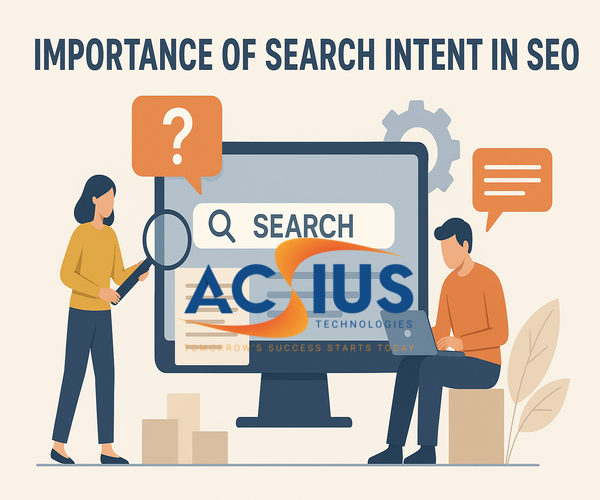
Search intent means the real reason behind a user’s search query. When someone types or speaks a question on Google, Bing, or even an AI tool like ChatGPT, the search engine tries to understand what kind of answer the user expects.
For example:
- If someone searches for “best running shoes for flat feet,” their intent is commercial — they are probably ready to buy.
- If someone types “how to start running,” their intent is informational — they want to learn, not buy.
- If someone types “Nike store near me,” their intent is navigational — they are looking for a specific location.
In short, search intent tells you why people search, while keywords tell you what they type.
Why Search Intent Matters More Than Keywords in 2026
In modern SEO, understanding search intent helps you create content that truly satisfies users. Google rewards content that meets intent, not just matches words.
Here’s why it matters more than ever:
- Google’s AI updates (like RankBrain and BERT) can now read context, meaning, and emotion behind search queries.
- Keyword stuffing no longer works — it can even harm your rankings.
- User engagement metrics (time on page, clicks, bounce rate) depend on how well your content matches intent.
So, focusing only on keywords is like shooting in the dark. But focusing on intent is like using a GPS — it leads you straight to what your audience wants.
The 4 Main Types of Search Intent
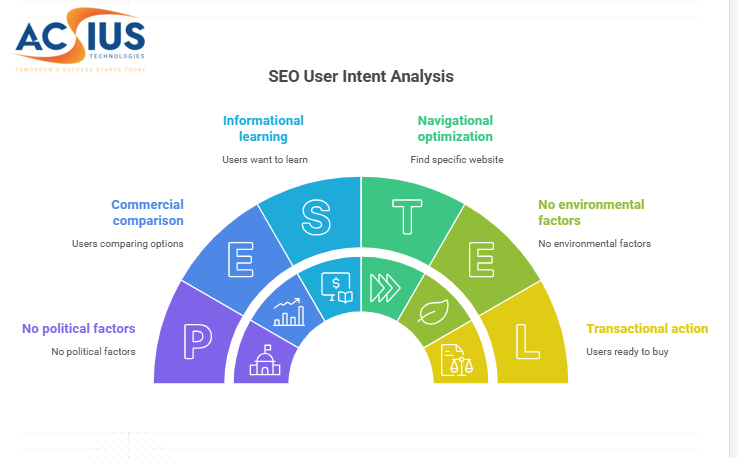
- Informational Intent – Users want to learn something.
- Example: “What is on-page SEO?”
- Use content like guides, tutorials, and blog posts.
- Navigational Intent – Users want to find a particular website or page.
- Example: “YouTube SEO tips HubSpot.”
- Optimize for brand names and specific pages.
- Commercial Intent – Users are comparing options before buying.
- Example: “Best SEO tools for small business.”
- Use listicles, product comparisons, or case studies.
- Transactional Intent – Users are ready to take action.
- Example: “Buy SEO software online.”
- Use product pages, call-to-action buttons, and trust signals.
Knowing these types helps you design content that matches the stage of the buyer’s journey.
How to Identify Search Intent
You can easily identify intent by looking at SERP (Search Engine Results Page).
- If you see blog posts and guides — the intent is informational.
- If you see product pages and prices — the intent is transactional.
- If you see brand names — the intent is navigational.
Also, tools like Google Keyword Planner, Ahrefs, and Semrush can help you understand keyword intent.
How to Optimize Content for Search Intent in 2026
Here’s how you can use search intent optimization in your SEO strategy:
- Start with the user’s question — What are they really looking for?
- Create content that gives the best answer — Clear, complete, and easy to read.
- Use long-tail keywords naturally — like “how to optimize content for search intent” or “best SEO strategy for informational search intent.”
- Match your content type to the intent — Blog for informational, product page for transactional.
- Update old content to make sure it still fits the intent behind current searches.
Search Intent and AI: The Future of SEO
In 2026 and beyond, SEO will focus more on semantic search, user behavior, and AI-powered ranking systems.
Tools like Google’s Search Generative Experience (SGE) and AI assistants analyze context, not just text. They look for answers that match user intent.
That’s why creating human-first, intent-driven content is the best SEO strategy today.
Search engines now reward content that feels helpful, conversational, and relevant — not robotic or keyword-heavy.
Real Example: Intent Beats Keywords
Let’s say you target the keyword “SEO content strategy.”
- If your article only lists SEO tools, it misses the mark for someone who wants to learn how to build a strategy.
- But if your article explains steps, examples, and templates — it matches the informational intent.
The result?
More clicks, better engagement, and higher rankings — even if your keyword density is lower.
Final Thoughts
Search intent is the foundation of modern SEO.
It helps you understand people — not just search engines.
When you know why someone is searching, you can deliver exactly what they need. That builds trust, engagement, and conversions.
So stop chasing keywords.
Start understanding intent.
That’s how you win in SEO today.
FAQs About Search Intent in SEO
Why is search intent important for SEO?
Because Google now ranks pages that match user intent, not just pages with matching keywords. Intent-based content gets more clicks and conversions.
How can I find search intent for a keyword?
Check Google’s results for that keyword. The type of pages ranking first (blogs, shops, videos) will show the user’s intent.
What are some tools to analyze search intent?
You can use Google SERPs, Ahrefs, Semrush, or AnswerThePublic to study user intent behind keywords.
How do I optimize for multiple intents?
Create cluster content — separate pages for each intent type (guide, comparison, product) and link them together.
How ACSIUS Can Create Content Based on Search Intent
1. Understand Your Target Audience and Their Search Intent
The first step for ACSIUS is to map your audience — business owners, startups, marketers, and eCommerce brands looking for SEO or digital marketing help.
Each of them searches Google with different goals (different intents).
Here’s how to categorize them:
| Type of Intent | User’s Goal | Example Search Query | Best Content Type for ACSIUS |
| Informational | Learn about SEO or marketing | “What is technical SEO?” | Blog post, guide, video explainer |
| Navigational | Find ACSIUS or a specific service | “ACSIUS SEO agency” | Homepage, About page |
| Commercial | Compare agencies or solutions | “Best SEO companies in India” | Comparison page, case studies |
| Transactional | Ready to contact or buy | “Hire SEO expert in India” | Service landing page, contact form |
Why this matters:
By understanding these intents, ACSIUS can create the right content for each stage of the buyer’s journey — from awareness to conversion.
2. Do Keyword and Intent Mapping Together
Traditional keyword research looks only for volume and difficulty.
But search intent optimization goes deeper — it looks for what users want behind each keyword.
Here’s how ACSIUS can do it:
- Use SEO tools like Semrush, Ahrefs, or Google Search Console.
- List all relevant long-tail keywords (e.g., “affordable SEO services in Delhi,” “how to improve Google ranking for my website”).
- For each keyword, identify its intent — informational, navigational, commercial, or transactional.
- Group similar intent keywords together into topic clusters.
Example:
- Cluster: SEO Services in India
- Transactional keyword: “Hire SEO agency in India”
- Commercial keyword: “Top SEO companies in India”
- Informational keyword: “How to choose an SEO agency in India”
Each cluster can then have one pillar page and multiple sub-articles that support it — all internally linked.
3. Create Content That Matches Intent (Not Just Keywords)
Now it’s time for ACSIUS to write for humans first, but optimize for search intent.
Here’s how to do it for each type:
Informational Intent
Users want to learn.
- Create educational blog posts like:
- “What Is On-Page SEO? A Beginner’s Guide for Small Businesses”
- “How to Improve Website Speed for Better Google Ranking”
- Use FAQ sections, infographics, and examples.
- Add long-tail LSI keywords naturally, like “how to optimize website content for SEO”, “steps to perform keyword research”.
Goal: Build trust and authority.
Navigational Intent
Users already know about ACSIUS or your brand.
- Optimize your About Us, Contact, and Service pages with branded search terms like:
- “ACSIUS digital marketing agency”
- “ACSIUS SEO experts in India”
- Ensure your Google Business Profile is complete and updated.
Goal: Make it easy for people to find and contact you.
Commercial Intent
Users are comparing options.
- Create comparison posts and service pages that explain:
- Why choose ACSIUS over others
- Detailed case studies showing real results
- Client testimonials and pricing transparency
- Add comparison-based LSI keywords like “best SEO services for small business,” “ACSIUS vs other SEO agencies.”
Goal: Show value and convince users to choose you.
Transactional Intent
Users are ready to act.
- Create high-converting landing pages with:
- Clear CTAs (“Get a Free SEO Audit”)
- Strong trust signals (certifications, testimonials)
- Long-tail keywords like “hire professional SEO experts in Delhi”, “buy affordable digital marketing services.”
- Optimize for local SEO — include your city, address, and service area.
Goal: Drive inquiries, leads, and sales.