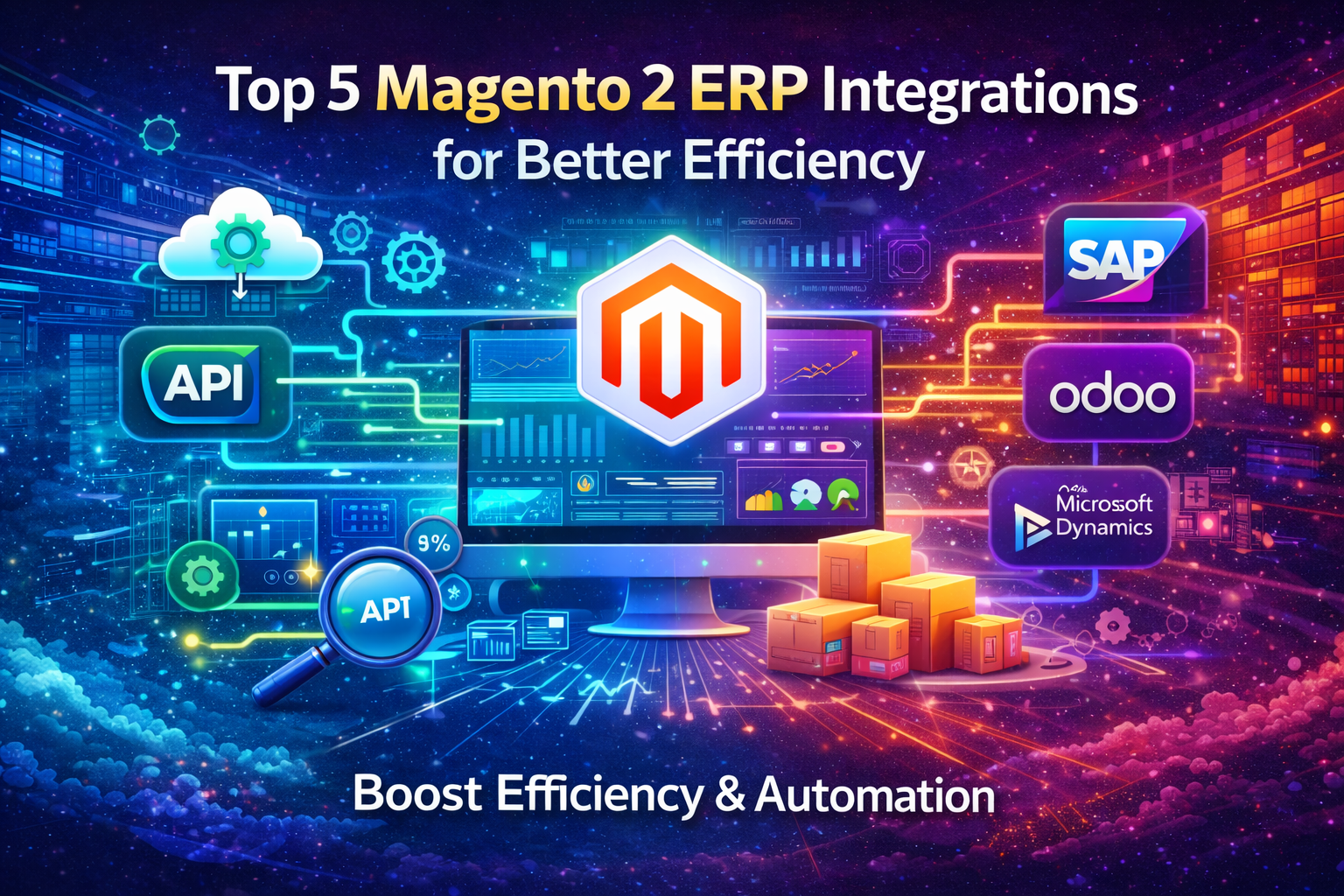
In today’s fast-paced eCommerce environment, efficiency is everything. Managing inventory, orders, customers, and finances manually can slow down your operations and lead to costly errors. That’s where Magento 2 ERP integrations come into play.
By connecting your Magento store with an ERP system, you can automate workflows, synchronize data in real time, and streamline your entire business process. If you’re planning to scale your eCommerce operations, investing in professional magento development services or hiring a python programmer for hire for custom integrations can significantly boost your efficiency.
In this 2500-word guide, we’ll explore the top 5 Magento 2 ERP integrations that can transform your business operations in 2026.
What is Magento 2 ERP Integration?
Magento 2 ERP integration connects your online store with backend business systems such as:
- Inventory management
- Accounting
- Order processing
- Customer data management
This integration ensures seamless data flow between systems, eliminating manual work and reducing errors.
👉 In simple terms, ERP acts as the central brain of your business, while Magento handles the storefront.
Why ERP Integration is Essential for Magento Stores
ERP integration is no longer optional—it’s a necessity for growing businesses.
Key Benefits:
Real-Time Inventory Management
ERP systems automatically update stock levels, preventing overselling or stockouts.
Automated Order Processing
Orders are processed instantly, reducing manual intervention and improving accuracy.
Centralized Business Operations
All data—inventory, finance, and customers—is managed in one place.
Improved Customer Experience
Faster order fulfillment and accurate stock data enhance customer satisfaction.
Scalability
ERP integration allows businesses to scale without operational bottlenecks.
Top 5 Magento 2 ERP Integrations for 2026
Let’s explore the best ERP solutions you can integrate with Magento 2.
Odoo ERP – Best for Small to Medium Businesses
Odoo ERP is one of the most popular ERP systems for Magento integration.
Key Features:
- Real-time synchronization of orders and inventory
- Modular system (CRM, accounting, inventory)
- Affordable and scalable
- Easy customization
Odoo integrates seamlessly with Magento using connectors, making it ideal for startups and growing businesses.
Why Choose Odoo?
- Budget-friendly
- User-friendly interface
- Flexible for customization
👉 Best for: Small to mid-sized eCommerce businesses
SAP Business One – Best for Enterprise-Level Businesses
SAP Business One is a powerful ERP solution designed for large enterprises.
Key Features:
- Advanced analytics and reporting
- Supply chain management
- Financial tracking
- Multi-location inventory management
It provides deep insights into business operations and ensures smooth data flow between Magento and ERP systems.
Why Choose SAP Business One?
- Enterprise-grade features
- Strong analytics capabilities
- Ideal for complex operations
👉 Best for: Large businesses and manufacturers
Microsoft Dynamics 365 – Best for Omnichannel Businesses
Microsoft Dynamics 365 is a robust ERP solution that integrates seamlessly with Magento.
Key Features:
- Real-time product and inventory sync
- Automated order processing
- Financial and customer data integration
- Multi-warehouse support
It creates a unified system where all business operations are connected.
Why Choose Microsoft Dynamics 365?
- Strong integration with Microsoft ecosystem
- Ideal for global operations
- Scalable and flexible
👉 Best for: Growing enterprises and omnichannel retailers
NetSuite ERP – Best for Cloud-Based Businesses
NetSuite ERP is a cloud-based solution that offers end-to-end business management.
Key Features:
- Cloud-based infrastructure
- Financial management
- Inventory and order tracking
- Real-time reporting
NetSuite is widely used by global brands due to its scalability and cloud capabilities.
Why Choose NetSuite?
- Fully cloud-based
- Scalable for global businesses
- Advanced reporting
👉 Best for: Cloud-first businesses and large enterprises
- Aureus ERP – Best for Mid-Sized Retailers
Aureus ERP is a powerful open-source ERP solution.
Key Features:
- Real-time order and inventory sync
- Advanced dashboards and reporting
- Supply chain optimization
- Reduced data errors
It provides strong insights and helps businesses manage complex operations efficiently.
Why Choose Aureus ERP?
- Open-source flexibility
- Strong analytics
- Suitable for mid-sized businesses
👉 Best for: Medium-sized retailers with complex workflows
Comparison of Top Magento 2 ERP Integrations
| ERP System | Best For | Key Strength | Pricing | Scalability |
| Odoo | SMBs | Flexibility | Affordable | High |
| SAP Business One | Enterprises | Analytics | Expensive | Very High |
| Microsoft Dynamics 365 | Omnichannel | Integration | High | Very High |
| NetSuite | Cloud Businesses | Cloud ERP | High | Very High |
| Aureus ERP | Mid-sized Retailers | Insights | Moderate | High |
How Magento 2 ERP Integration Works
Magento ERP integration typically follows these steps:
Data Mapping
Align data fields such as products, customers, and orders.
API or Middleware Integration
Systems communicate via APIs or middleware platforms.
Real-Time Synchronization
Data flows automatically between Magento and ERP systems.
Key Features to Look for in an ERP Integration
When choosing an ERP system, consider:
- Real-time data synchronization
- Customization options
- Scalability
- Integration capabilities
- Reporting and analytics
Challenges of Magento ERP Integration
While ERP integration offers many benefits, it also comes with challenges:
Complexity
Integration requires technical expertise.
Cost
Enterprise ERP systems can be expensive.
Data Migration Issues
Incorrect mapping can cause data inconsistencies.
Maintenance
Ongoing updates and monitoring are required.
👉 This is why hiring experts for magento development services is crucial.
Role of Custom Development in ERP Integration
Off-the-shelf connectors may not always meet your business needs.
Custom development allows you to:
- Build tailored workflows
- Integrate multiple systems
- Improve performance
Hiring a python programmer for hire can help create custom middleware solutions for seamless integration.
Best Practices for Successful Integration
Choose the Right ERP
Select a system that aligns with your business size and needs.
Use Reliable Connectors
Ensure stable data synchronization.
Test Before Deployment
Avoid errors by testing thoroughly.
Monitor Performance
Track system performance regularly.
Real-World Benefits of ERP Integration
Businesses using Magento ERP integrations report:
- Faster order processing
- Reduced manual errors
- Improved inventory accuracy
- Better customer satisfaction
👉 ERP integration acts as a growth engine for eCommerce businesses.
Future Trends in Magento ERP Integration (2026)
AI-Powered Automation
AI will optimize workflows and predict demand.
Cloud-Based ERP Systems
More businesses are moving to cloud solutions.
Real-Time Data Analytics
Advanced analytics will drive decision-making.
Omnichannel Integration
Seamless integration across multiple sales channels.
Conclusion
Magento 2 ERP integration is essential for businesses looking to improve efficiency, reduce errors, and scale operations.
The top 5 ERP systems—Odoo, SAP Business One, Microsoft Dynamics 365, NetSuite, and Aureus ERP—offer powerful features to streamline your business processes.
Choosing the right ERP depends on your business size, budget, and operational complexity.
To ensure a successful implementation, investing in professional magento development services or hiring a skilled python programmer for hire can help you build a robust and scalable integration.
👉 In 2026, businesses that embrace ERP integration will gain a significant competitive advantage in the eCommerce space.
FAQs
Why is ERP integration important for Magento stores?
ERP integration helps streamline operations, reduce manual errors, improve efficiency, and provide real-time data across all business functions.
Which ERP is best for Magento 2?
The best ERP depends on your business needs:
- Odoo for small to mid-sized businesses
- SAP Business One for large enterprises
- Microsoft Dynamics 365 for omnichannel businesses
- NetSuite for cloud-based operations
How long does Magento ERP integration take?
Integration can take anywhere from a few weeks to several months, depending on the complexity, customization, and systems involved.
Is Magento ERP integration expensive?
Costs vary based on the ERP system, customization level, and development requirements. However, it is a long-term investment that improves efficiency and ROI.
Can I customize Magento ERP integration?
Yes, custom integration allows you to tailor workflows, automate processes, and meet specific business requirements. Hiring experts in magento development services can help achieve this.
What are the benefits of real-time data synchronization?
Real-time synchronization ensures accurate inventory, faster order processing, and better decision-making by providing up-to-date information.
Do I need a developer for ERP integration?
Yes, ERP integration requires technical expertise. Hiring a python programmer for hire or Magento developer ensures a smooth and error-free implementation.
What challenges can occur during ERP integration?
Common challenges include:
- Data migration issues
- System compatibility
- High initial setup costs
- Ongoing maintenance
Can ERP integration help scale my business?
Absolutely. ERP integration automates operations, improves efficiency, and allows your business to scale without operational bottlenecks.