In today’s fast-paced digital world, eCommerce businesses are continuously evolving to provide better user experiences and seamless customer journeys. One feature that has become increasingly important is the smart store locator. As online shoppers often want the option to visit a physical store, pick up orders, or check product availability nearby, store Locators Bridge the gap between digital and physical retail.
A smart store locator does much more than simply show a map—it integrates geolocation, real-time inventory, directions, and personalized recommendations. This feature enhances convenience, builds trust, and ultimately boosts conversions. Many leading eCommerce brands have successfully implemented smart store locators to improve their omnichannel strategy.
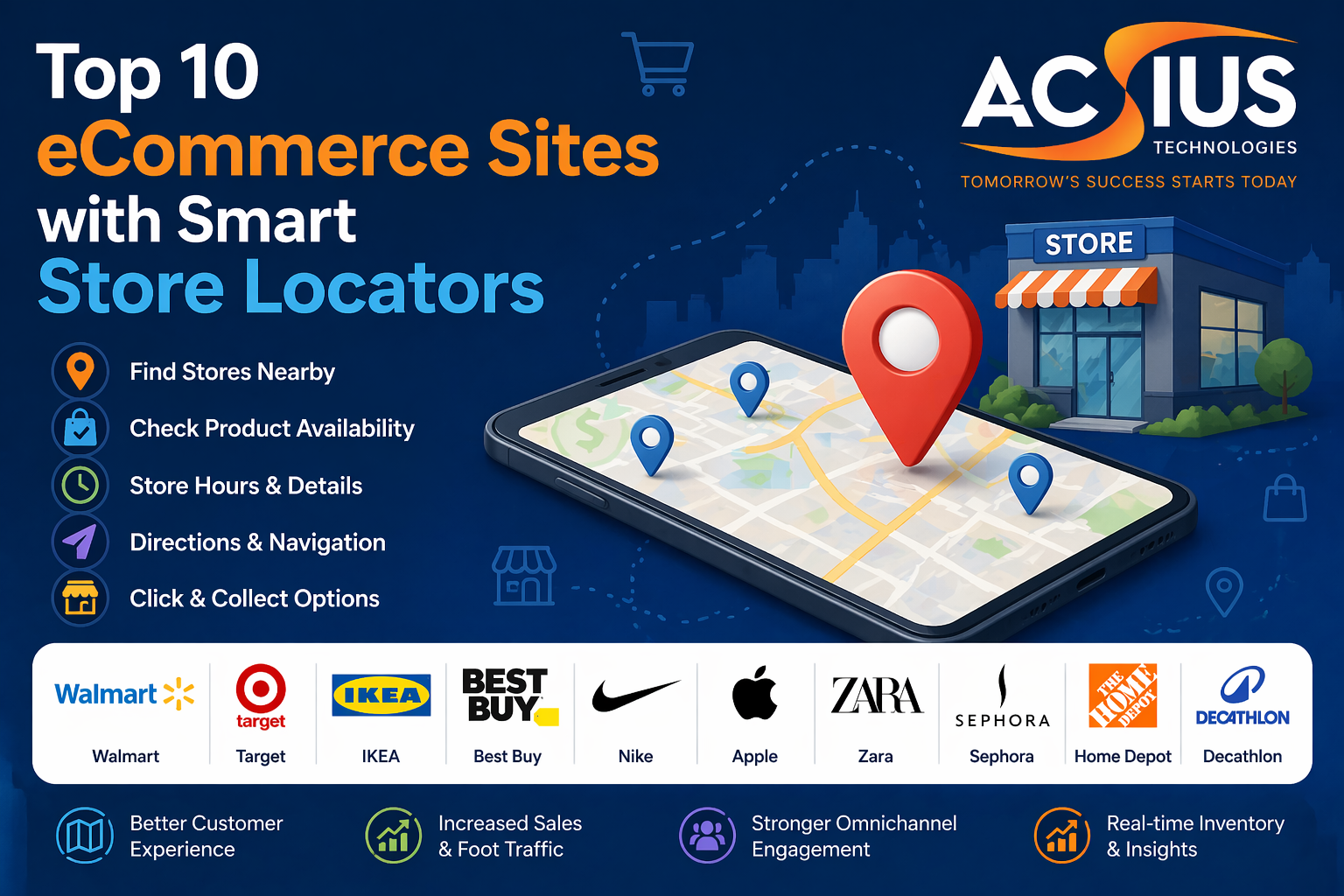
In this blog, we’ll explore the top 10 eCommerce sites that use smart store locators effectively and understand why this feature is crucial for modern businesses.
Why Smart Store Locators Matter in eCommerce
Before diving into examples, it’s important to understand why store locators are so valuable. Customers today expect instant information and convenience. Whether they want to check if a product is available nearby or find the closest outlet, a smart store locator makes it possible within seconds.
A robust eCommerce Website Development Services India solution ensures seamless integration of such features, enabling businesses to provide a smooth user experience across platforms.
Key benefits include:
- Improved customer convenience
- Increased foot traffic to physical stores
- Higher conversion rates
- Enhanced user experience
- Better data insights for businesses
Features of a Smart Store Locator
Modern store locators are equipped with advanced features that go beyond basic maps. These include:
- GPS-based location detection
- Real-time inventory updates
- Store hours and contact details
- Click-and-collect options
- Mobile-friendly interface
- Integration with navigation apps
Businesses that hire aws developers India can further enhance these features with cloud-based scalability and faster performance.
Walmart
Walmart’s store locator is a perfect example of efficiency and user convenience. It allows users to find nearby stores, check product availability, and even schedule pickups. The integration of real-time inventory ensures customers know exactly where to find what they need.
Target
Target offers a highly intuitive store locator that provides detailed store information, including services offered, store hours, and product availability. Their “Drive Up” feature allows customers to pick up orders without leaving their cars.
IKEA
IKEA’s store locator is designed with user experience in mind. It provides store layouts, product availability, and directions. Customers can also check stock levels before visiting the store, saving time and effort.
Best Buy
Best Buy uses a smart store locator to help customers find nearby stores, check product availability, and schedule in-store pickups. Their system integrates seamlessly with their online platform, ensuring a smooth shopping experience.
Nike
Nike’s store locator goes beyond basic functionality by offering personalized recommendations based on user preferences. It also highlights exclusive in-store products and services, enhancing customer engagement.
Apple
Apple’s store locator is known for its simplicity and elegance. It provides detailed store information, appointment booking options, and product availability. Customers can easily schedule sessions or repairs through the platform.
Zara
Zara’s store locator is highly efficient and mobile-friendly. It allows users to find nearby stores, check stock availability, and even reserve items for in-store pickup.
Sephora
Sephora enhances its store locator with beauty services and appointment booking features. Customers can locate stores offering specific services like makeovers or skincare consultations.
Home Depot
Home Depot’s store locator is designed for practicality. It provides aisle-level product locations, making it easier for customers to find items quickly once they arrive at the store.
Decathlon
Decathlon’s store locator integrates seamlessly with its eCommerce platform, offering real-time inventory updates, store details, and click-and-collect options. It ensures a consistent shopping experience across online and offline channels.
Key Benefits of Smart Store Locators
Enhanced Customer Experience
Smart store locators provide instant access to store information, improving overall user satisfaction.
Increased Sales and Conversions
By showing nearby product availability, customers are more likely to complete purchases.
Omnichannel Integration
Store locators connect online and offline channels, creating a seamless shopping journey.
Better Decision Making
Businesses gain valuable insights into customer behavior and preferences.
How to Implement a Smart Store Locator
To build an effective store locator, businesses should focus on:
- User-friendly design
- Accurate and real-time data
- Mobile optimization
- Integration with inventory systems
- Scalable infrastructure
Partnering with experienced developers ensures smooth implementation and optimal performance.
Role of Cloud Technology in Store Locators
Cloud platforms play a crucial role in enhancing store locator functionality. They provide:
- Scalability to handle high traffic
- Faster data processing
- Secure data storage
- Real-time updates
This is why many businesses rely on cloud-based solutions for their eCommerce platforms.
Future Trends in Store Locators
The future of store locators is driven by advanced technologies such as:
- Artificial Intelligence (AI) for personalized recommendations
- Augmented Reality (AR) for in-store navigation
- Voice search integration
- Predictive analytics for inventory management
These innovations will further enhance the shopping experience and drive customer engagement.
Common Mistakes to Avoid
When implementing a store locator, businesses should avoid:
- Outdated or inaccurate information
- Poor mobile optimization
- Lack of real-time inventory updates
- Complicated user interfaces
Ensuring accuracy and simplicity is key to success.
Conclusion
Smart store locators have become an essential feature for modern eCommerce businesses. They bridge the gap between online and offline shopping, providing convenience and enhancing customer satisfaction.
From global giants like Walmart and Apple to innovative brands like Nike and Sephora, leading eCommerce companies are leveraging smart store locators to stay ahead of the competition. By integrating advanced features and focusing on user experience, businesses can significantly improve their performance and customer engagement.
In conclusion, investing in the right technology and partnering with experts like ACSIUS can help you build a powerful eCommerce platform with advanced store locator capabilities, ensuring long-term success in the competitive digital marketplace.
FAQs
Why are store locators important for eCommerce websites?
Store locators enhance the customer experience by connecting online shopping with physical stores. They help increase foot traffic, improve convenience, and boost overall sales.
What features should a good store locator have?
A modern store locator should include:
- GPS-based location detection
- Real-time inventory updates
- Store hours and contact details
- Mobile-friendly interface
- Integration with maps and navigation apps
How does a smart store locator improve sales?
By showing nearby product availability and offering pickup options, customers are more likely to make a purchase. It reduces uncertainty and speeds up decision-making.
Can small businesses benefit from store locators?
Yes, even small businesses can benefit by helping local customers find their stores easily, improving visibility and increasing in-store visits.
What technologies are used in smart store locators?
Smart store locators use technologies like GPS, cloud computing, APIs, and sometimes AI to provide accurate and real-time information.
Are store locators mobile-friendly?
Yes, most modern store locators are designed to be mobile-friendly, allowing users to find stores easily on smartphones and tablets.
How do store locators integrate with inventory systems?
They connect with backend inventory systems to display real-time product availability at different store locations.
What is click-and-collect in eCommerce?
Click-and-collect allows customers to order products online and pick them up from a nearby store, combining the convenience of online shopping with the speed of in-store pickup.
Can store locators provide directions to stores?
Yes, they usually integrate with navigation apps like Google Maps to provide turn-by-turn directions to the selected store.
How can businesses improve their store locator performance?
Businesses can improve performance by ensuring accurate data, optimizing for mobile devices, using fast-loading servers, and regularly updating store information.
What are the future trends in store locator technology?
Future trends include AI-based recommendations, voice search integration, augmented reality navigation, and predictive analytics for better customer experiences.