In an era where digital presence dictates market dominance, a website is far more than a digital business card; it is the central hub of your entire brand experience. Consumers today expect instant gratification, seamless navigation, and highly personalized interactions from the exact moment they land on a homepage. If an interface is clunky, slow, or difficult to use on a mobile device, users will abandon ship within seconds. This rapid bounce rate directly translates to lost revenue, wasted marketing spend, and a damaged brand reputation. To capture and retain audience attention in a saturated market, businesses must transcend basic, rigid templates and invest in comprehensive technical architectures that anticipate user needs and deliver flawless functionality.
Building these powerful online experiences requires a multifaceted approach that blends aesthetic design with rigorous backend engineering. It is not enough to simply exist online; your digital platform must be robust, highly scalable, and impenetrable to security threats. This means embracing modern development frameworks, leveraging advanced cloud infrastructure for uncompromising uptime, and ensuring your brand’s interactive elements are perfectly translated across every device, from ultrawide desktop monitors to the smallest smartphones. Achieving this elevated level of digital excellence demands strategic execution, a forward-thinking roadmap, and a deep understanding of how different technological layers interact to serve the end user flawlessly.
The Architecture of Engagement: Custom Web Solutions
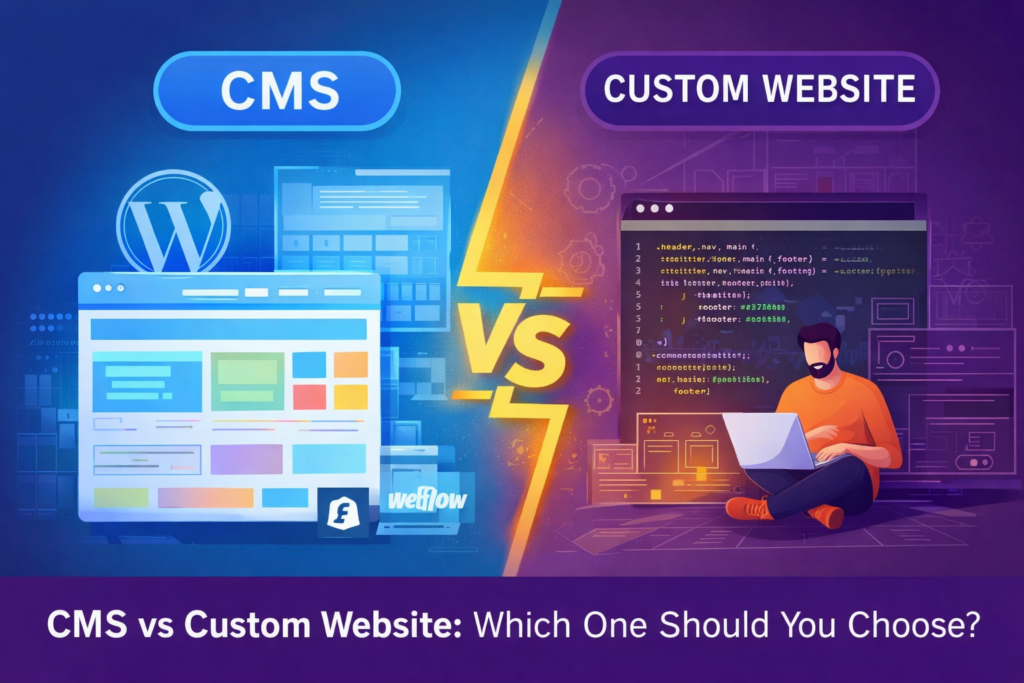
At the core of any digital transformation is the structural architecture of the website itself. Off-the-shelf solutions and drag-and-drop web builders might serve a fledgling startup for a few months, but true enterprise scalability demands custom engineering. A tailored website allows businesses to integrate complex, proprietary functionalities—such as custom Customer Relationship Management (CRM) dashboards, real-time global inventory syncing, and advanced interactive 3D elements—that generic platforms simply cannot support. It ensures that the underlying codebase is clean, semantic, and highly optimized for search engine crawlers, which is the foundational step for dominating organic visibility. Furthermore, a custom approach guarantees that your User Interface (UI) and User Experience (UX) are built specifically for your exact target demographic, guiding them seamlessly through a frictionless conversion funnel.
When looking to build an enterprise-grade platform without compromising on code quality or drastically inflating the corporate budget, many global enterprises turn to specialized technical partners who offer deep domain expertise. By partnering with top-tier Web Development Services India, businesses can seamlessly leverage world-class engineering talent to construct sophisticated, high-performance websites. These specialized services encompass everything from dynamic frontend frameworks like React.js and Vue.js to robust, data-heavy backend languages like Node.js and Python. This strategic approach ensures that your digital real estate is built on cutting-edge, future-proof technologies capable of evolving alongside your business.
Powering Scalability with Cloud Infrastructure
A beautiful, intuitively designed website is entirely useless if it crashes during a massive traffic surge or suffers from agonizingly slow load times during peak operational hours. This is where the backend infrastructure becomes the unsung hero of the ultimate digital experience. Modern web applications require dynamic, highly scalable environments that can adjust computational resources on the fly. Traditional on-premise servers or rigid shared hosting plans are highly vulnerable to localized hardware failures and traffic bottlenecks. Cloud computing has fundamentally revolutionized how applications are hosted and deployed, offering a globally distributed network of servers that ensures high availability, automated redundancy, and incredibly low latency for users, regardless of their geographical location.
To truly harness the unprecedented power of modern cloud computing, organizations must architect their web applications to be “cloud-native” from the ground up. This involves utilizing advanced microservices, adopting serverless computing models, and integrating managed database systems to build digital ecosystems that are inherently resilient. Working in tandem with an expert aws development company enables businesses to seamlessly migrate legacy monolithic systems to the cloud, optimize existing cloud architectures for strict cost-efficiency, and deploy highly automated CI/CD (Continuous Integration/Continuous Deployment) pipelines. This ensures that critical security patches and innovative new features can be rolled out rapidly and safely without any system downtime.
Capturing the Mobile Audience: The Cross-Platform Imperative
While desktop experiences remain incredibly important for deep research, comprehensive data entry, and complex B2B transactions, the vast majority of global consumer internet traffic now originates from mobile devices. However, simply having a “mobile-responsive web page” is only one small piece of the modern digital puzzle. To build profound brand loyalty and offer high-retention features like push notifications, offline data access, and deep hardware integration (such as accessing a device’s camera, biometric sensors, or GPS), businesses are increasingly launching dedicated mobile applications alongside their primary web platforms. Historically, the challenge here has been the prohibitive financial cost and extended timeline required to develop separate native apps for both the iOS and Android ecosystems, requiring entirely different codebases and isolated development teams.
Modern technological frameworks provide elegant, highly efficient solutions to this platform fragmentation, allowing software engineers to write code once and deploy it natively across multiple operating systems. Utilizing professional flutter app development services is rapidly becoming the industry gold standard for businesses looking to launch feature-rich, high-performance mobile applications quickly. Flutter, an open-source UI software development kit created by Google, compiles directly to native ARM machine code. This means the resulting applications offer buttery-smooth, 60-frames-per-second scrolling and rendering that is virtually indistinguishable from applications built natively in Swift or Kotlin. By adopting this streamlined cross-platform strategy, companies ensure a unified, powerful user experience while significantly reducing time-to-market.
The Silent Killer of Online Experiences: Latency and Performance
Beyond the frameworks and cloud infrastructure, the tangible speed of your website is a critical metric that dictates user behavior. In the modern digital economy, latency is the silent killer of conversion rates. Studies consistently show that a delay of even a single second in page load time can result in a drastic reduction in page views, user satisfaction, and ultimately, sales. Users have been conditioned by tech giants to expect near-instantaneous load times; when a site fails to meet this expectation, the user’s immediate reaction is to click the “back” button and visit a competitor.
Building a powerful online experience means meticulously optimizing every single asset that makes up your web presence. This involves implementing advanced Content Delivery Networks (CDNs) that cache your website’s static files—like images, CSS, and JavaScript—on servers strategically located close to the user’s physical location. It means embracing next-generation image formats like WebP or AVIF, which provide superior compression without sacrificing visual fidelity. Furthermore, techniques like “lazy loading,” where images and videos are only loaded when they enter the user’s viewport, drastically reduce the initial payload of the page, ensuring the site becomes interactive almost instantly.
Performance optimization is no longer just a best practice for user experience; it is a strict mandate for search engine visibility. Google’s algorithmic updates, specifically those focused on Core Web Vitals, heavily penalize websites that suffer from layout shifts, slow server response times, and delayed interactivity. A website development strategy that does not prioritize raw speed is fundamentally flawed, as it will inevitably struggle to rank organically, regardless of how high-quality the written content may be.
Fortifying the Digital Perimeter: Security as a User Experience
When we discuss “user experience,” we often limit the conversation to visual design and navigation. However, true digital experience management inherently includes the security and privacy of the user’s data. With high-profile data breaches making daily headlines, consumers are more skeptical and protective of their personal information than ever before. If a user perceives your platform as insecure, they will not create an account, they will not input their payment information, and they will absolutely not complete a transaction. Security is not just a backend IT concern; it is a vital component of user trust and brand credibility.
Powerful online experiences are built on a foundation of impenetrable security protocols. This begins with the absolute basics, such as enforcing strict SSL/TLS encryption to ensure all data transmitted between the user’s browser and your server is unreadable to malicious interceptors. But modern web development goes much deeper. It involves implementing robust authentication mechanisms, such as Multi-Factor Authentication (MFA) and OAuth, to protect user accounts from brute-force attacks.
Furthermore, a comprehensive development service will ensure your platform is built to natively comply with complex, overarching data privacy regulations like the General Data Protection Regulation (GDPR) in Europe or the California Consumer Privacy Act (CCPA) in the United States. This includes building clear, transparent consent management platforms into the UI and engineering databases so that user data can be easily anonymized or permanently deleted upon request. When a website is built with a “security-by-design” philosophy, it radiates professionalism, ensuring users feel safe engaging with your digital ecosystem.
Designing for Everyone: The Importance of Digital Accessibility
A truly powerful online experience is one that excludes no one. Digital accessibility is the practice of ensuring that websites, applications, and digital tools are usable by people of all abilities and disabilities. This includes individuals with visual impairments, hearing loss, cognitive conditions, and motor skill limitations. Far too often, web development treats accessibility as an afterthought or an optional add-on, resulting in platforms that are entirely unusable by up to 15% of the global population.
Prioritizing accessibility during the development phase involves adhering to the strict guidelines outlined in the Web Content Accessibility Guidelines (WCAG). This means ensuring that there is a high contrast ratio between text and background colors, providing accurate alternative text (alt-text) for all informational images, and ensuring that every single interactive element on the website can be accessed and operated using only a keyboard. It also involves using semantic HTML tags properly so that assistive technologies, like screen readers used by the blind, can accurately interpret and announce the layout and content of the page.
Beyond the clear moral imperative to create inclusive digital spaces, accessibility has massive business implications. By designing for all abilities, you instantly expand your total addressable market. Furthermore, many of the technical requirements for accessibility—such as clean code structure and descriptive media tags—directly overlap with technical SEO best practices, giving accessible websites a natural boost in search engine rankings. Finally, building accessible platforms mitigates significant legal risks, protecting businesses from costly digital discrimination lawsuits.
The Art of Continuous Iteration: Data-Driven UX
A website is never truly “finished.” The launch of a new digital platform is not the end of the development lifecycle; it is merely the beginning of the optimization phase. Powerful online experiences are not born purely from intuition; they are sculpted over time through rigorous, data-driven analysis of real user behavior.
Once a site is live, advanced analytics and user behavior tracking tools—such as heatmaps, session recordings, and custom event trackers—must be deployed to understand exactly how visitors are interacting with the interface. Where are they clicking? How far down the page are they scrolling? At what exact point in the checkout process are they abandoning their carts? By answering these questions with hard data, development and design teams can formulate highly targeted hypotheses for improvement.
This leads directly into Conversion Rate Optimization (CRO) and A/B testing. Instead of guessing which headline, button color, or page layout will perform best, developers can serve two different versions of a page to real users simultaneously and let the data declare the winner. This philosophy of continuous, iterative improvement ensures that the website remains a living, breathing asset that constantly adapts to shifting consumer preferences and market trends. When a business commits to data-driven UX, their online experience evolves from a static brochure into a highly tuned, revenue-generating engine.
Integrating the Future: AI, Machine Learning, and Web 3.0
As we look toward the horizon of digital experiences, the integration of Artificial Intelligence (AI) and Machine Learning (ML) is rapidly transitioning from a novelty to a necessity. Website development is no longer just about presenting static information; it is about creating intelligent interfaces that anticipate user needs and personalize the experience in real-time.
Machine learning algorithms can be integrated into e-commerce platforms to provide hyper-personalized product recommendations based on a user’s browsing history, purchase behavior, and demographic profile. Natural Language Processing (NLP) allows for the deployment of sophisticated AI chatbots that can handle complex customer service inquiries instantly, 24/7, without human intervention. Furthermore, AI can be utilized in the backend to dynamically optimize site performance, automatically scale server resources based on predictive traffic models, and identify anomalous network behavior to thwart cyberattacks before they execute.
Similarly, the concepts of Web 3.0 and decentralized architectures are beginning to influence how advanced digital platforms are constructed. While still in their relative infancy, technologies like blockchain integration for secure, transparent transactions and decentralized identity verification are becoming highly relevant for businesses in the finance, healthcare, and high-tech sectors. A forward-thinking development strategy must account for these emerging technologies, ensuring that the platform architecture is flexible enough to integrate future innovations without requiring a complete rebuild from the ground up.
The Omni channel Ecosystem: Bridging the Gap between Platforms
The modern consumer journey is rarely linear. A user might discover a product via a social media advertisement on their mobile phone during their morning commute, conduct deeper research on their desktop computer at work, and finally complete the purchase via a dedicated mobile app while relaxing at home. A powerful online experience requires absolute continuity across all of these touchpoints.
This necessitates a “headless” development architecture. In a traditional CMS (Content Management System), the backend database (the “body”) is tightly coupled to the frontend presentation layer (the “head”). In a headless architecture, the frontend and backend are completely decoupled. They communicate exclusively via Application Programming Interfaces (APIs).
This approach is incredibly powerful. It allows businesses to manage all of their core data, product inventory, and written content in one centralized backend repository, and then push that exact same data seamlessly to a website, a mobile app, a smartwatch interface, or even an interactive digital kiosk in a physical retail store. Headless architecture empowers developers to use the absolute best frontend tools for each specific channel without being constrained by backend limitations, resulting in a cohesive, lightning-fast omnichannel ecosystem.
Building for the Long Term
Investing in comprehensive website development is not merely an IT expense; it is a fundamental business strategy that dictates your brand’s future trajectory. A website is the digital storefront, the hardest-working sales representative, and the primary point of contact for the global market. Delivering an experience that is fast, secure, mobile-optimized, and deeply user-centric requires a symphony of different technologies working in perfect harmony.
From the foundational code written in the frontend UI to the scalable cloud infrastructure hosting the databases, every single technical decision impacts the end user. As consumer expectations continue to rise and the digital landscape becomes increasingly competitive, businesses cannot afford to cut corners on their technical architecture. The brands that will dominate tomorrow are the ones that recognize the critical importance of digital excellence today.
Ultimately, realizing this vision requires more than just a passing familiarity with code; it requires a strategic partnership with a team of technologists who understand how to align cutting-edge development practices with overarching business objectives. By treating your digital presence as a constantly evolving product rather than a static project, you ensure that your brand remains relevant, engaging, and powerful. To navigate this complex landscape and engineer digital solutions that truly resonate with your audience and drive measurable growth, you need the reliable expertise and innovative vision provided by ACSIUS.
FAQs
How do modern web development services improve a website’s search engine rankings?
A professional web development service tackles search engine optimization (SEO) from the ground up by optimizing technical architectures. This includes improving Core Web Vitals (loading performance, interactivity, and visual stability), structuring semantic HTML data, implementing schema markup, and ensuring flawless mobile responsiveness. These factors signal to search engine crawlers that your platform offers a high-quality user experience, directly leading to better organic rankings.
What is cloud-native web development, and why is it important for high-traffic websites?
Cloud-native web development refers to designing applications specifically to run within cloud environments, utilizing microservices, serverless computing, and dynamic databases. Unlike traditional hosting, which relies on a single server, cloud infrastructure allows your website to scale dynamically. This means if your site experiences a massive traffic surge during a product launch or promotional event, the backend automatically provisions more resources to prevent crashes or slow response times.
What are the main benefits of using cross-platform frameworks like Flutter for mobile apps?
Cross-platform frameworks like Flutter allow developers to write a single codebase that compiles natively into both iOS and Android applications. For businesses, this cuts down development costs and time-to-market by nearly 50% compared to building separate native apps. Furthermore, it ensures that your users enjoy an identical, high-performance feature set and user interface across all mobile devices.
What is "headless architecture" in modern website development?
Headless architecture is the decoupling of your website’s frontend presentation layer (the "head") from its backend content database (the "body"). They communicate dynamically using secure APIs. This structure allows businesses to push content, inventory updates, and data to multiple frontends simultaneously—such as a desktop website, a mobile application, a smartwatch app, or a digital retail kiosk—maintaining a true omnichannel digital ecosystem.
How does digital accessibility impact a website's business performance?
Prioritizing digital accessibility (adhering to Web Content Accessibility Guidelines or WCAG) ensures your platform is usable by individuals with visual, auditory, motor, or cognitive impairments. Beyond expanding your total addressable market to include millions of users with disabilities, accessible web design directly aligns with clean SEO coding practices and protects your business from costly web accessibility lawsuits.
What security standards should a powerful online experience always include?
At a minimum, every modern website must enforce SSL/TLS encryption (HTTPS) to secure data in transit. For platforms handling user data or transactions, robust authentication protocols like Multi-Factor Authentication (MFA) and OAuth are essential. Additionally, the platform must be engineered to securely handle data privacy mandates like the GDPR and CCPA, giving users transparent control over their personal information.
How often should a website undergo performance optimization?
Performance optimization is a continuous process, not a one-time task. Every time new images, promotional videos, third-party marketing pixels, or software features are added, site speed can degrade. Regular audits should be conducted monthly to ensure assets are compressed into next-generation formats (like WebP or AVIF), code remains clean, and latency stays low.
What role do AI and Machine Learning play in contemporary web development?
AI and machine learning are utilized to craft deeply personalized, predictive user experiences. This includes integrating smart recommendation engines that display tailored products or content to individual users based on past interactions, deploying advanced Natural Language Processing (NLP) chatbots for instant customer service, and utilizing AI-driven backend security tools to flag anomalous network behavior and block cyber threats in real-time.
How long does it typically take to design and deploy an enterprise-grade website?
The timeline for a comprehensive, enterprise-grade web development project typically spans anywhere from 3 to 9 months, depending heavily on the complexity of the features, the depth of custom UI/UX design required, data migration needs, and security compliance audits. A structured development lifecycle always includes thorough discovery, wireframing, architecture engineering, prototyping, continuous quality assurance testing, and post-launch optimization phases.