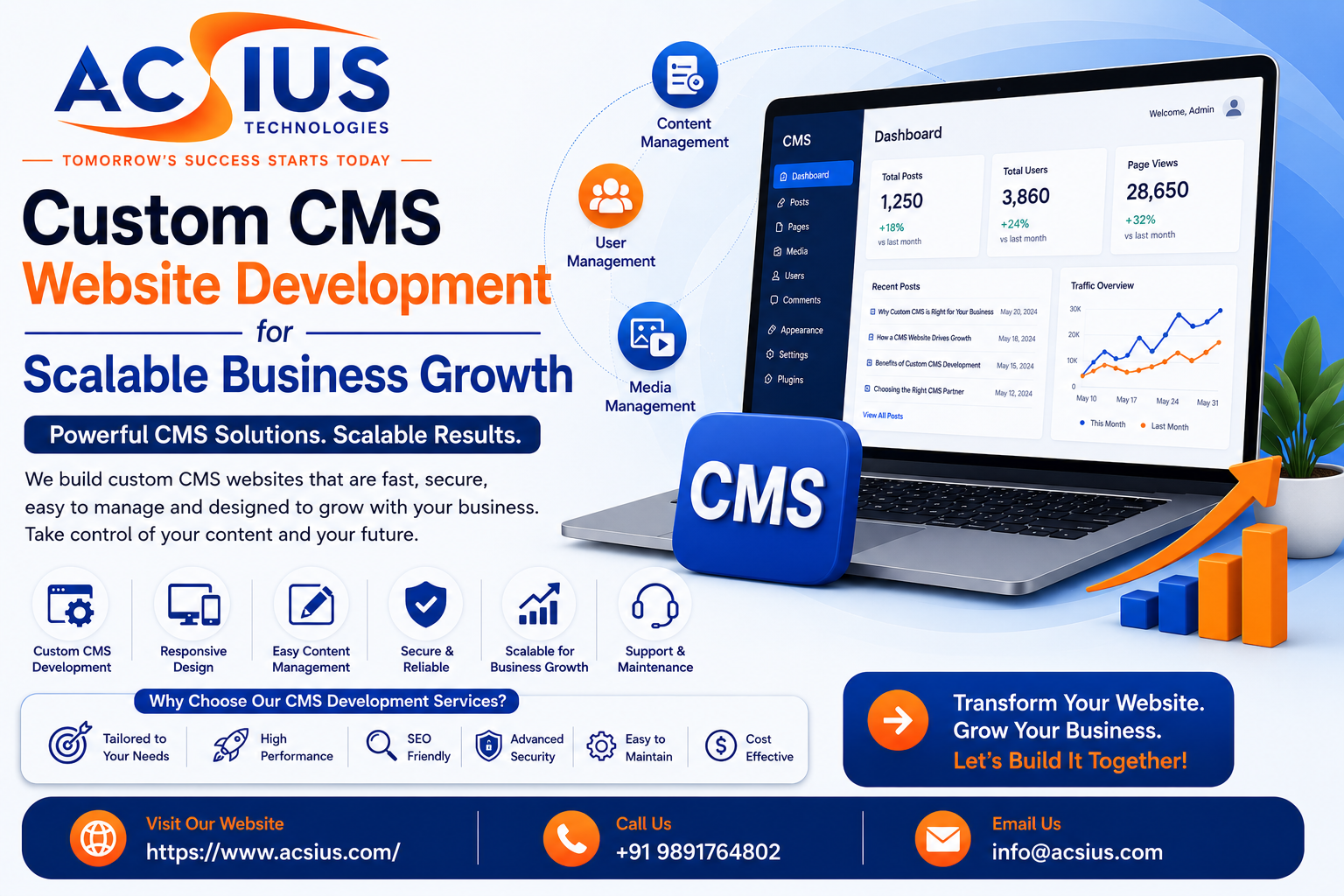
In today’s digital economy, businesses require websites that are flexible, scalable, and easy to manage. As organizations grow, their online presence must evolve to support increasing content demands, customer interactions, and operational requirements. This is where a custom Content Management System (CMS) becomes a valuable business asset. Unlike off-the-shelf solutions, custom CMS platforms are designed specifically to meet the unique needs of a business, providing greater control, security, and scalability.
A custom CMS allows organizations to manage website content efficiently without requiring extensive technical knowledge. Whether updating product information, publishing blogs, managing customer portals, or integrating third-party applications, a custom CMS streamlines content management and improves operational productivity. As businesses continue to embrace digital transformation, custom CMS solutions have become essential for maintaining a competitive edge.
Many organizations invest in Custom CMS Website Development to create tailored digital platforms that align with their business objectives. These solutions provide complete control over website functionality, design, and content management processes while supporting long-term scalability and business growth.
Understanding Custom CMS Website Development
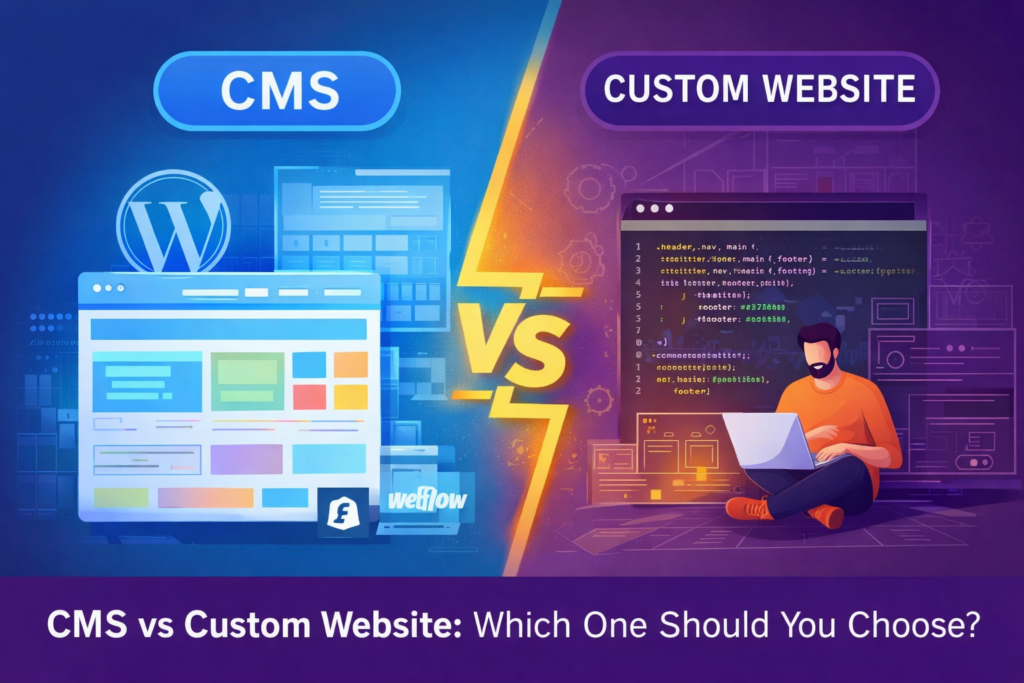
A Content Management System is a software application that enables users to create, manage, edit, and publish digital content without requiring advanced programming skills. While popular CMS platforms offer pre-built functionalities, custom CMS development focuses on building a solution specifically designed around a business’s unique workflows and requirements.
Custom CMS websites provide flexibility that generic platforms often cannot match. Businesses can incorporate specialized features, custom user roles, unique content structures, and advanced integrations that enhance operational efficiency. This customization ensures that the platform grows alongside the organization rather than limiting future expansion.
Why Businesses Choose Custom CMS Solutions
Greater Flexibility
One of the primary advantages of a custom CMS is flexibility. Businesses can define exactly how content is managed, organized, and displayed. Unlike template-based systems, custom CMS platforms can accommodate unique business processes and requirements.
Enhanced Security
Security is a major concern for businesses operating online. Custom CMS solutions offer stronger security controls because they are built with specific requirements in mind. By eliminating unnecessary plugins and reducing exposure to common vulnerabilities, businesses can better protect sensitive data.
Improved Performance
Custom-built CMS websites are optimized for performance from the ground up. Developers can remove unnecessary code and focus on creating efficient architectures that improve loading speeds and user experiences.
Scalability for Future Growth
As businesses expand, their websites must support increasing traffic, content, and functionality demands. Custom CMS solutions provide the scalability needed to accommodate growth without requiring complete platform replacements.
Essential Features of a Custom CMS
User-Friendly Dashboard
An intuitive administration panel enables content managers to update pages, upload media, and manage website content efficiently.
Role-Based Access Control
Custom CMS platforms allow businesses to assign permissions based on user roles, ensuring that employees only access the features necessary for their responsibilities.
Content Scheduling
Businesses can schedule content publication in advance, supporting marketing campaigns and content strategies.
SEO Optimization Tools
Built-in SEO features help businesses optimize pages, metadata, URLs, and content structures for improved search engine visibility.
Multi-Language Support
Organizations serving global audiences can implement multilingual capabilities to reach customers in different regions.
The Importance of Custom CMS for eCommerce Growth
As online shopping continues to grow, businesses require robust content management systems that support product catalogs, customer accounts, payment processing, and inventory management. A custom CMS can be specifically designed to meet the complex requirements of modern eCommerce operations.
Businesses seeking scalable online stores often invest in eCommerce Website Development Services to create customized shopping experiences that improve customer satisfaction and increase conversions. A custom CMS integrated with eCommerce functionality enables organizations to manage products, promotions, and customer interactions from a centralized platform.
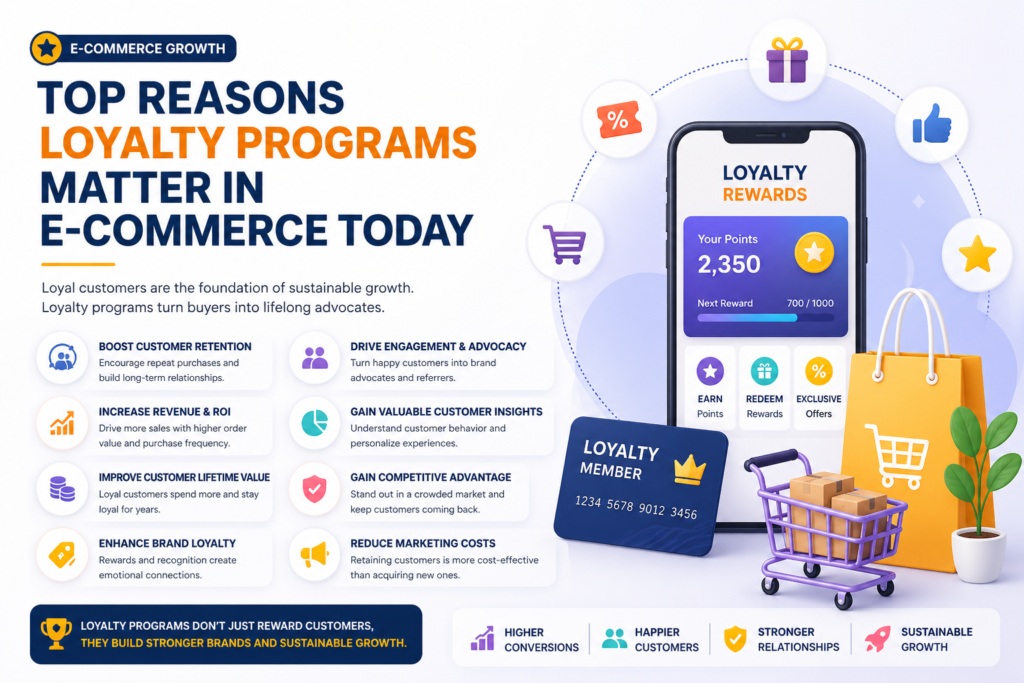
Custom eCommerce solutions also provide flexibility for implementing advanced features such as personalized recommendations, subscription models, loyalty programs, and omnichannel integrations.
Benefits of Custom CMS for Different Industries
Healthcare
Healthcare organizations use custom CMS platforms to manage patient portals, appointment systems, healthcare resources, and compliance-related content.
Education
Educational institutions leverage CMS solutions to manage courses, student information, faculty resources, and online learning platforms.
Real Estate
Real estate companies utilize custom CMS websites to manage property listings, virtual tours, lead generation, and client communications.
Finance
Financial organizations require secure CMS solutions for managing client portals, financial content, compliance documentation, and online services.
Manufacturing
Manufacturers use CMS platforms to manage product catalogs, distributor networks, technical documentation, and customer support resources.
Custom CMS vs. Open-Source CMS
Many businesses begin with open-source content management systems but eventually encounter limitations as their needs become more complex.
Advantages of Open-Source CMS
- Lower initial costs
- Large community support
- Extensive plugin libraries
- Faster deployment
Advantages of Custom CMS
- Tailored functionality
- Enhanced security
- Better scalability
- Improved performance
- Seamless third-party integrations
While open-source platforms may work well for smaller projects, growing organizations often benefit from the flexibility and control provided by custom CMS development.
The Role of WordPress in Modern Website Development
WordPress remains one of the most widely used content management systems globally. Its flexibility, extensive plugin ecosystem, and user-friendly interface make it a popular choice for businesses across industries.
Many organizations seeking customized WordPress solutions choose WordPress website development services to enhance functionality, improve performance, and create unique digital experiences. Professional WordPress development allows businesses to customize themes, build advanced plugins, integrate third-party services, and optimize websites for scalability.
WordPress can also serve as the foundation for highly customized CMS solutions when paired with expert development and strategic planning.
Key Technologies Used in Custom CMS Development
PHP
PHP remains one of the most commonly used programming languages for CMS development due to its flexibility and extensive framework support.
Laravel
Laravel provides developers with a powerful framework for building secure and scalable CMS applications.
Node.js
Node.js supports high-performance web applications and real-time functionalities for modern CMS platforms.
React and Angular
Frontend frameworks such as React and Angular enable developers to create dynamic user interfaces and responsive content management experiences.
Cloud Integration
Cloud services provide scalability, reliability, and secure storage solutions for content management systems.
SEO Advantages of Custom CMS Websites
Search engine optimization is critical for driving organic traffic and improving online visibility. A custom CMS allows businesses to implement SEO best practices at every level of the website architecture.
Benefits include:
- Clean URL structures
- Custom metadata management
- Optimized site speed
- Mobile responsiveness
- Structured data implementation
- Improved content organization
These features help websites rank higher in search engine results and attract more qualified visitors.
Future Trends in CMS Development
Artificial Intelligence Integration
AI-powered content recommendations, automated workflows, and predictive analytics are transforming content management capabilities.
Headless CMS Architecture
Headless CMS solutions separate content management from presentation layers, providing greater flexibility across multiple digital channels.
Voice Search Optimization
CMS platforms are increasingly incorporating features that support voice-based search interactions.
Personalization
Advanced personalization technologies enable businesses to deliver customized content experiences based on user behavior and preferences.
Enhanced Security Frameworks
As cyber threats evolve, modern CMS solutions continue to adopt stronger security measures to protect data and maintain compliance.
Best Practices for Successful Custom CMS Development
To maximize the value of a custom CMS investment, businesses should:
- Clearly define project goals and requirements.
- Prioritize user experience and content workflows.
- Implement robust security measures.
- Optimize for mobile responsiveness.
- Plan for future scalability.
- Integrate analytics and reporting tools.
- Conduct thorough testing before launch.
Following these best practices ensures a successful implementation that supports both current needs and future growth.
Conclusion
Custom CMS website development empowers businesses to build scalable, secure, and highly customized digital platforms that support long-term growth. By providing complete control over content management, functionality, and user experiences, custom CMS solutions help organizations adapt to changing market demands and operational requirements. Whether supporting corporate websites, eCommerce platforms, educational portals, or enterprise applications, a custom CMS serves as a powerful foundation for digital success. With expertise in custom CMS development, eCommerce solutions, and WordPress customization, ACSIUS delivers innovative website solutions that help businesses streamline operations, improve customer engagement, and achieve sustainable growth in the digital landscape.
FAQs
Why should I choose a custom CMS instead of a pre-built CMS?
A custom CMS provides personalized features, enhanced security, better scalability, and seamless integration with business systems. Unlike pre-built solutions, it is designed specifically around your workflows and business objectives.
How does a custom CMS support business growth?
A custom CMS can scale as your business grows by accommodating increased traffic, content, users, and functionality requirements without major platform limitations or performance issues.
Is a custom CMS more secure than an open-source CMS?
In many cases, yes. Custom CMS platforms can be built with specific security measures and do not rely heavily on third-party plugins, reducing potential vulnerabilities and security risks.
What industries benefit from custom CMS development?
Industries such as healthcare, education, real estate, finance, manufacturing, retail, and eCommerce benefit significantly from custom CMS solutions due to their unique content and operational requirements.
Can a custom CMS be integrated with eCommerce functionality?
Yes. A custom CMS can be fully integrated with shopping carts, payment gateways, inventory management systems, customer accounts, order tracking, and other eCommerce features.
How long does it take to develop a custom CMS website?
The development timeline depends on project complexity, required features, integrations, and customization needs. Most custom CMS projects can take anywhere from several weeks to a few months.
Can I manage website content without technical knowledge?
Yes. Custom CMS platforms are designed with user-friendly dashboards that allow non-technical users to update content, upload media, manage pages, and publish information easily.
Is SEO-friendly functionality included in a custom CMS?
Absolutely. Custom CMS websites can include advanced SEO features such as custom meta tags, clean URL structures, schema markup, XML sitemaps, mobile optimization, and page speed enhancements.
Can a custom CMS support multiple users and permissions?
Yes. Role-based access control allows administrators to assign different permissions to employees, editors, managers, and other users based on their responsibilities.
What technologies are commonly used for custom CMS development?
Popular technologies include PHP, Laravel, Node.js, React, Angular, MySQL, PostgreSQL, MongoDB, and cloud platforms such as AWS and Microsoft Azure.
Why choose ACSIUS for Custom CMS Website Development?
ACSIUS specializes in building scalable, secure, and fully customized CMS solutions tailored to unique business needs. Their experienced development team delivers high-performance websites that improve content management, enhance user experiences, and support long-term digital growth.