If you’ve spent any time researching frameworks for your next web project, you’ve probably run into the same debate a hundred times: WordPress vs. custom code, Node vs. PHP, and somewhere in that mix, Laravel keeps coming up as the framework developers actually enjoy working with. That’s not marketing fluff — it’s a pattern you’ll notice the moment you talk to engineers who’ve built with it.
Laravel isn’t new. It’s been around since 2011, and it’s matured into one of the most dependable PHP frameworks for building everything from small business websites to complex, multi-tenant SaaS platforms. With Laravel 13 now out in the wild (launched in March 2026, requiring PHP 8.3 and shipping a first-party AI SDK), the framework has only gotten more capable — better tooling, cleaner syntax, and stronger support for the kind of AI-integrated, API-driven applications businesses are asking for today.
This article walks through what Laravel website development services actually involve, why the framework holds up so well for growing businesses, and how a team like ACSIUS approaches Laravel projects with a focus on long-term maintainability rather than just shipping something that works today and breaks in six months.
What Is Laravel, and Why Does It Still Matter in 2026?
Laravel is an open-source PHP framework built around the MVC (Model-View-Controller) architecture. Created by Taylor Otwell, it was designed to take the pain out of common web development tasks — routing, authentication, database migrations, caching, queues — so developers could focus on building the actual product instead of reinventing infrastructure every time.
What keeps Laravel relevant more than a decade later is its ecosystem. Tools like Laravel Forge (server management), Laravel Vapor (serverless deployment), Laravel Nova (admin panels), Laravel Horizon (queue monitoring), and Laravel Sanctum (API authentication) all plug directly into the core framework. You’re not stitching together a dozen third-party libraries and hoping they play nicely — Laravel gives you a coherent toolkit from day one.
With the release of Laravel 13, the framework leaned further into modern development needs: native PHP attribute syntax for cleaner model and controller definitions, a stable first-party AI SDK for building AI-powered features without duct-taping external APIs together, and framework-level support for connection poolers like PgBouncer — a detail that matters a lot once your application scales past a handful of concurrent users. None of this is flashy on its own, but together it signals that Laravel isn’t standing still. It’s evolving in step with what real businesses need.
What Falls Under “Laravel Website Development Services”?
When people search for Laravel website development services, they’re usually looking for one (or several) of the following:
Custom Web Application Development
Not every business fits into a WordPress template or a Shopify theme. Laravel shines when you need something built around your exact workflow — a custom CRM, a booking system with unusual business rules, an internal tool that automates a process nobody else has automated before.
E-Commerce Development
Laravel powers a large share of custom e-commerce builds, especially for businesses that have outgrown WooCommerce or need features off-the-shelf platforms don’t support — custom pricing logic, multi-vendor marketplaces, subscription billing, or tight integrations with ERP and inventory systems.
SaaS Product Development
Multi-tenancy, subscription billing, role-based permissions, usage-based metering — Laravel’s package ecosystem (Cashier for billing, Sanctum for API tokens, Jetstream for scaffolding) makes it a genuinely strong choice for SaaS founders who want to move fast without cutting corners on architecture.
API Development and Backend Services
A growing number of Laravel projects aren’t traditional “websites” at all — they’re backend APIs powering mobile apps, React or Vue front-ends, or third-party integrations. Laravel’s routing, validation, and resource classes make it well-suited to API-first development.
Laravel Migration and Modernization
Plenty of businesses come to a Laravel development company not to build something new, but to move off an aging codebase — legacy PHP, CodeIgniter, or an outdated CMS — into a modern, maintainable Laravel application.
Ongoing Maintenance and Support
Laravel follows a structured release and support cycle, which means applications need periodic upgrades to stay within security-supported versions. This is a service category that’s easy to overlook when you’re focused on the initial build, but it’s often where a development partner’s real value shows up over time.
Why Businesses Keep Choosing Laravel Over Other Frameworks
It Balances Speed and Structure
Laravel gives you enough built-in structure (routing, ORM, validation, middleware) that you’re not making a hundred architectural decisions from scratch, but it doesn’t box you into rigid conventions the way some frameworks do. That balance tends to translate into faster development timelines without sacrificing code quality.
Eloquent ORM Makes Database Work Less Painful
Laravel’s Eloquent ORM lets developers work with the database using expressive, readable PHP instead of writing raw SQL for every interaction. For businesses, this usually means fewer bugs around data handling and faster iteration when requirements change — which they always do.
Built-In Security Features
Laravel handles a lot of security groundwork out of the box: protection against SQL injection through parameter binding, CSRF protection on forms, hashed password storage, and a straightforward authentication and authorization system. That doesn’t mean a Laravel app is automatically secure — much still depends on how the team building it writes code — but the framework removes a lot of the common footguns.
Scalability Without a Rebuild
A well-architected Laravel application can scale from a handful of users to hundreds of thousands without requiring a rewrite. Combined with tools like Laravel Horizon for background job processing and native support for caching layers like Redis, Laravel applications are built to handle growth rather than choke on it.
A Mature, Active Ecosystem
Laravel has one of the most active communities in the PHP world. That matters practically: security patches come quickly, documentation is thorough, and finding developers who already know the framework is far easier than for niche or in-house frameworks.
AI-Ready Infrastructure
With Laravel 13’s first-party AI SDK, businesses building AI-powered features — chatbots, content generation tools, intelligent search — now have a native path to integrate large language models without relying entirely on external glue code. For a lot of businesses planning product roadmaps in 2026, that’s a meaningful head start.
Common Laravel Use Cases Across Industries
Laravel isn’t tied to one type of business. Here’s where it tends to show up most:
- Healthcare platforms — patient portals, appointment scheduling systems, and HIPAA-conscious data handling built with custom access controls.
- Fintech and financial services — applications requiring strict data validation, audit trails, and secure transaction handling.
- Real estate platforms — property listing sites with complex search/filter logic, map integrations, and lead management.
- Education platforms — LMS systems, student portals, and course management tools with role-based access for admins, instructors, and students.
- Logistics and supply chain — inventory tracking, order management, and integrations with shipping and ERP systems.
- Marketplaces — multi-vendor platforms with commission structures, vendor dashboards, and payment splitting.
If your business has workflows that don’t map neatly onto a template, there’s a good chance Laravel can be shaped around them rather than the other way around.
How ACSIUS Approaches Laravel Website Development
ACSIUS works with businesses that need more than a developer who knows Laravel syntax — they need a team that understands how to translate business requirements into an application architecture that won’t need to be torn down in two years. Here’s what that looks like in practice.
Discovery Before Development
Before writing a single line of code, the ACSIUS team spends time understanding the actual business problem — not just the feature list. A lot of avoidable rework in software projects comes from building the wrong thing efficiently. Getting the requirements right upfront, including database structure and user flows, tends to save far more time than it costs.
Clean, Maintainable Architecture
Laravel gives developers a lot of flexibility, which cuts both ways — it’s just as easy to write disorganized code in Laravel as it is to write clean code. ACSIUS follows established Laravel conventions (service classes, repository patterns where appropriate, proper use of Eloquent relationships, and test coverage for critical business logic) so that the codebase stays understandable as it grows, whether that growth happens with ACSIUS or an in-house team down the line.
Security as a Default, Not an Afterthought
Beyond what Laravel provides out of the box, ACSIUS builds in additional layers where the project calls for it — rate limiting on sensitive endpoints, proper environment variable management, input sanitization beyond framework defaults, and secure API authentication using Sanctum or Passport depending on the use case.
Performance-Minded Development
A Laravel application that works fine with 50 test users can fall over under real production traffic if it wasn’t built with performance in mind. ACSIUS pays attention to query optimization (avoiding N+1 query problems, a classic Eloquent pitfall), caching strategy, and queue-based processing for anything that shouldn’t block the user’s request cycle.
Transparent Communication Throughout the Build
Custom development projects go sideways most often not because of bad code, but because of unclear communication. ACSIUS structures projects with regular check-ins, staging environments clients can actually see progress in, and documentation that doesn’t leave a business dependent on a single developer’s memory.
Long-Term Support, Not Just a Handoff
Because Laravel follows a defined release and support lifecycle, applications need periodic maintenance to stay secure and compatible with newer PHP versions. ACSIUS offers ongoing support plans so businesses aren’t left figuring out framework upgrades on their own a year after launch.
What to Look for in a Laravel Development Partner
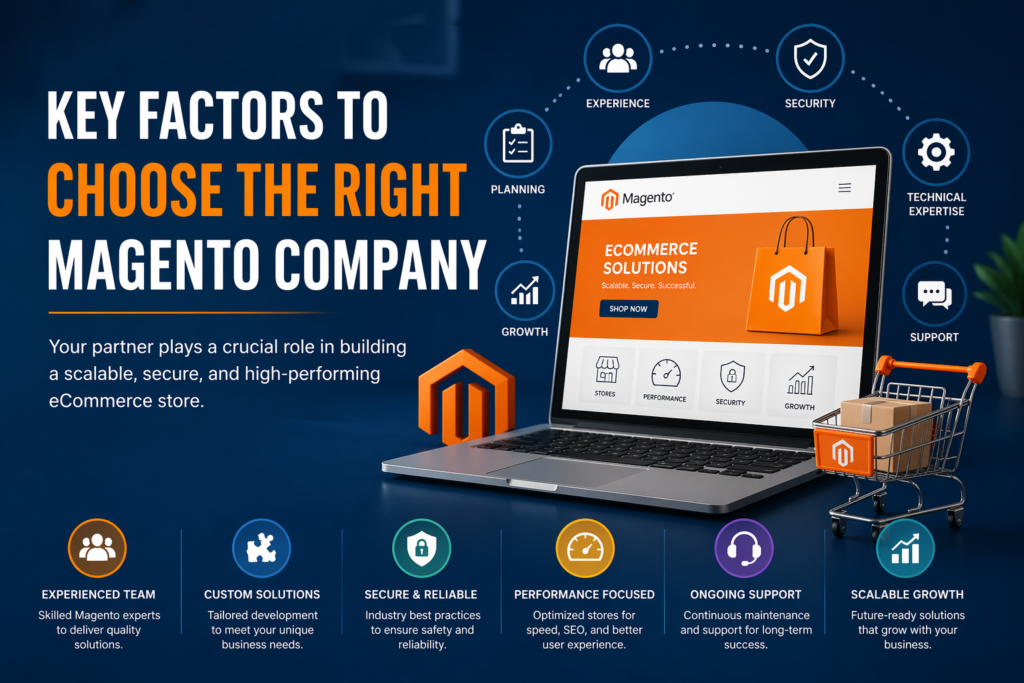
Whether or not you end up working with ACSIUS, it’s worth knowing what actually separates a strong Laravel development partner from one that’ll leave you with technical debt.
A portfolio of real, verifiable projects. Ask to see actual applications, not just screenshots. If possible, talk to a past client about how the post-launch relationship went.
Clarity about testing practices. Does the team write automated tests for critical functionality, or is testing just “click around and see if it breaks”? This matters a lot more once your application has been live for a year and needs new features added without breaking old ones.
A real answer on scalability. Ask how they’d handle a 10x increase in traffic or users. Vague answers are a red flag; specific answers about caching, queueing, and database indexing are a good sign.
Transparent pricing and scope. Fixed-price projects work for well-defined scopes; time-and-materials makes more sense for evolving products. A good partner will tell you which model fits your situation instead of pushing whichever is easier for them.
Post-launch support options. Ask what happens after launch. A development partner who disappears the moment the invoice is paid is a liability, not a partner.
Laravel vs. Other Frameworks: A Quick, Honest Comparison
It’s worth being upfront: Laravel isn’t the right fit for every project, and no honest development company will tell you otherwise.
- Laravel vs. WordPress — WordPress is faster and cheaper for content-driven sites with standard functionality. Laravel makes more sense once you need custom logic, complex user roles, or an application that doesn’t fit a CMS model.
- Laravel vs. Django — both are mature, well-supported frameworks. The real deciding factor is usually team familiarity and existing infrastructure (PHP vs. Python) more than any inherent technical advantage of one over the other.
- Laravel vs. Node.js/Express — Node has an edge for real-time, highly concurrent applications built entirely around JavaScript. Laravel tends to win on built-in structure and speed of development for standard business applications, especially where the team is already PHP-fluent.
- Laravel vs. Ruby on Rails — philosophically similar frameworks. Laravel currently has a larger active developer pool and hosting ecosystem, which matters for long-term maintainability and hiring.
The honest answer to “which framework is best” is almost always “it depends on your specific requirements, team, and timeline” — and any development company that skips that nuance to sell you on one framework for every situation is optimizing for the sale, not for your project.
Final Thoughts
Laravel earned its reputation the slow way — not through hype, but through a decade of being genuinely pleasant to build with and reliable to maintain. With Laravel 13’s release bringing AI-native tooling and continued framework refinement, that reputation shows no sign of fading in 2026.
If you’re evaluating Laravel website development services, the framework itself is rarely the risk — the real variable is who’s building with it. A skilled team can turn Laravel’s flexibility into a genuinely scalable, secure, maintainable application. A rushed or inexperienced one can produce something that technically works but becomes expensive to maintain within a year.
That’s the gap ACSIUS aims to close: treating Laravel not as a checkbox on a tech stack slide, but as a foundation worth building carefully. If you’re weighing options for your next web project, it’s worth having a conversation grounded in your actual requirements — not a generic pitch — before deciding what “custom development” should really mean for your business.
FAQs
Is Laravel good for SEO?
Yes — Laravel gives developers full control over URL structures, meta tags, page speed optimization, and server-side rendering considerations, all of which matter for SEO. The framework itself doesn't hurt or help SEO directly; that comes down to how the application is built.
Do I need to know PHP to work with a Laravel development company?
Not at all. A good Laravel development partner should be able to explain technical decisions in plain language and shouldn't require you to understand the codebase to make informed business decisions about your project.
What does Laravel website development typically cost?
Costs vary widely based on complexity, integrations, and the experience level of the team. Simple custom sites might start in the low thousands, while complex platforms with custom architecture can run considerably higher. Be wary of quotes that seem far below market rate — they often reflect corners being cut on testing, security, or architecture.
Can an existing website be migrated to Laravel?
Yes, and it's a common request. Migrations typically involve mapping existing data structures, rebuilding functionality within Laravel's architecture, and carefully testing for feature parity before switching over.