
A shopping website is no longer just a digital storefront. For many businesses, it is the first place where customers discover a brand, compare products, evaluate credibility, and decide whether they are ready to buy. That makes website design and development a major part of building a strong shopping brand. A beautiful logo or a large product catalog cannot compensate for a confusing website, slow checkout, poor mobile experience, or a lack of trust.
The best shopping brands understand that design and development work together. Design shapes how customers feel about a business, while development makes sure that experience actually works. From the first page load to product discovery, payment, delivery information, and post-purchase communication, every interaction can influence whether a visitor becomes a customer. When these elements are planned properly, a website becomes more than an online shop—it becomes the foundation of the brand.
Website Design Is the First Conversation With Your Customer
Imagine walking into a physical store where products are scattered across different shelves, prices are difficult to find, signs are confusing, and the checkout counter is hidden. Most shoppers would leave. Online customers behave in much the same way.
Website design gives an ecommerce brand the opportunity to make a strong first impression within seconds. Typography, colors, imagery, navigation, spacing, product presentation, buttons, and page structure all communicate something about the business.
A premium fashion store should not look like a discount electronics marketplace. A handmade jewelry business should create a different emotional experience from a large grocery retailer. Good design reflects the personality of the business while keeping the shopping journey simple.
This is where professional ecommerce development becomes especially valuable. Businesses that want a flexible Shopify store can hire Shopify developers to create shopping experiences that are tailored around their products, customers, and growth plans.
A Strong Brand Needs More Than an Attractive Homepage
One common mistake is treating the homepage as the entire website experience. A homepage can attract attention, but customers often make purchasing decisions on product pages, category pages, search results, cart pages, checkout screens, and support sections.
A successful shopping brand creates consistency across all of these areas
For example, the same visual language should continue from the homepage to the product page. Product descriptions should feel like they belong to the same brand. Buttons should behave consistently. Images should have a recognizable style. Even error messages and confirmation emails should sound like they come from the same company.
This consistency helps customers remember a brand. More importantly, it reduces uncertainty.
When visitors know where to find information and understand what will happen after they click a button, they can move through the website with less hesitation.
User Experience Can Directly Influence Sales
Good ecommerce UX is not about adding as many features as possible. It is about removing unnecessary obstacles.
A customer visiting an online store usually has a simple goal: find something useful, understand it, decide whether it is worth the money, and complete the purchase.
Every unnecessary step can create friction
A complicated navigation menu may make products difficult to discover. A product page without clear pricing may create doubt. A checkout requiring too much information can lead to abandonment. A website that performs poorly on mobile can lose customers before they even see the best products.
Effective website development addresses these problems at a technical level, while UX design solves them from the customer’s perspective.
The strongest shopping websites usually answer important questions early:
- What does this business sell?
- Why should I trust it?
- How much does the product cost?
- What makes this product different?
- Can I see it clearly?
- What are the delivery options?
- Can I return it?
- How can I contact the business?
- Is the payment process secure?
When these questions are answered naturally, customers do not have to work hard to make a decision.
Mobile Shopping Should Be Designed, Not Adapted
Mobile commerce has changed the way people shop online. Customers may discover a product through social media, search engines, advertisements, email, or a recommendation and immediately open the website on a smartphone.
That means a mobile version cannot simply be a smaller version of the desktop website.
Buttons need to be easy to tap. Product images need to load properly. Menus should be simple. Forms should require minimal effort. Product information should remain readable without excessive scrolling or zooming.
The checkout process deserves particular attention. Customers should be able to review their cart, select delivery options, enter payment information, and complete the order without fighting the interface.
Responsive design is therefore a business requirement rather than merely a design preference.
A shopping brand that provides a comfortable mobile experience can make the buying process feel natural, even when customers are browsing during a commute, waiting in a queue, or relaxing at home.
Product Pages Are Where Brands Earn Trust
The product page is one of the most important assets in ecommerce.
A visitor who reaches a product page is often closer to making a purchase than someone casually browsing the homepage. The page needs to provide enough information to support that decision.
High-quality product photography is important, but images are only one part of the experience. A useful product page may include:
- Clear product names
- Short and detailed descriptions
- Pricing and available offers
- Size, color, or model choices
- Specifications
- Product benefits
- Shipping information
- Return policies
- Customer reviews
- Frequently asked questions
- Stock availability
- Related products
The writing should also focus on the customer’s needs rather than simply listing features.
Instead of saying that a backpack has a particular material, for example, the product copy can explain how that material helps with durability, comfort, weather resistance, or everyday use.
That shift from features to customer benefits makes product pages more persuasive without making them sound overly promotional.
Search and Navigation Make Large Stores Easier to Use
As an ecommerce business grows, product discovery becomes more complicated.
A store with 20 products can often rely on simple navigation. A store with 2,000 products needs a stronger system.
Categories, filters, search, sorting options, breadcrumbs, collections, and recommendation systems can help customers find what they need.
Internal search is especially important. Customers who use a website’s search function often have a specific product or category in mind. If search results are inaccurate, slow, or difficult to filter, the brand can lose a high-intent visitor.
Good development allows search functionality to evolve as the catalog grows.
For example, a clothing store could let shoppers filter by size, color, brand, price, material, and availability. An electronics store may need filters for specifications, compatibility, storage capacity, operating system, or product type.
The right system depends on what customers actually use—not on how many filters a website can technically support.
Website Speed Is Part of the Customer Experience
A visually impressive website that takes too long to load can still create a poor impression.
People have limited patience online. When pages take too long to appear, customers may abandon the website before viewing the product. Slow websites can also make the entire shopping experience feel unreliable.
Performance should therefore be considered during development rather than treated as a final technical cleanup.
Developers can work on image optimization, caching, code efficiency, database performance, content delivery, third-party scripts, and other technical factors that influence loading speed.
Designers also play a role. Extremely large images, unnecessary animations, excessive pop-ups, and complicated visual components can increase the technical burden of a page.
Fast websites do not have to look basic. The goal is to create visual impact without sacrificing usability.
Trust Signals Help Customers Feel Comfortable
Customers are often cautious when buying from a brand they have never used before.
A professional website can reduce that uncertainty by presenting useful trust signals at the right moments.
Customer reviews, testimonials, clear contact information, transparent shipping policies, return details, secure payment indicators, company information, and product guarantees can all help.
Trust signals should not be hidden on a single page that nobody visits. Relevant information should appear naturally throughout the shopping journey.
For example, a product page might display customer ratings near the product information. Shipping details can appear close to the purchase button. Return information can be easy to access before checkout.
The objective is not to overwhelm customers with badges and claims. It is to provide the information they need when they need it.
Personalization Can Make Shopping More Relevant
Modern ecommerce brands increasingly use personalization to improve product discovery.
A returning customer might see recently viewed products. A shopper interested in running equipment may receive recommendations related to running. A customer who previously purchased a particular product could see compatible accessories.
Personalization can make a large store feel easier to navigate.
However, personalization should be useful rather than intrusive. Customers should feel that the website understands their interests, not that it is following every move they make.
Good development creates the technical foundation for recommendations, customer accounts, product relationships, and targeted experiences while respecting privacy and transparency.
The Right Technology Supports Long-Term Growth
Website development decisions can affect an ecommerce business for years.
A business may begin with a small product catalog and later need advanced integrations, multiple payment options, inventory synchronization, customer management, analytics, marketing automation, or marketplace connections.
The technology should therefore match both current requirements and realistic future plans.
For businesses operating complex ecommerce environments, hire Magento developers can be an option when the store requires a highly customizable platform and sophisticated ecommerce functionality.
The important point is not to choose technology simply because it is popular. A platform should be selected based on product complexity, business operations, integrations, expected traffic, budget, internal resources, and future growth.
Custom Development Can Solve Problems That Templates Cannot
Templates and ready-made ecommerce tools can be extremely useful. They allow businesses to launch faster and reduce initial development costs.
But as a brand grows, it may encounter requirements that standard templates cannot handle efficiently.
A business might need a custom product configurator, unusual pricing rules, a subscription system, advanced customer accounts, complex inventory logic, or integration with an internal business application.
This is where custom development can make a meaningful difference.
Instead of forcing the business to change its processes to fit the website, developers can build technology around the way the business actually operates.
For data-heavy platforms, automation systems, integrations, and custom ecommerce applications, businesses may choose to hire Python developers to build or support the technical infrastructure behind their shopping experience.
Checkout Design Deserves Special Attention
A customer can spend 20 minutes browsing products and still leave because checkout feels difficult.
Checkout should be simple, predictable, and transparent.
Customers should understand what they are buying, how much they are paying, when they can expect delivery, and what happens after payment.
Unexpected fees are one of the fastest ways to create distrust. Businesses should make shipping charges, taxes, discounts, and final totals clear.
Guest checkout can also be valuable for customers who do not want to create an account immediately. At the same time, returning customers should have convenient ways to save information and complete future purchases faster.
Payment options should be selected based on the target market. A global store may require different payment methods from a local business.
The best checkout is often the one customers barely notice because everything works as expected.
Accessibility Makes a Brand More Inclusive
A strong shopping website should be usable by as many people as possible.
Accessibility considerations can include readable text, sufficient contrast, keyboard navigation, meaningful labels, alternative text for images, logical heading structures, accessible forms, and interfaces that work with assistive technologies.
Accessibility is not only a technical responsibility. It is also part of good customer experience.
When websites are designed clearly, everyone benefits. Clear navigation, readable content, descriptive buttons, and logical layouts can improve usability for customers regardless of how they access the website.
An inclusive ecommerce experience can also demonstrate that the brand takes its customers seriously.
Content and Design Need to Work Together
A beautiful website with weak content can feel empty. A website with excellent content but poor design can feel difficult to use.
Shopping brands need both.
Content should help customers understand products, compare options, solve problems, and make decisions. Design should make that information easy to consume.
This is particularly important for ecommerce SEO.
Search engines need understandable content, logical structures, descriptive headings, useful product information, internal links, and technically accessible pages. Customers need the same things in a different form.
Instead of writing pages simply to insert keywords, brands should focus on the questions their customers genuinely ask.
For example:
- What size should I choose?
- How does this product work?
- Is this suitable for beginners?
- What is the difference between these two models?
- Can I return the product?
Answering these questions can support both organic visibility and purchasing confidence.
Visual Storytelling Helps Customers Remember Brands
Shopping is emotional as well as practical.
People remember brands that create a recognizable visual identity. Photography, illustrations, typography, colors, layout, animations, packaging visuals, and product presentation can all contribute to that identity.
Visual storytelling is especially powerful for lifestyle products.
A furniture brand can show how a product looks inside a real home. A skincare company can demonstrate how products fit into a daily routine. A sports brand can show products being used rather than displaying them only against a plain background.
The goal is to help customers imagine the product in their own lives.
That is a major difference between simply displaying products and building a shopping brand.
Integrations Connect the Website to the Business
An ecommerce website rarely operates alone.
Behind the scenes, businesses may rely on inventory systems, customer relationship management software, email marketing platforms, accounting systems, shipping providers, payment gateways, analytics platforms, marketplaces, and customer support tools.
Poor integration can create manual work and errors.
For example, if inventory information does not synchronize correctly, customers may order products that are unavailable. If order data does not reach fulfillment systems, shipping can be delayed.
Well-planned development connects these systems so that information can move reliably between them.
This is one reason ecommerce development should be considered part of the wider business strategy rather than just a website project.
Analytics Help Brands Improve Instead of Guess
Launching a website is not the end of the process.
Customer behavior can reveal where improvements are needed.
Analytics can show which pages attract visitors, which products receive attention, where users leave the website, which devices generate purchases, and which traffic sources bring valuable customers.
Businesses can use these insights to improve navigation, product presentation, content, campaigns, and checkout flows.
For example, if many customers visit a product page but very few add the product to their cart, the business may investigate pricing, product information, reviews, imagery, shipping costs, or page usability.
If customers frequently add products to carts but abandon during checkout, the problem may be related to payment options, unexpected costs, account requirements, or technical friction.
Data does not replace creativity. It gives creativity a better direction.
Website Security Protects Both Customers and Brands
Trust can disappear quickly after a security incident.
Ecommerce websites handle valuable information, including customer accounts, order details, payment-related information, and business data. Security should therefore be built into development from the beginning.
Regular updates, secure authentication, reliable hosting, access controls, monitoring, backups, and appropriate payment integrations all contribute to a safer environment.
Businesses should also limit unnecessary access to administrative systems and ensure that third-party tools are maintained properly.
Security is not something customers always notice when it is working, but they certainly notice when it fails.
Better Websites Create Stronger Customer Relationships
The strongest shopping brands do not focus exclusively on the first purchase.
They think about what happens afterward.
Order confirmation should be clear. Shipping updates should be useful. Support should be easy to reach. Returns should be straightforward. Customers should have reasons to come back.
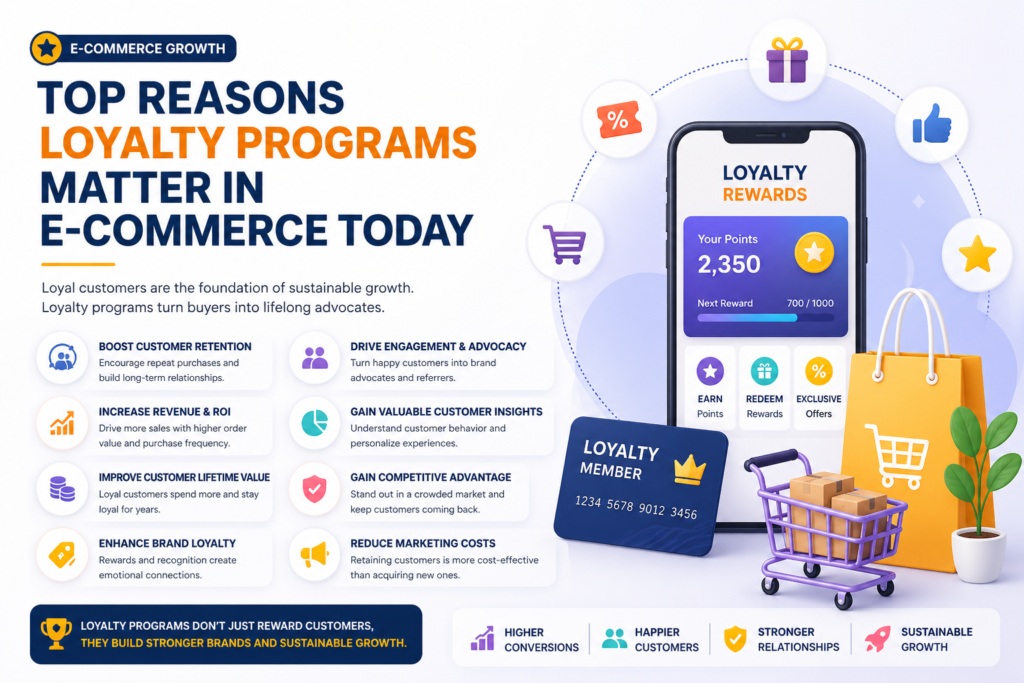
A well-developed website can support these relationships through customer accounts, order histories, personalized recommendations, loyalty programs, subscriptions, content, support tools, and email integrations.
This turns the website into an ongoing communication channel rather than a one-time sales machine.
A customer who has a positive experience is more likely to return, recommend the brand, leave a review, and develop familiarity with the business.
The Best Shopping Brands Keep Improving
There is no such thing as a permanently finished ecommerce website.
Customer expectations change. New devices appear. Search behavior evolves. Competitors introduce new experiences. Payment preferences change. Products expand. Business models develop.
A website should be treated as a living business asset.
Regular improvements might include updating product pages, simplifying navigation, improving mobile performance, testing checkout changes, adding useful content, refining search, upgrading integrations, or experimenting with new personalization features.
The most successful shopping brands are willing to listen to their customers and adjust accordingly.
Website Design and Development Should Have One Goal
Design and development should not operate as separate departments working toward different outcomes.
Design should make the brand attractive, understandable, memorable, and easy to use. Development should make that experience fast, reliable, secure, scalable, and connected to the wider business.
When the two work together, a shopping website can do much more than display products.
- It can communicate personality.
- It can build credibility.
- It can simplify decisions.
- It can remove purchasing friction.
- It can support marketing.
- It can collect useful insights.
- It can create repeat customers.
Most importantly, it can give a growing business a digital experience that feels as professional as the products and services it sells.
Final Thoughts
Better shopping brands are rarely built through one dramatic website feature. They are created through dozens of thoughtful decisions working together—from the first impression and product photography to navigation, mobile usability, page speed, checkout, security, personalization, content, and customer support.
Website design creates the experience customers see and feel. Website development creates the technology that allows that experience to perform reliably. When both are planned around genuine customer needs, the result is a digital storefront that feels trustworthy instead of generic and useful instead of complicated.
For businesses looking to turn ecommerce websites into long-term brand assets, ACSIUS can help bring together design thinking, development expertise, ecommerce functionality, performance, and growth-focused technology to create shopping experiences built around real business goals and customer expectations.
FAQs
Why is website development important for ecommerce businesses?
Website development turns the design into a functional shopping platform. It supports features such as product catalogs, shopping carts, payment gateways, customer accounts, inventory management, APIs, and third-party integrations.
How can a website improve the online shopping experience?
A website can improve shopping by providing simple navigation, fast-loading pages, detailed product information, effective search and filters, multiple payment options, transparent shipping information, and a streamlined checkout process.
Should an ecommerce website be designed for mobile users?
Yes. A large portion of online shopping activity takes place on smartphones. Responsive and mobile-first design helps ensure that product pages, menus, forms, images, and checkout functions work smoothly across different screen sizes.
How does website speed affect an online shopping brand?
Website speed affects usability and customer satisfaction. Slow-loading pages can cause visitors to leave before viewing products or completing checkout. Optimized images, efficient code, caching, and good technical architecture can help improve website performance.
What ecommerce platform should a business choose?
The right platform depends on the company's products, budget, scalability requirements, integrations, customization needs, and long-term goals. Shopify, Magento, and custom development solutions can each be suitable for different ecommerce businesses.
How does ecommerce website development support SEO?
SEO-friendly development can provide clean URLs, logical site architecture, responsive layouts, fast-loading pages, structured data, optimized headings, crawlable content, internal linking, and other technical foundations that help search engines understand an ecommerce website.
How can an ecommerce website increase customer trust?
Customer reviews, clear product information, transparent return policies, secure payment options, shipping details, business contact information, guarantees, and visible trust signals can help reduce customer hesitation during the purchasing journey.
Why are analytics important for an ecommerce website?
Analytics help businesses understand how visitors interact with their websites. Metrics such as product views, cart additions, checkout abandonment, conversion rates, traffic sources, and returning customers can reveal opportunities for improving the shopping experience and increasing sales.
How can professional website development help a shopping brand grow?
Professional development can create a scalable foundation that supports new products, integrations, payment methods, marketing tools, automation, and future functionality. A well-built website can therefore adapt as the business and customer expectations evolve.